Software Trending News – Guaripete | Online Store |
- All the different ways you can ask Siri to play music on your HomePod!
- Save over $100 and your important files with WD’s easystore 4TB hard drive
- Your workout isn’t complete without the perfect Fitbit Charge 3 band
- Today’s Apps Gone Free: Spite and Malice, Tweety and Towaga
- Pandora Unveils Updated Apple Watch App With Offline Playback
- Google’s new SMS and call permission policy is crippling apps used by millions
- Nanoleaf Canvas review: The funkiest smart lights get cooler, better
- 10 new and notable Android apps from the last two weeks including GitNews, Remote Fingerprint Unlock, and Language Navi (12/22/18 – 1/5/19)
- Para masoquistas: esta versión de Tetris siempre te da la peor pieza posible
- Google Chrome: display URL on tab mouse hover
| All the different ways you can ask Siri to play music on your HomePod! Posted: 05 Jan 2019 12:04 PM PST When it comes to playing music, the HomePod is a fantastic speaker that fills your room with excellent sound, and if you have an Apple Music subscription, your HomePod has access to a vast catalog of music that you can play all by invoking Siri. While you may know the basics of using Siri to find and play your music, there’s a ton of commands you may not know about; here’s all the way Siri can help you play music on your HomePod! Note: I’m using iPhone screenshots to illustrate the Siri interactions of the commands, but you can just use Hey, Siri directly to your HomePod to achieve all these results. How to find songs using Siri on HomePodProbably the most straightforward way of searching for music is by just asking Siri to play you s song you want to hear, but that isn’t the only command you can give Siri to play a particular song. You can get Siri to find you the newest single from an artist, or even find songs based on lyrics. Here are some examples of what Siri can do: If you’re trying to play a song that has the same name as multiple songs, you’ll likely have to add in the artist top the command. You can even use lyrics to search for a song you may not know the name of, which is surprisingly useful when you get a catchy earworm but don’t know your song or artist. The general command to achieve this is to say: Hey Siri. Play the song that goes insert song lyrics here. Surprinsgly, searching Apple Music with Siri using lyrics works really well! I tried to stump Siri several times while testing it out, and from classic hits to small indie band singles, Siri pulled up the right song for me every time without fail. How to find artists and albums using Siri on HomePodJust like finding a specific song, you can start playing an album by simply asking Siri to play an album, but you can also find the newest album, oldest album, or even top album right now. Here are some examples of what Siri can find:
You can even play album shuffled just by saying so in the command like “Hey Siri play Walls by Kings of Leon shuffled” and Siri will scramble that album up for you! How to find playlists and stations with SiriApple Music has tons of playlists and radio stations that can help you find large quantities of songs from certain genres, decades, or even for certain activities. Siri can even create radio stations for you based on a band you like, or even a song in some instances. Here are a few examples of how Siri can play playlists and radio stations on your HomePod.
Of course, if you know the name of the specific playlist you want to play, just tell Siri, and it will be up and playing for you in no time! What’s your favorite music command on HomePod?Let us know in the comments below how you like to use Siri on HomePod to find music! The post All the different ways you can ask Siri to play music on your HomePod! appeared first on GuaripeteMagazine. |
| Save over $100 and your important files with WD’s easystore 4TB hard drive Posted: 05 Jan 2019 12:04 PM PST The WD easystore 4TB portable hard drive is down to $89.99 through Best Buy’s official eBay store and the main site. It usually sells for up to $200 otherwise. This deal makes for one of its best prices ever there, though it’s good for just one day only. You’ll also receive a 32GB USB flash drive with its purchase. Easystore is Best Buy’s proprietary hard drive series. It’s not sold anywhere else first party. These drives are usually just internal drives covered with an external closure. So while it says portable, I wouldn’t jostle these around too much. Each has a USB 3.0 interface for easy on-the-go usage and uses WD’s Backup software to work quietly in the background to keep your files safe. You can use it on both a Mac and Windows PC. This drive has 4.8 stars based on more than 1,200 user reviews. This post may contain affiliate links. See our disclosure policy for more details. The post Save over $100 and your important files with WD’s easystore 4TB hard drive appeared first on GuaripeteMagazine. |
| Your workout isn’t complete without the perfect Fitbit Charge 3 band Posted: 05 Jan 2019 12:04 PM PST The Nike watch bands for the Apple Watch are some of my favorite watch bands and now you can get the same comfort and breathability for the Fitbit Charge 3. These bands from Qibox sport the same tri-hole design (trademark me), have the same button clasp, and come in several different colors. This is a great option. The post Your workout isn’t complete without the perfect Fitbit Charge 3 band appeared first on GuaripeteMagazine. |
| Today’s Apps Gone Free: Spite and Malice, Tweety and Towaga Posted: 05 Jan 2019 12:04 PM PST Play a card game filled with spite and malice, check Twitter from your lock screen, and destroy monsters with beams of light with today's collection of apps and games. All app prices are subject to change at any time and without notice regardless of stated free duration. Price changes are solely under the control of the developers.
Towaga ($0.99 → Free, 271.7 MB): Destroy monsters with beams of light in Towaga. Fans of action games. Play as a masked sorcerer perched atop the legendary Temple of Towaga. You're objective is to fight off the monsters lurking in the darkness using your light beam. As the monsters descend upon the temple from all angles, highlight them with your beam and release to exercise. When times get tough, unleash your super light beam to cover large swaths of enemies. The game includes six chapters in all. Towaga is available for free for a limited time. It has a 4.5-star rating with a total of 60 ratings.
Spite & Malice ($1.99 → Free, 74.7 MB): This game of cards is full of spite and malice. Anyone who enjoys going head-to-head with friends in turn-based card games. Unleash your inner demon with the fiendishly fun Spite & Malice. Your goal is to be the first person to play all of the cards from your own pile by placing them on the middle piles in numerical order. Don't worry about the suits of the cards because in Spite & Malice they don't mean a thing. Just remember that the best way to beat your opponent is to block them from ever playing their cards. The game includes a single player mode, and online real-time and turn-based multiplayer. Spite & Malice is available for free for a limited time. It has a 4.5-star rating with a total of 6161 ratings.
Tweety Pro Widgets for Twitter ($0.99 → Free, 50.8 MB): Check Twitter from your lock screen with Tweety Pro. Those who want quick updates from Twitter. Before you do anything, you'll have to link your Twitter accounts with Tweety. You can then customize the widget in order to fit how you use Twitter. Tweety allows you to adjust which accounts are showing tweets, how often they update, how much information is displayed, and whether or not you want quick actions. Tweety is also able to open tweets in Safari, the Twitter app, Tweetbot, or Twitterrific. Tweety Pro Widgets for Twitter is available for free for a limited time. It has a 4-star rating with a total of 33 ratings. That concludes today's issue of Apps Gone Free. If you like staying on top of these daily deals, don't forget to check out our free AppsGoneFree app.
It provides all the deals each day, and even an archive of past deals that are still active. Developers:If you are a developer who would like to get your app included in our "Apps Gone Free" daily lists, here's our basic set of rules:
To submit an app, simply send a request to [email protected] with the subject "Apps Gone Free." Please include the name of the app, a link to it in the App Store, when and for how long you intend to offer the app for free, and anything else you would like to share. We will take it from there. The post Today's Apps Gone Free: Spite and Malice, Tweety and Towaga appeared first on GuaripeteMagazine. |
| Pandora Unveils Updated Apple Watch App With Offline Playback Posted: 05 Jan 2019 12:04 PM PST For proper use of this site, you need to enable javascript in your browser!
January 5, 2019 Take that, Spotify. Pandora has just updated its app with a redesigned Apple Watch experience highlighted by offline music playback.  Subscribers can now access Pandora music on their watch without an Internet connection. Once the app starts, music will be transferred over to the watch. Users can also access remote playback controls and give a Thumbs Up for favorite songs from the Now Playing watch screen. Competitor Spotify released an Apple Watch app in late 2018 but it lacked any offline playback. Pandora is designed for both the iPhone and all iPad models. The app can be downloaded for free. You'll need to have watchOS 5 on your Apple Watch. Pandora Plus is $4.99 per month and offers unlimited personalized stations and unlimited skips and replay. The premium option is $9.99 per month and allows users to search and play any song. Both options are also ad-free. The post Pandora Unveils Updated Apple Watch App With Offline Playback appeared first on GuaripeteMagazine. |
| Google’s new SMS and call permission policy is crippling apps used by millions Posted: 05 Jan 2019 12:04 PM PST Late last year, Google decided it was time to crack down on apps requesting SMS and call log permissions. Ostensibly, exceptions would be granted for categories including backups and automation, but as of now, there are still gaps which cover legitimate use cases. While some popular apps like Tasker have successfully secured exemptions, others like Cerberus have not. Instead, they’ve decided to strip out those permissions or risk facing the wrath of Google’s upcoming January 9th banhammer, killing associated functionality and disappointing millions of long-time users to adhere to the Play Store’s new policy.
The Play Console support page for the applicable set of permissions notifies developers that they can submit what is effectively an application for an exemption, categories for which are listed on the same page. (And that list of exceptions has grown since the original announcement.) Nonetheless, a further set of prohibitions are also included in the form itself, which explicitly preclude support for phone security/device location apps like Cerberus:
As a result, Cerberus has had to push out a recent update which removes those permissions and a whole pile of functionality from the phone security app, killing SMS-based commands, alerts, call backups, and opening the app via a dial code. In the developer’s own words: “This basically kills one of Cerberus heads.” And Cerberus isn’t alone. Plenty of other apps — even some explicitly built around SMS/MMS and phone call functionality — have been denied exceptions, and some of these are apps that easily fit within the ostensibly allowed categories stated by Google. Even so, they have been denied a continued presence on the Play Store. Tasker may have been important enough and attracted enough public attention to secure an exception, but many smaller apps that also fit exemption categories haven’t had the same luck.
Developer-facing herald of the coming appocalypse. Google’s monumental failure to support independent developers is well-known at this point, but with months to prepare, one would have assumed that apps already including the permission could have undergone a manual review process. Many of the apps that seem to have been hit by the automation double-whammy of the alert and subsequent appeals denial are clear exceptions by Google’s own expressed rules, while others like Cerberus should be. Even so, at the time of writing a post on the Google Issue Tracker related to the issue is now over 620 comments deep, filled with both righteously indignant developers and piles of concerned users. Honestly, I’m tired of writing about Play Store developer support problems like these. This is a stereotypical Google problem, paired with the stereotypical Google solution: We have an issue which could be best solved with a bit of effort, time, and the expense of throwing warm bodies at it, and Google would prefer to just automate the whole thing instead, false positives be damned. (Humorously enough, this exemption application issue is a symptom of Google’s greater low-effort war against privacy-violating apps on the Play Store, which itself could be handled better.) But support works best when there’s something other than a robot on the other end, and even Google admits that this is a gray area where automation-defying exceptions can and should sometimes be granted. Sadly, developers are giving the company 30% cut of everything they make just to be told “no” by a robot. The very least Google can do is treat them with some respect during this appeals process, and a line to real human support as apps make this transition would be a start. Developers that are still trudging through how best to approach the permission removal at the last minute would be well served by reading this post by u/stereomatch in the Android Developers subreddit, which is an unofficial but dense set of guidelines, experiments, first-hand accounts, and background reading for different means of working around the change, depending on your app. You can also apply for a two-month extension until March 9th via the “Permissions Declaration” exemption form, if you’re running short on time. Hopefully, Google reconsiders how it’s handled this situation in the meantime. The post Google’s new SMS and call permission policy is crippling apps used by millions appeared first on GuaripeteMagazine. |
| Nanoleaf Canvas review: The funkiest smart lights get cooler, better Posted: 05 Jan 2019 12:04 PM PST Over the past couple of years, Nanoleaf has made a name for itself as the brand for cool, funky, unusual, and colorful smart lights. I dubbed its Aurora panels “the coolest and most extravagant smart lights you can own” when I reviewed them, and they’re still just as awesome as they were back in 2017. But you can’t sit still while the world moves on, so Nanoleaf is back again with the Canvas. Square tiles with multiple connection points replace the triangle ones, but the real advantage is in the touch reactivity and built-in Rhythm mode that follows your music. The Canvas are better than the Aurora in almost every way, but they’re also more expensive. Read on for my full review.
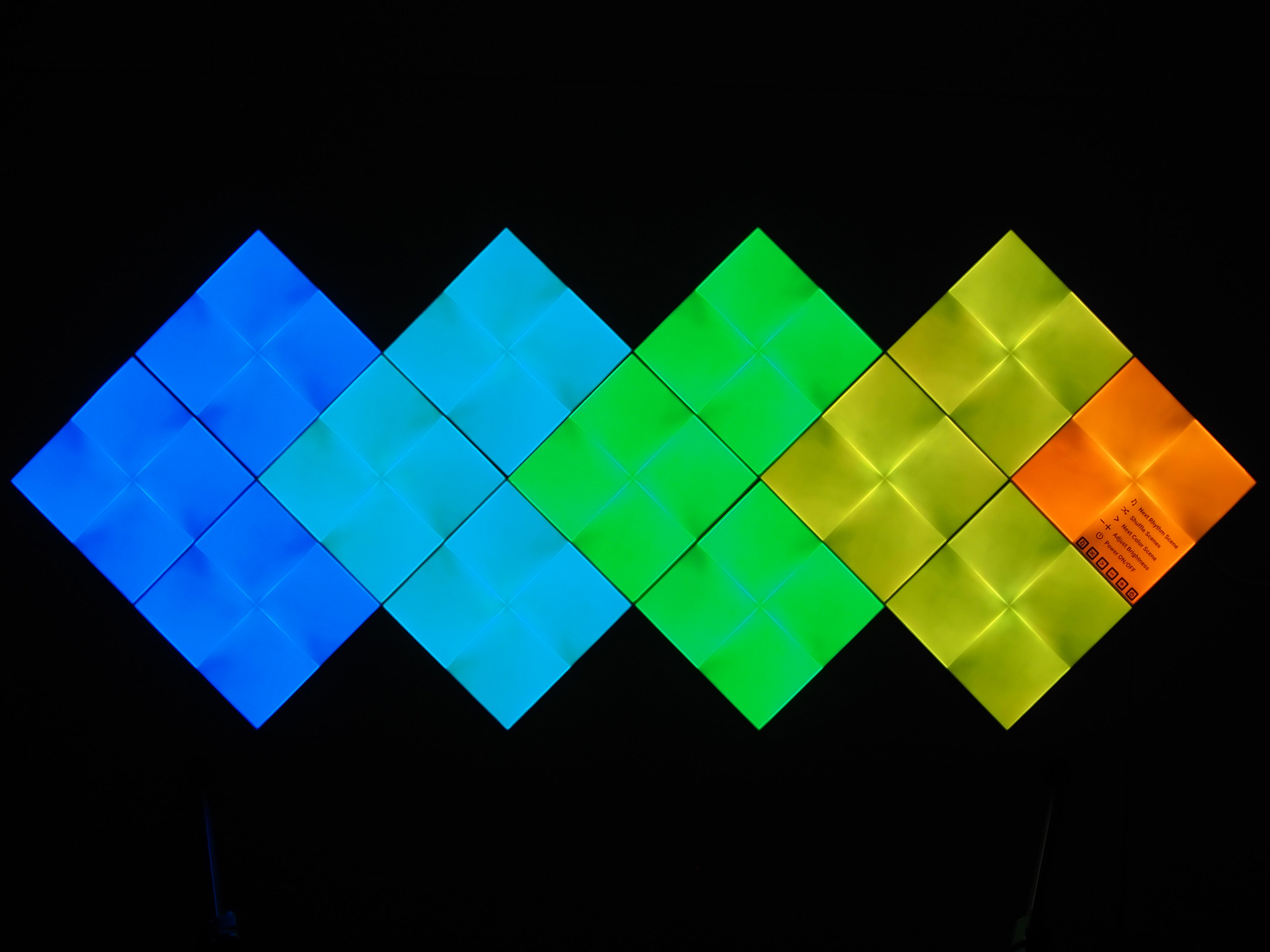
Left: Finding Nemo. Middle & right: Christmas tree animation. Hardware, design, what’s in the boxWith the Canvas, Nanoleaf provides a different design and possible configurations than its previous Aurora Light Panels. The square shape is perhaps less funky than the triangle, and leads to more rigid layouts. It’s also a bit smaller: with each side measuring 15cm (5.9″), a tile’s surface is 225 cm², whereas the Aurora’s triangle had 24cm sides (9.4″) for a surface of 250cm².
These tiny setbacks aside, everything else about the Canvas is improved. The entire square is lit as opposed to the Aurora’s plastic corners which created empty spaces. The back of each panel offers four connection points for the linkers, allowing you to perfectly align two panels or shift them so only half their sides are connected. The app provides a layout maker that helps you in figuring out whether a design is possible or invalid and where to install the linkers so that all panels have are connected. Another welcome change is the less bulky cable setup. Only one wall adapter is needed, instead of the Aurora’s controller + adapter + plug, so there’s less to hide when the Canvas goes on the wall.
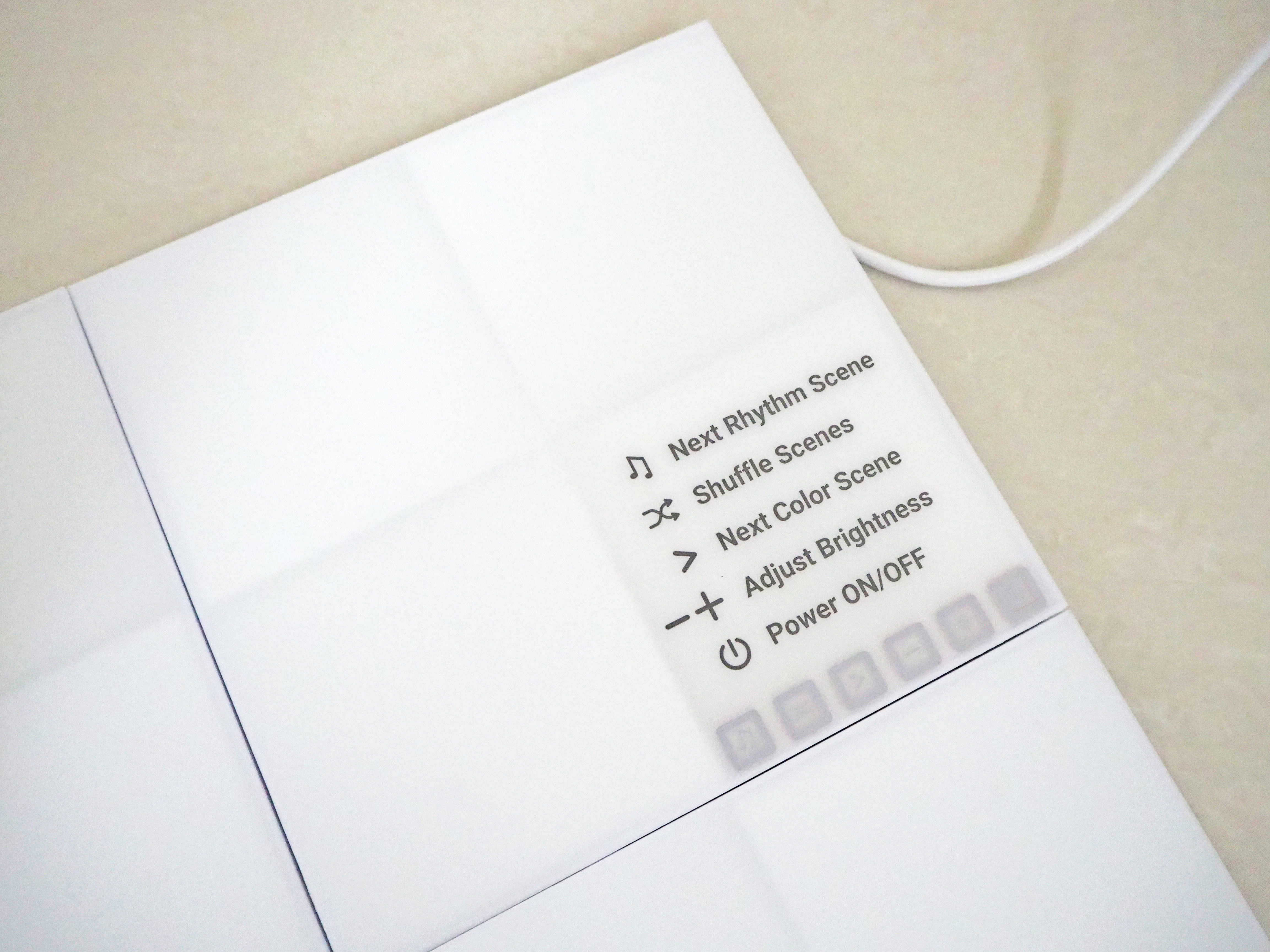
The most significant improvements though are the addition of three features: buttons on one panel, touch reactivity on all, and Rhythm functionality built in. Thanks to these, you don’t need to open the app to toggle the Canvas, change the brightness, or switch scenes. You can also play some interactive games like whack-a-mole and memory. And the lights will be able to react to music without a separate module. In the Canvas box, you’ll find one main control square (with the buttons), 8 regular squares, 9 linkers, 28 mounting tapes, and a power supply. Expansion sets of 4 squares are available to purchase separately.
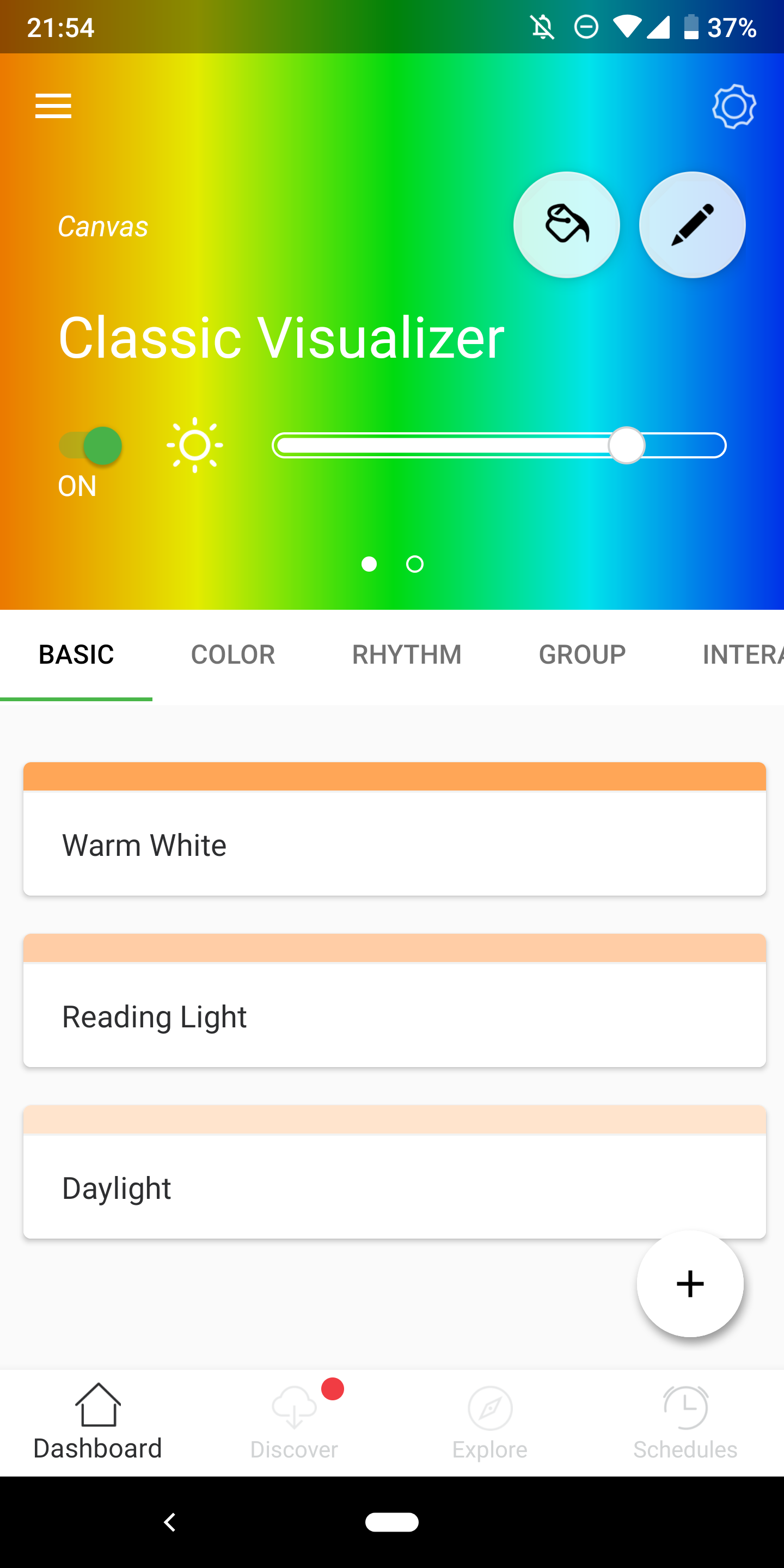
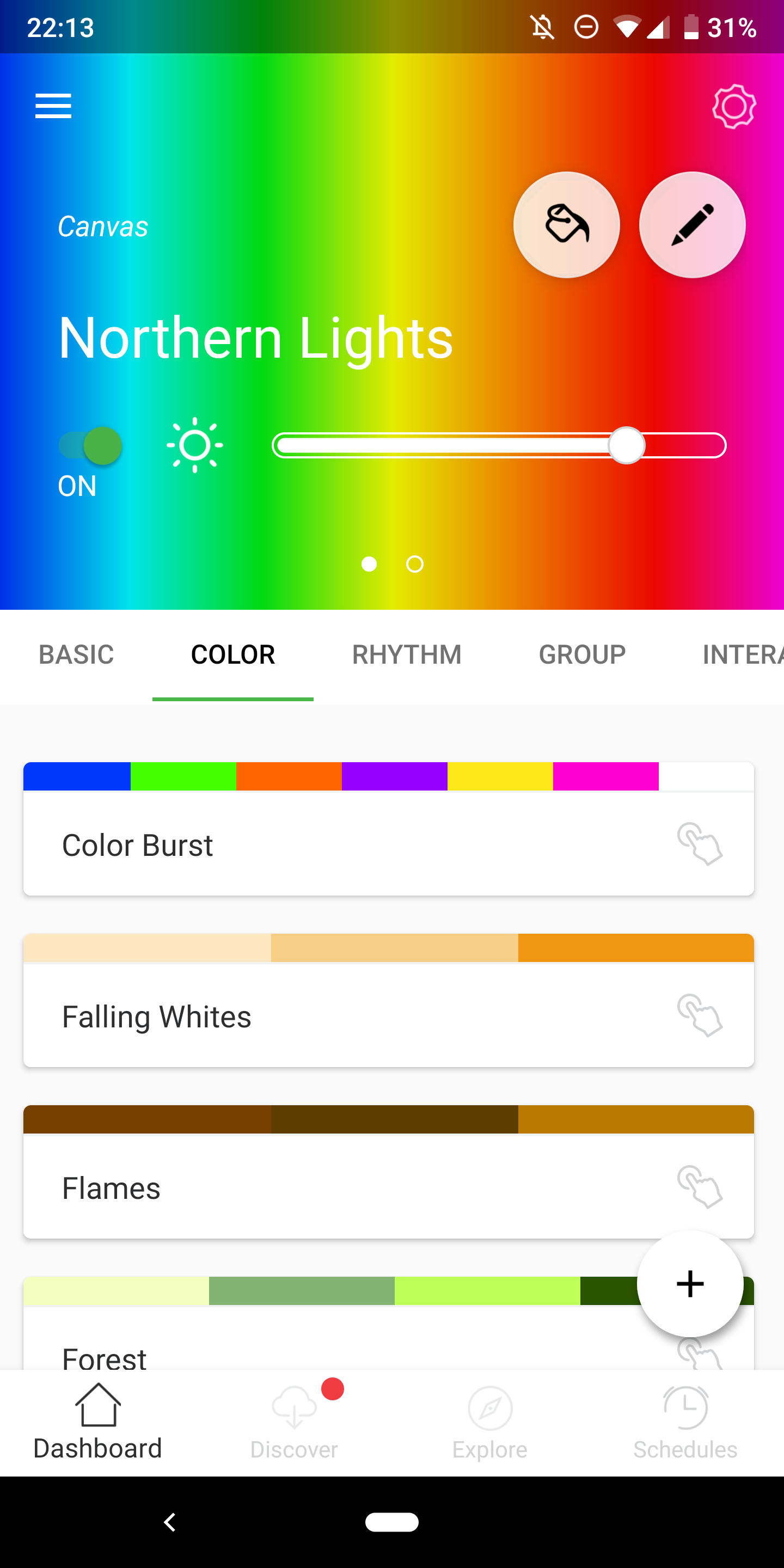
Installation and setupInstalling the Canvas is an easy but time-consuming process. The app guides you through the steps, and you can consult the online manual and tutorial videos if you need to. The gist is that you should pick out the layout in the app, set up your panels on a surface and make sure all linkers are in their place, then transfer everything to the wall by using the included mounting tapes (three per square). Simply connect the adapter to one of the squares and the Canvas will light up and prepare for setup, then use the app to get them on your WiFi network and start controlling them.  Price: Free Endless PossibilitiesTwo years on, I still think Nanoleaf makes one of the most impressive and feature-full smart home apps. The layout is daunting at first and it takes a bit of time to figure out how everything works, but the possibilities are really endless with it. Colors and animationsYou can pick a basic static color for the entire setup or light up each square as you wish using multiple palettes, combinations, and brightness levels.
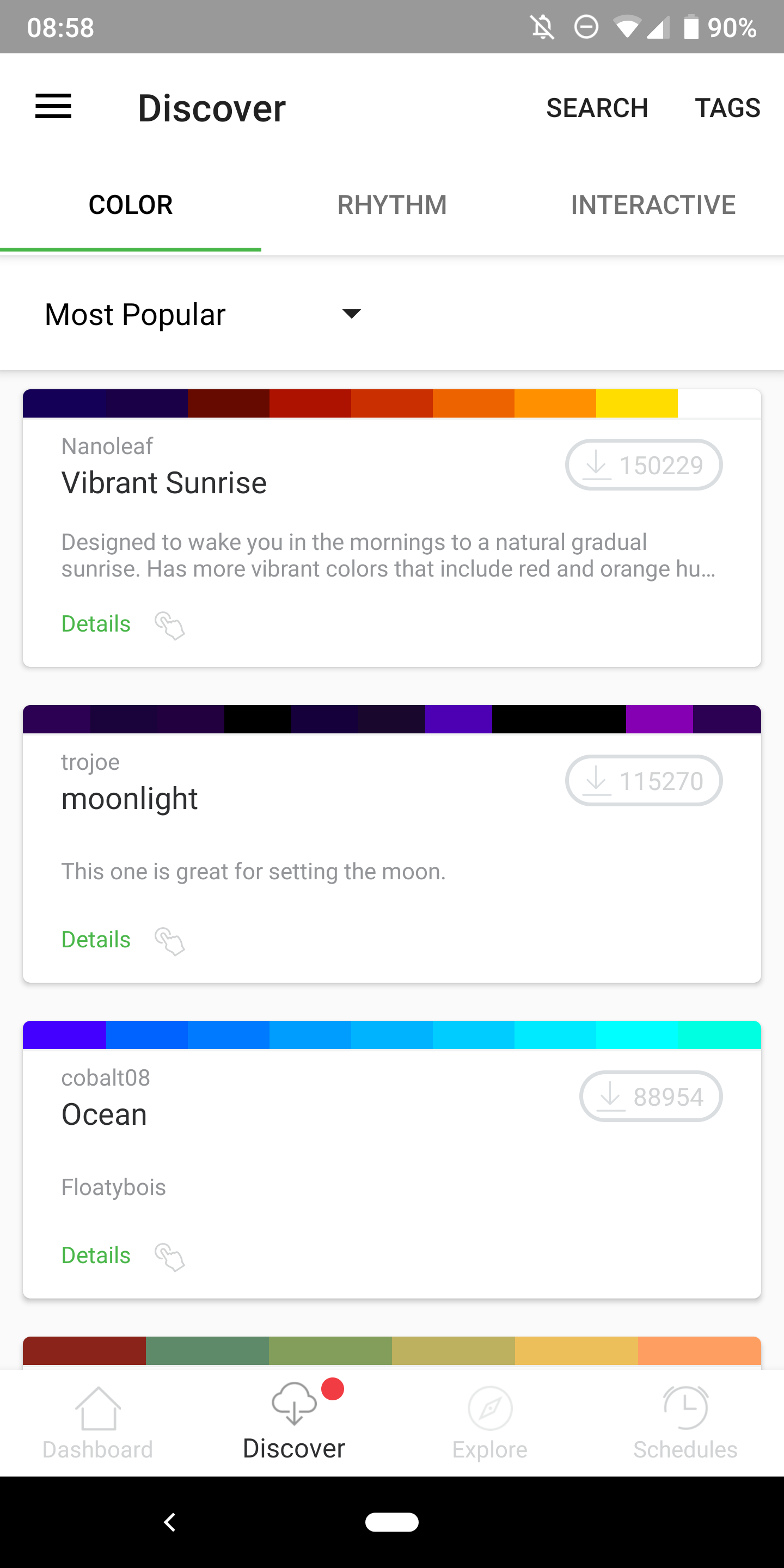
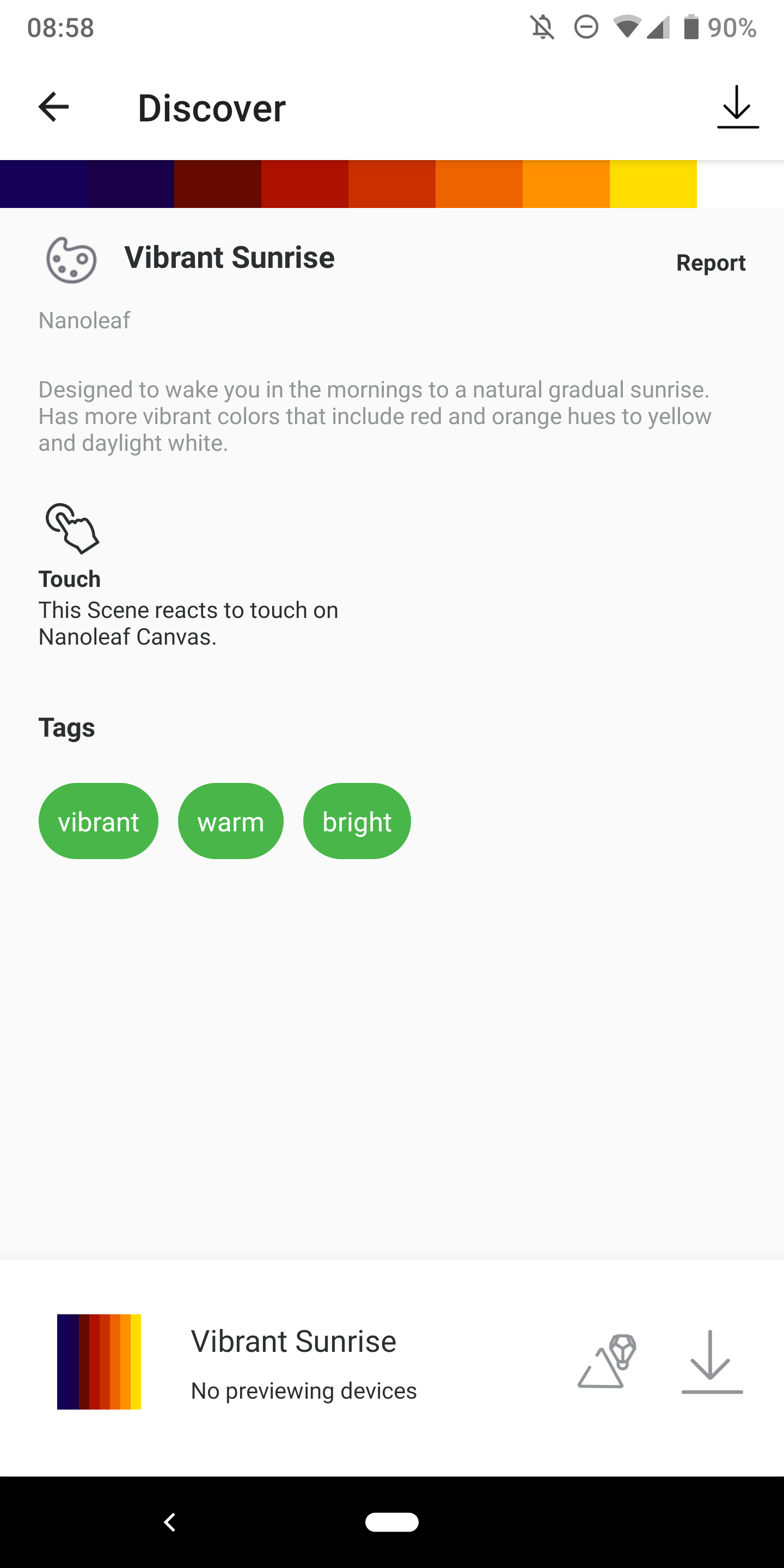
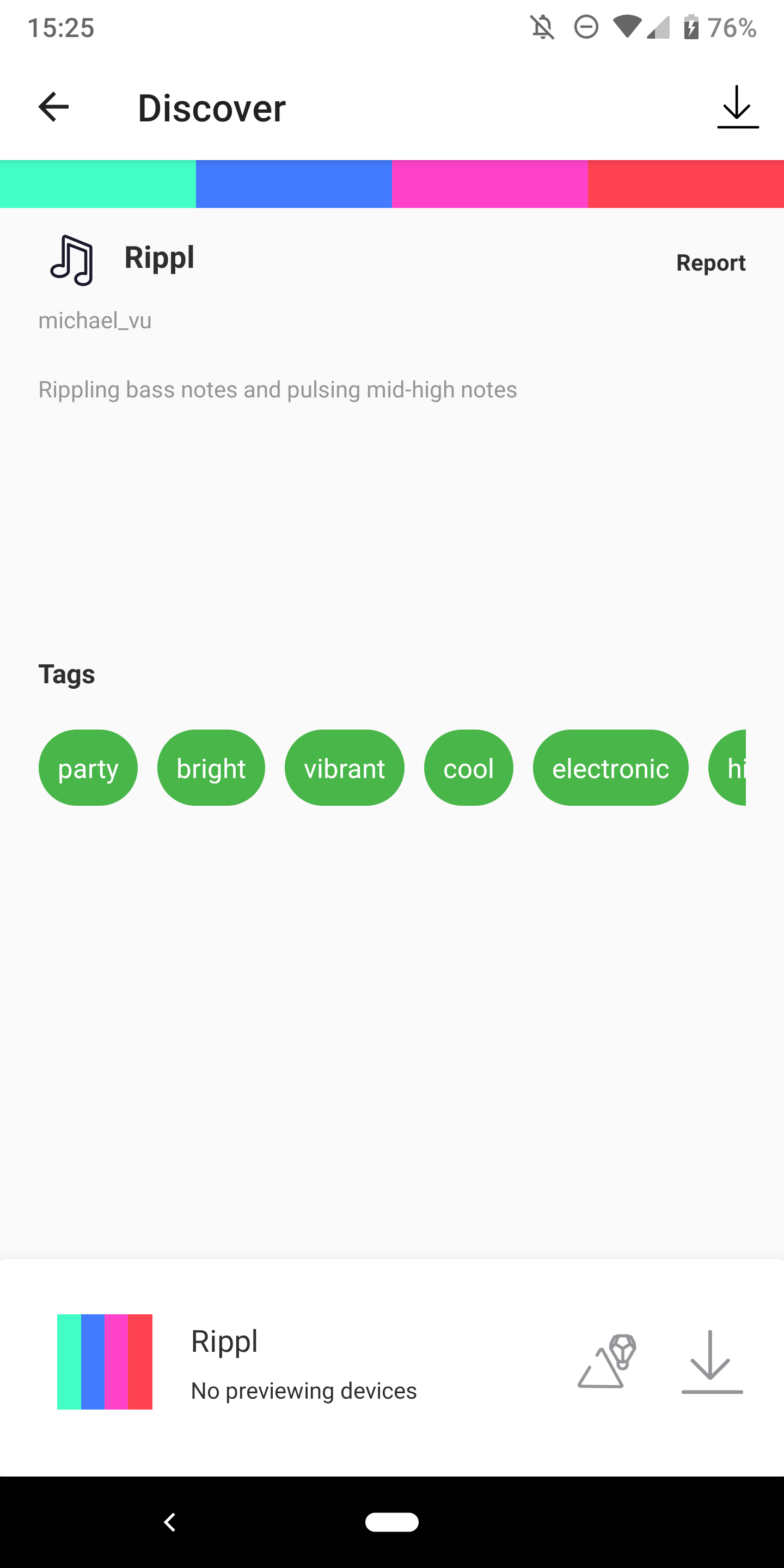
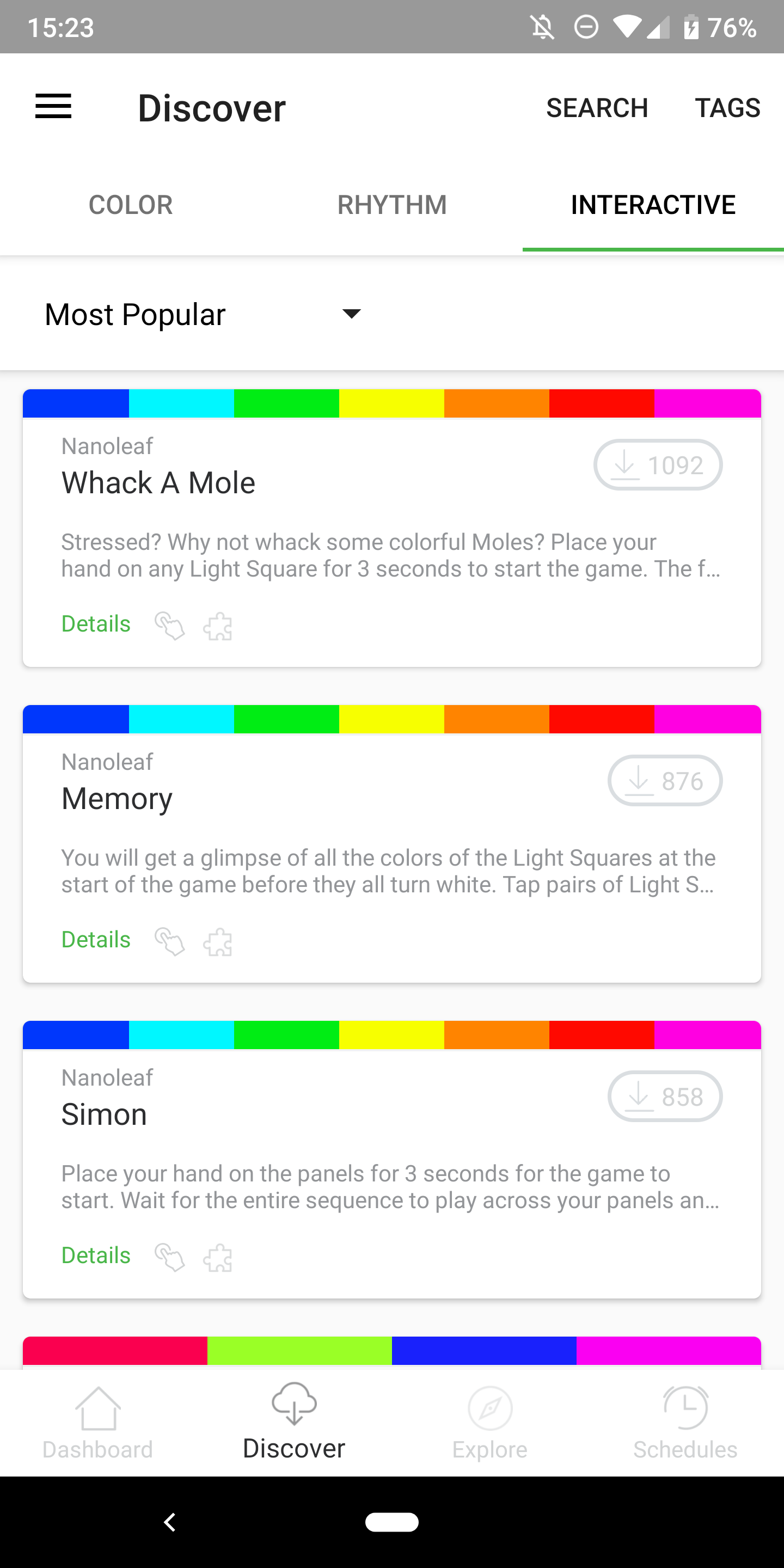
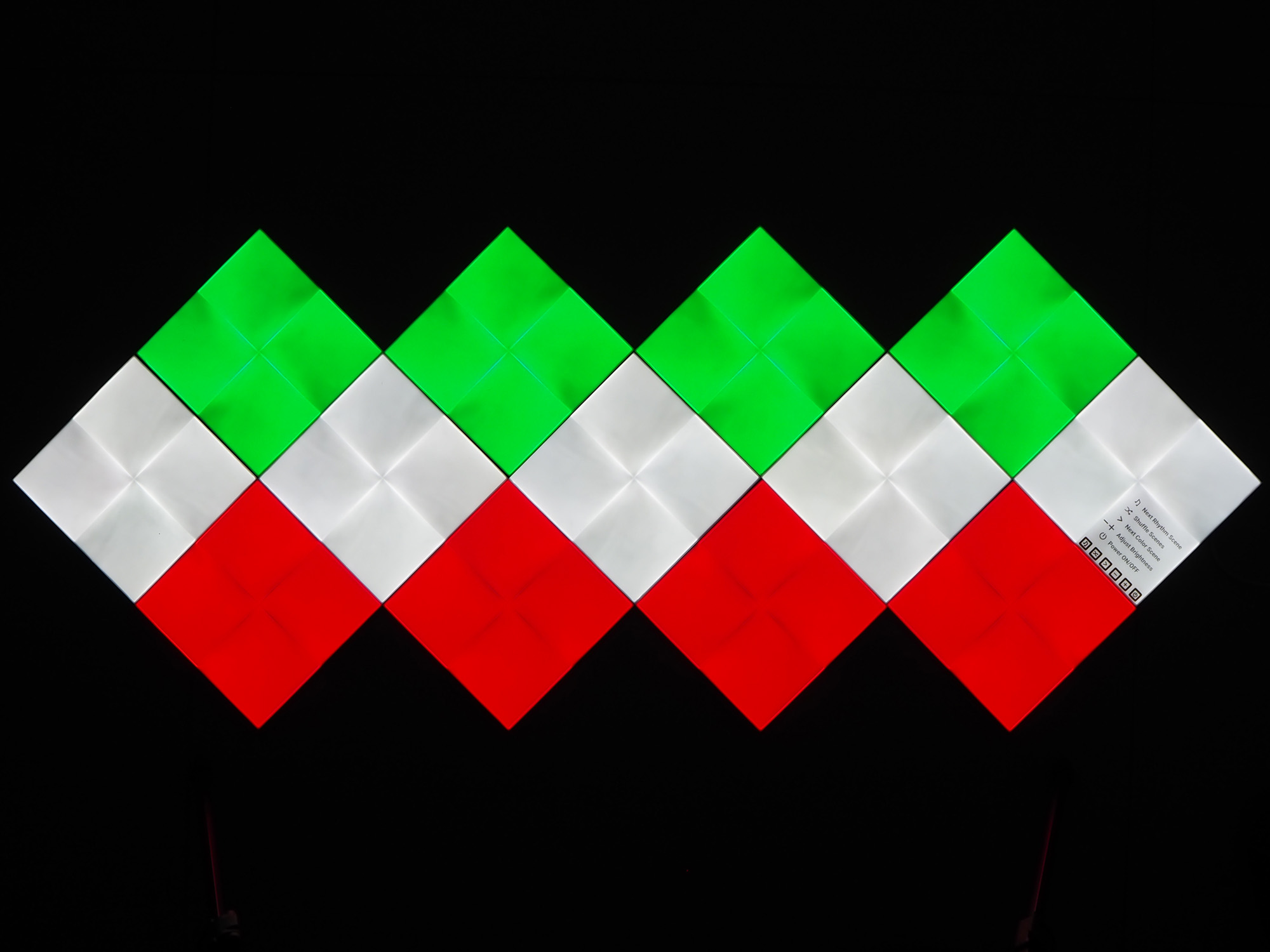
You can also choose an animated and touch-reactive color setup, with multiple colors and styles (fade, splash, burst, etc…). The Discover section in the app is full of user-contributed presets that are easy to preview and download.
Above: Beach wave scene. Below: Sunrise scene.
Above: Candy scene. Below: Northern Lights scene.
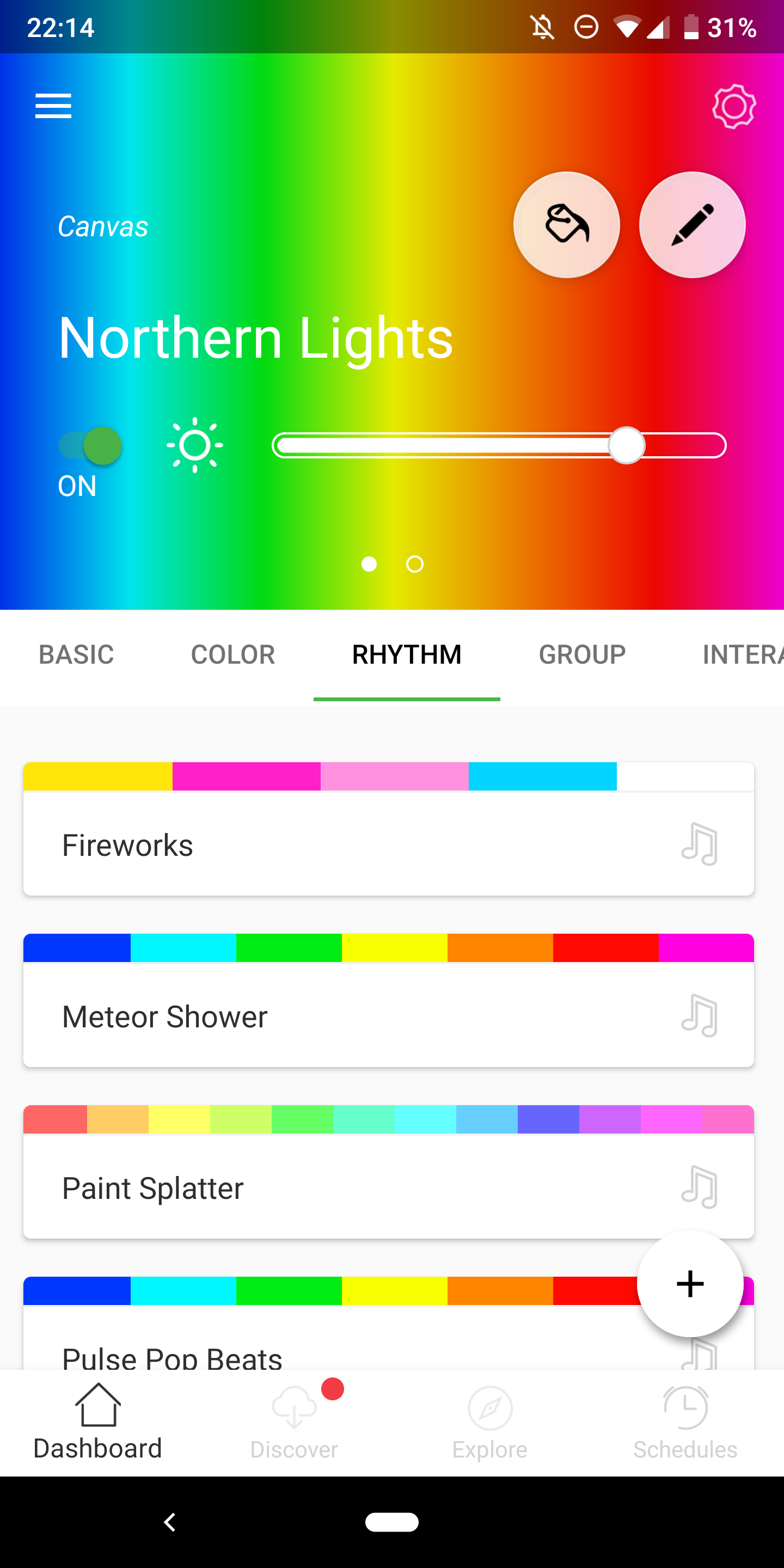
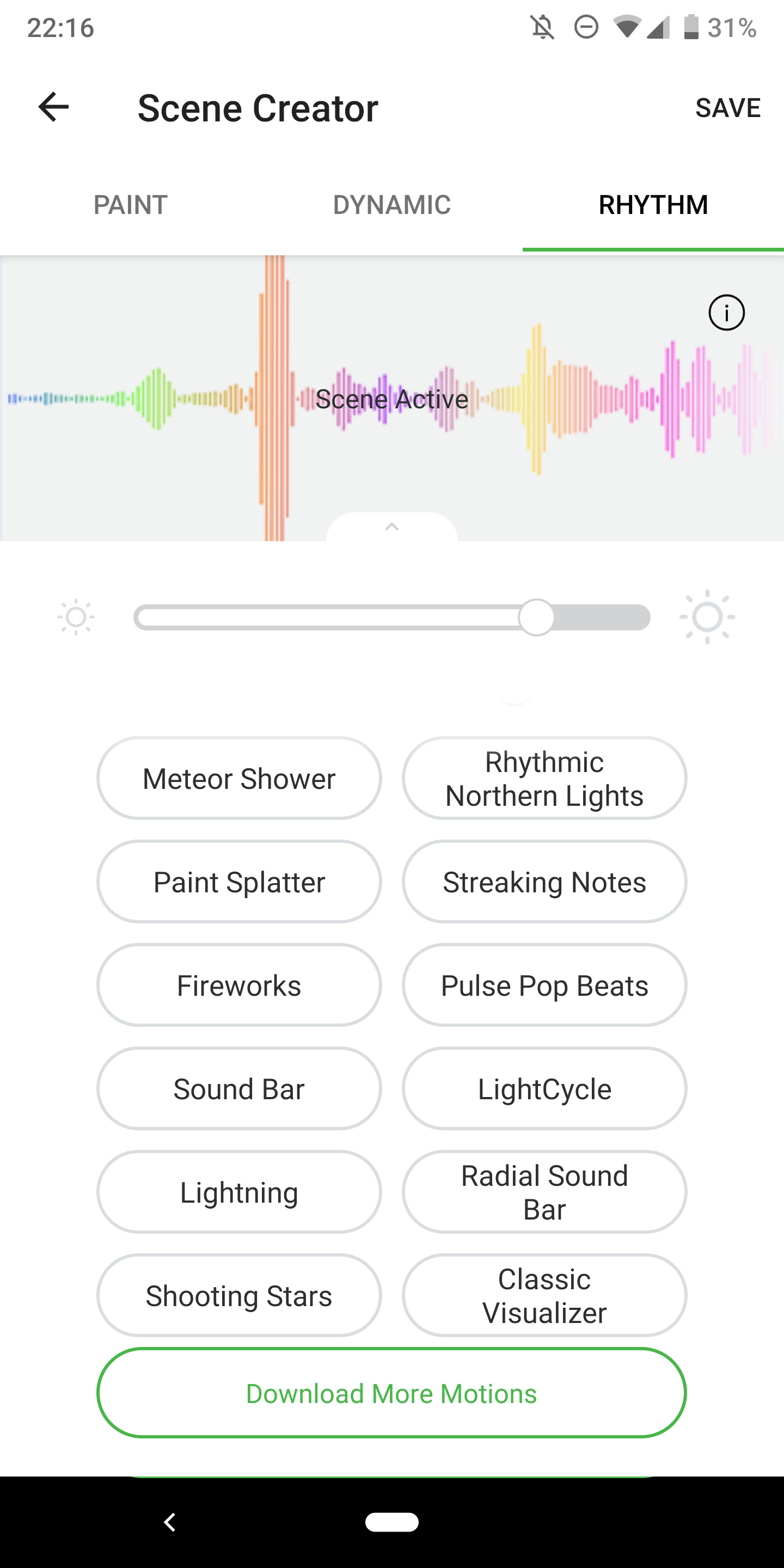
Above: Forest Green scene. Dancing lightsWith the built-in Rhythm function and multiple preset (and downloadable) scenes, animations, and motion effects, there are hours of fun to be had trying the various ways the lights can react to the music. My favorite is usually the soundbar, but I just discovered there are 23 more motions to be tried and if I start playing with them now, I’m sure this review won’t be finished in time. I’m trying to control myself.
Interactive panelsOne of the Canvas’ squares comes with touch buttons to toggle it on/off, raise/lower the brightness, turn on the Rhythm functionality, shuffle through hundreds of preloaded scenes (not yours), and cycle through your own scenes. The buttons also hide additional functionality, like the option to add a shuffled scene to your collection, activate various temperature white modes, and even turn on the Hotspot mode that lets your phone connect directly to the Aurora without using a home WiFi network.
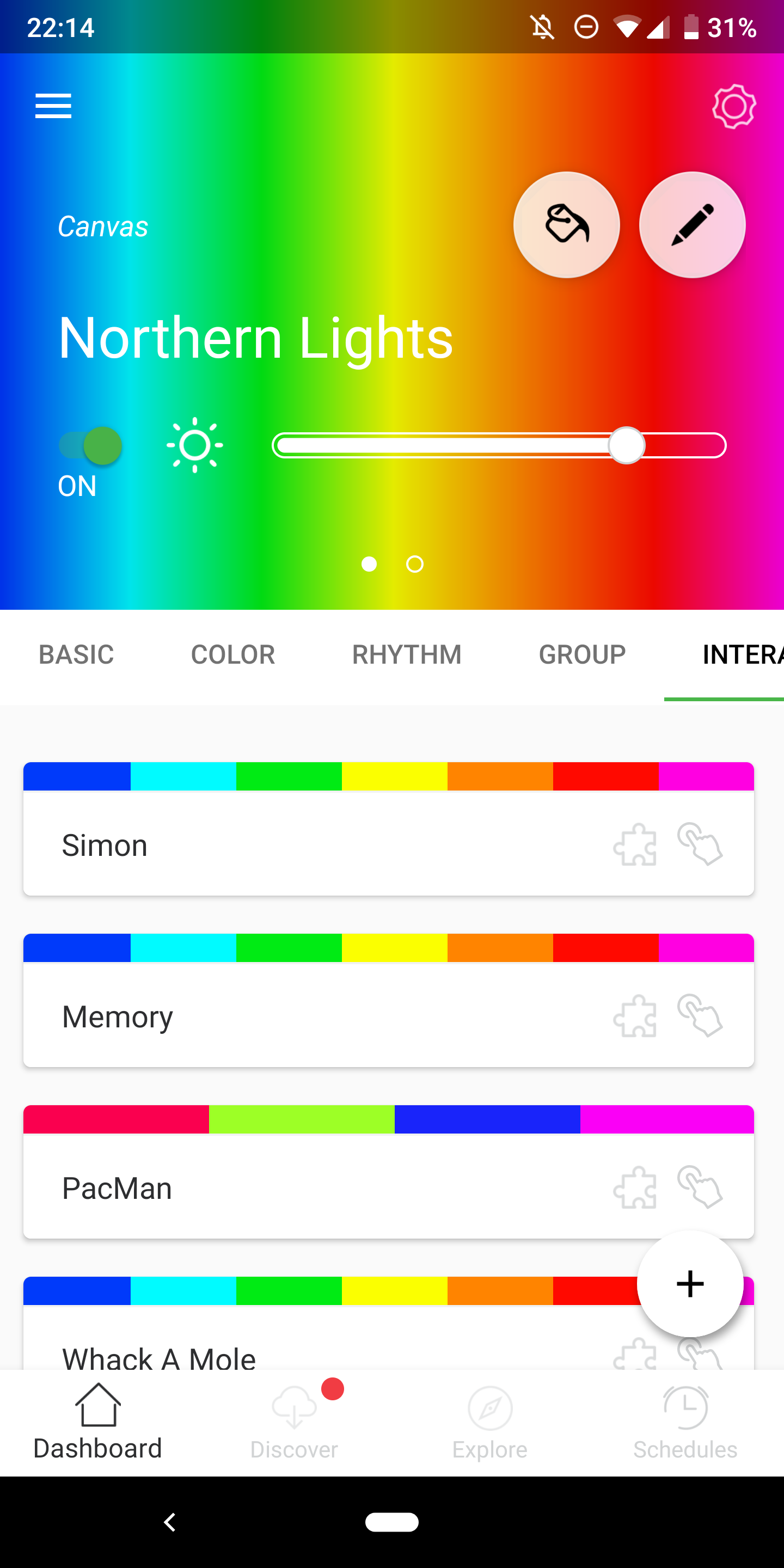
But there’s more than the buttons. The panels are touch-enabled too, so you can double tap them to toggle them on/off, swipe up to raise the brightness, down to lower it, and program these gestures (and more) to do what you want. The color scenes are also touch-enabled, so simply tapping a square will trigger it to change color within the chosen palette. And then there are the games. Thanks to the touch function and some downloadable interactive scenes, you can play games like Pacman, Memory, Whack-a-mole, Simon, and more. It’s not something I would find myself doing often, but if you have kids, I’m sure they’ll dig this to no end.
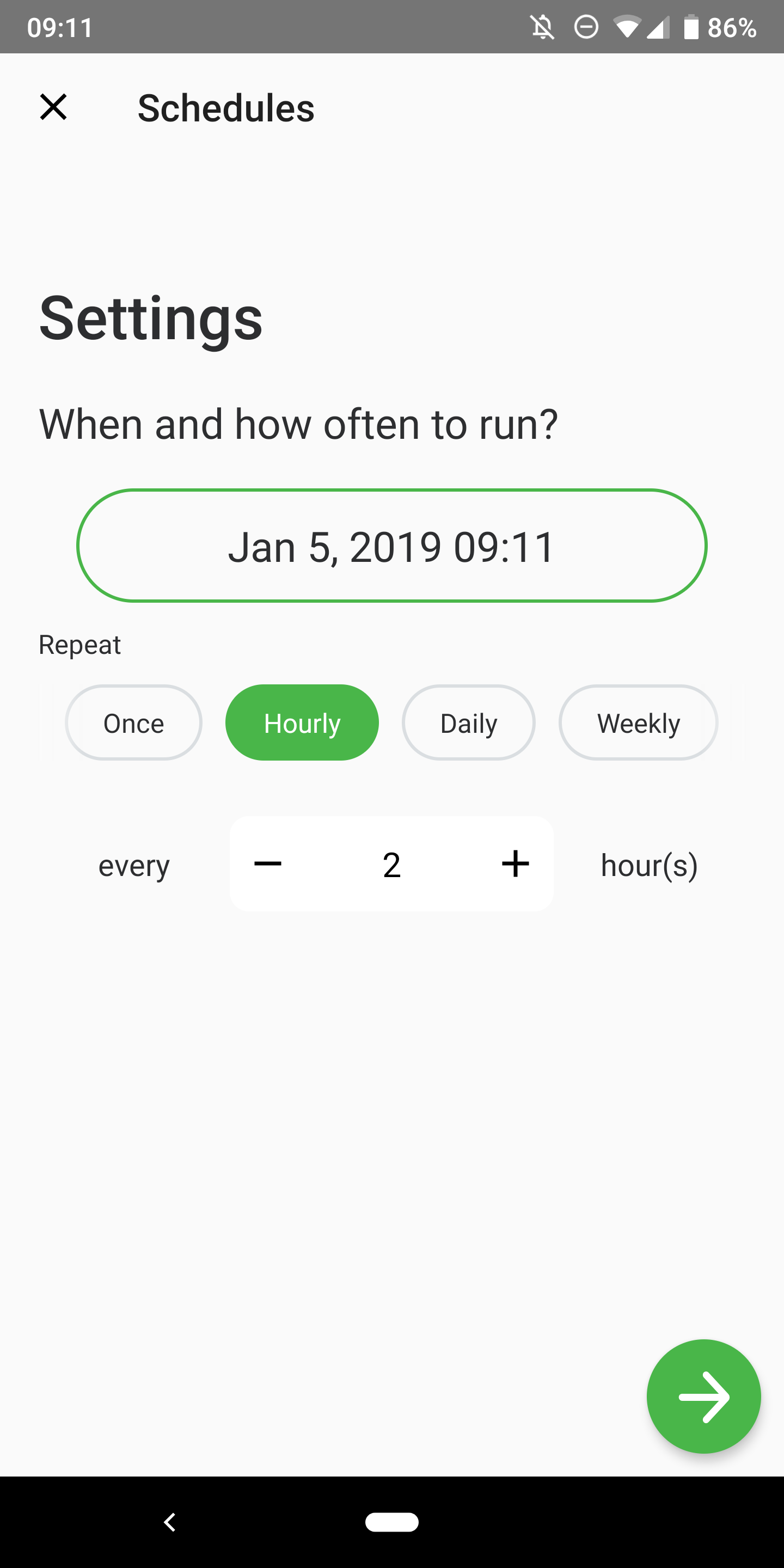
Making it your ownWhile the Canvas comes with its own shufflable scenes, and the app is full to the brim with preset scenes to download, you can also (easily) make your own. It takes some getting used to, but there’s everything you need from making your own color palette (with color wheel, RGB, and Hex pickers!), choosing any animation style you want, and modifying its speed, delay, and other features to suit you. Taking preset scenes and editing them to your liking is also possible, so there’s no need to start from scratch. SchedulesIf you want to automate your lights, the app lets you set schedules for the Canvas to turn on/off, pick a color or scene, set its brightness, and choose how quickly it fades in/out.
Smart home integrationsLike most of Nanoleaf’s products, Canvas works with Google Assistant, Amazon Alexa, Apple HomeKit, IFTTT, and there’s a developer portal with an open API and SDK.
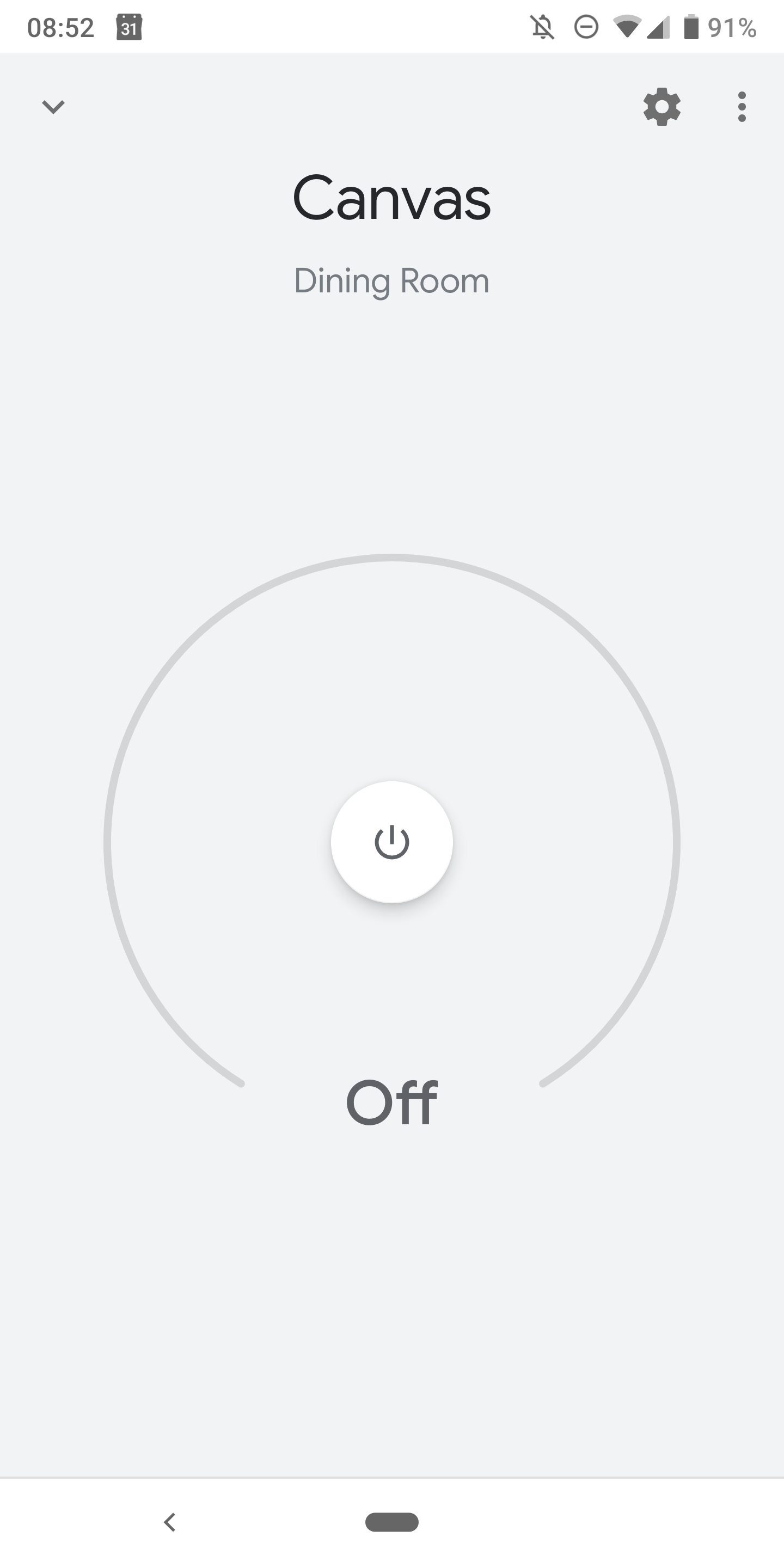
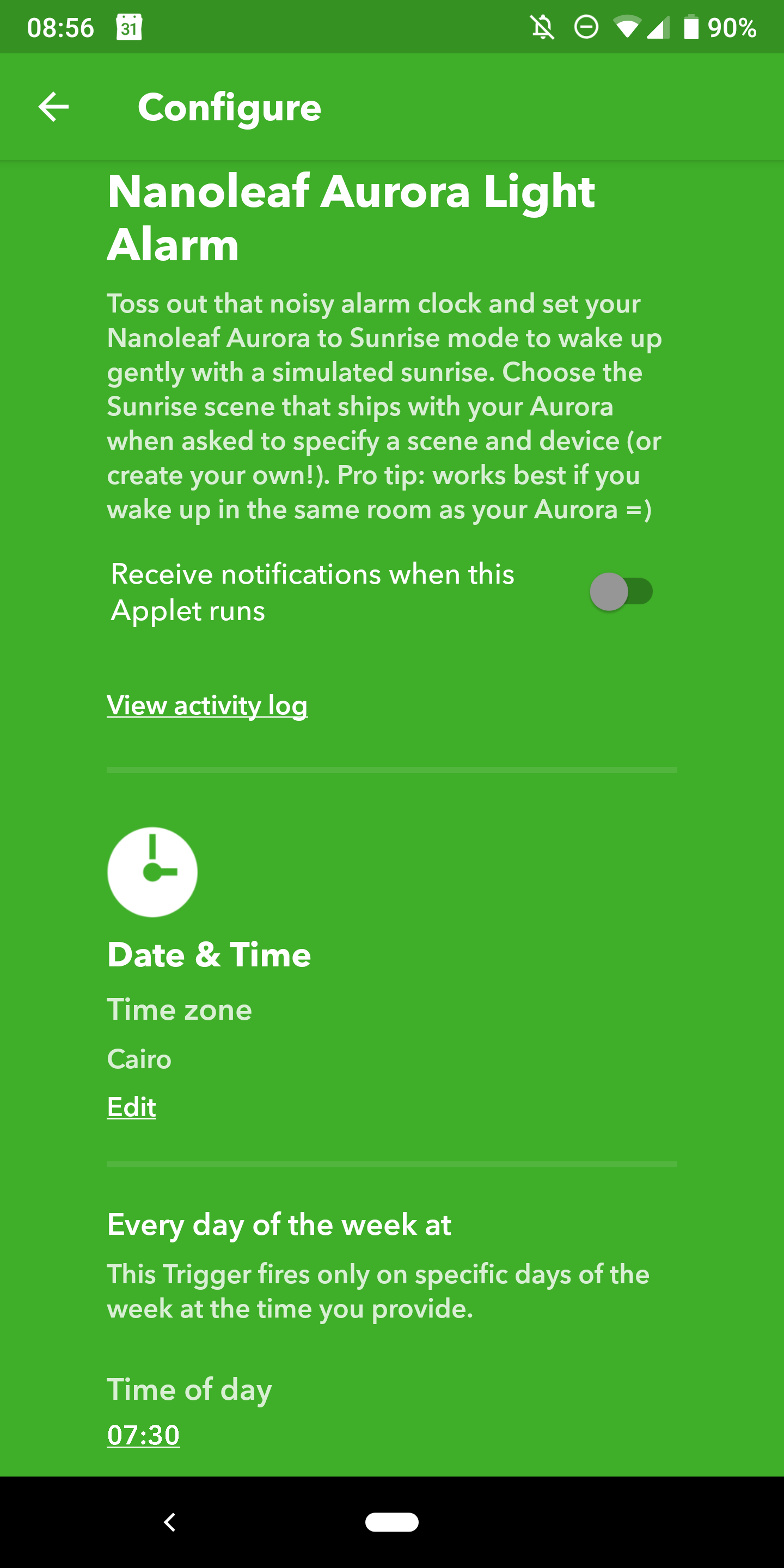
I tested the Google Assistant integration, which is thankfully much less cumbersome than last time I checked my Aurora. Only the Canvas will show in the Home app (as opposed to every scene you’ve added), and you can turn it on/off and control brightness with the app, but also use voice commands (list) to do so, plus set a color, ask about the state, and activate any scene you want. Simply saying “Hey Google, turn on Beach Waves” triggers the scene on the Canvas, without me having to specify the device or room name. IFTTT integration is also as powerful as ever. Pick any trigger you want (from time of day to your Nest camera) and you can set the Canvas to notify you with a specific color, turn on/off, change to a specific scene, brighten or dim, and more.
Should you buy it?Yes, if you can afford it. I’m under no illusion that the Canvas are expensive and probably not the first — or even tenth — smart light you might consider for your home. But if you think of them as digital wall art, and compare them to the excessive prices of a static painting, they become a little less crazy expensive. I’m not saying they’re in the same category as paintings, far from that, but they do fulfill the same(ish) need for decorating a wall. Plus, they are so, so, so, so cool.
Just like the Aurora, the Canvas are mesmerizing and show-stealers no matter where you install them in your house. I spent a couple of hours tinkering with the layout creator in the app, trying to find all the possible designs I could achieve with my 13 squares (original box + one expansion kit), emulating shapes and ideas. I even dreamed of the possibilities a 25-square setup would allow, then soon came back to reality and remembered we don’t have that kind of money or space to spare. When I decided on a layout, I spent another few hours testing various color and animation layouts, seeing what could be done, and picking some favorites. Then I turned on the Rhythm and all was lost… Between choosing music and corresponding scenes, my husband and I had an entire evening trying things, liking some, dismissing others, and just sitting there looking at the lights dance and switch with wide eyes and a silly smile. As for the games, I’ll be honest. I had an hour of fun playing them, but they’re not something I would seek out again. Children would love them, though, and you’re better off installing the Canvas high on a wall if you don’t want your kids to sit there all day playing whack-a-mole. For me, the Canvas’ only downsides are technical limitations more than real issues. First, bright colors are easy to get, but darker ones (especially black) are achieved by dimming and thus look faded and less vivid. Second, the designs are semi-permanent once they’re on your wall. You can’t easily change them, unless you decide to remove the tapes (and hope they don’t leave a trace) and get new ones to attach the squares in another place. My go-to solution is to get a white board to hang the Canvas on, to avoid the scary permanency of sticking them on my apartment’s walls.
My final takeaway is that there’s no question whether the Canvas are fun and awesome. However, I think the only question you want to ask yourself is whether to shell the $250 for it or go for the slightly cheaper Aurora Light Panels — Rhythm Edition for $230. In my mind, the advantages of the Canvas (less bulky cables, touch, buttons) more than justify the $20 difference, but the layouts allowed by the square design are less dynamic than the ones afforded by the triangles. It all comes down to what you want your design to look like. Buy if:
Don’t buy if:
Where to buyThe post Nanoleaf Canvas review: The funkiest smart lights get cooler, better appeared first on GuaripeteMagazine. |
| Posted: 05 Jan 2019 12:04 PM PST Welcome to the roundup of the best new Android applications that went live in the Play Store or were spotted by us in the previous two weeks or so. For today’s roundup, I have an awesome GitHub newsfeed app for discovering new and exciting repositories, an app that makes it possible to use your fingerprint reader to unlock Windows devices, and an ingenious translation app that’s perfect for translating different languages inside of foreign apps. So without further ado, here are the most notable Android apps released in the last two weeks. Please wait for this page to load in full in order to see the widgets, which include ratings and pricing info. Looking for the previous roundup editions? Find them here. Featured AppQuitNow! Quit smokingToday’s roundup is presented by QuitNow! A common tradition this time of year is to take up a New Year’s resolution to drop a bad habit, which is why it’s the perfect time to install QuitNow on your favorite Android device. As we all know, smoking cigarettes is bad for your health, and kicking the habit isn’t easy thanks to the addictive properties of the product. The QuitNow app is designed to encourage its users to quit smoking with attainable achievements, helpful statistics, and a friendly community of ex-smokers that have the know-how to help people through the difficult process of quitting. Pertinent information such as how many cigarettes you’ve avoided, how much money you’ve saved, and how many days you’ve been free of smoking are always available on the front page of the app. This way you’ll have a readily available reminder of just how much progress you’ve made in your fight to stay cigarette free. Download here: QuitNow!
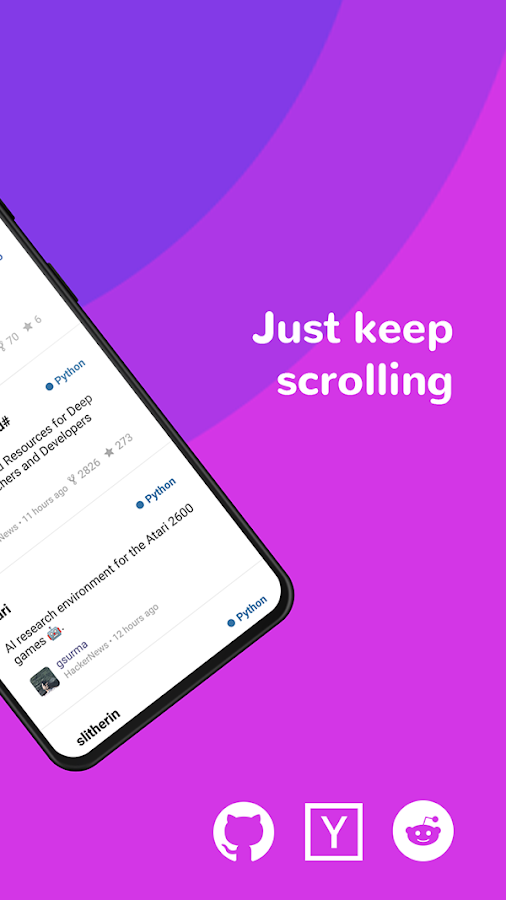
AppsGitNews — Trending repos from GitHub, HN & RedditGitNews is a useful newsfeed app for developers that would like to discover trending GitHub repositories. It offers an endless feed of GitHub repos that can be continually scrolled through, and it also provides sources from Reddit and Hacker News so that you can get your information in one place. The app is still pretty lightweight, which means there aren’t a ton of features yet, but if you’re looking for an easy way to discover some interesting repositories in your downtime, GitNews should fill that need perfectly. Monetization: free / no ads / IAPs $1.49 a piece
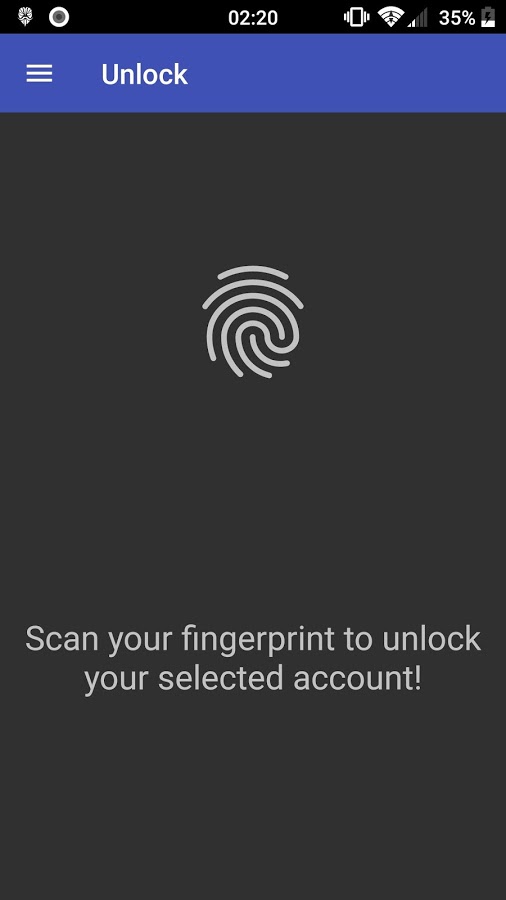
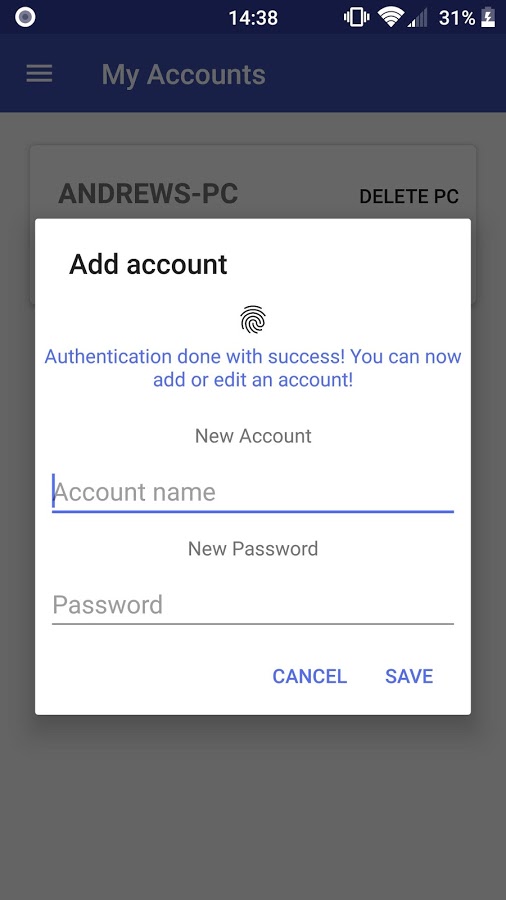
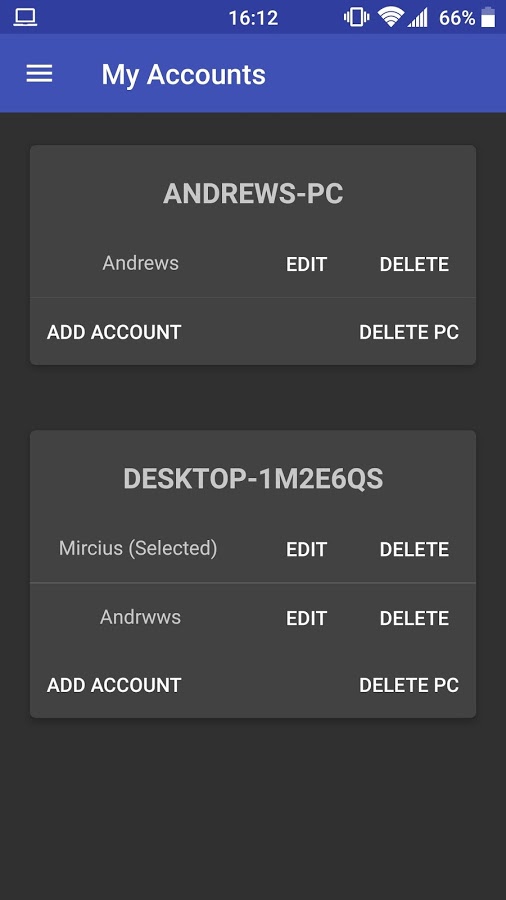
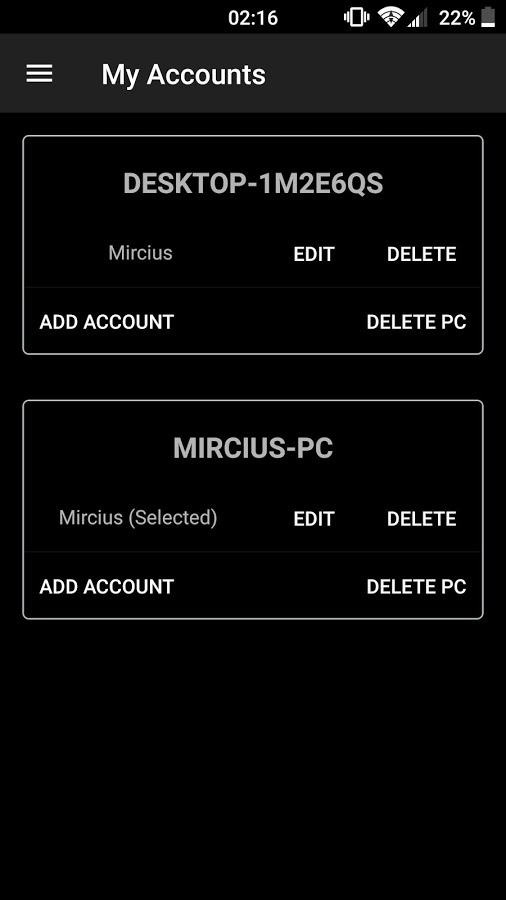
 Price: Free+ Remote Fingerprint UnlockThere are plenty of Android devices out there that contain fingerprint sensors, and Remote Fingerprint Unlock is a new app that makes it very easy to leverage their fingerprint reading capabilities to unlock your Windows PC. So if you’d like to set up an extra layer of security for your PC, Remote Fingerprint Unlock is an excellent solution. Monetization: free / contains ads / IAPs $1.99 a piece
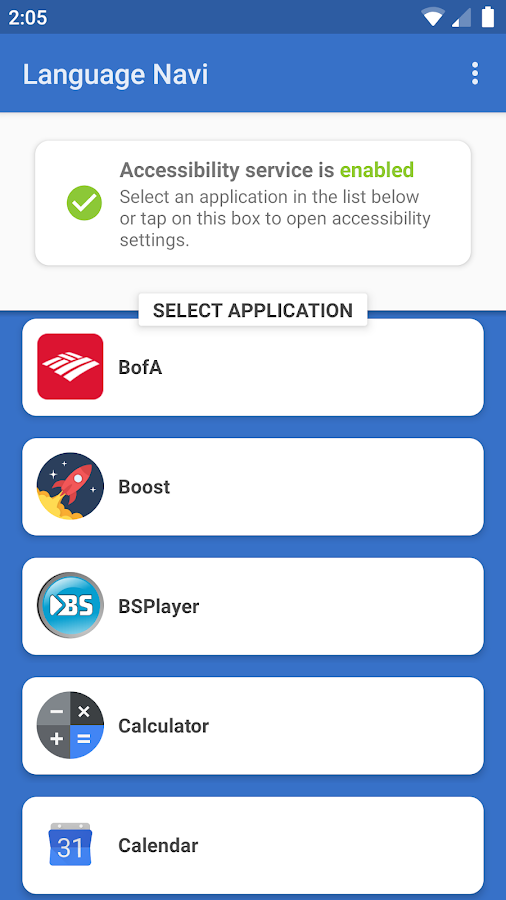
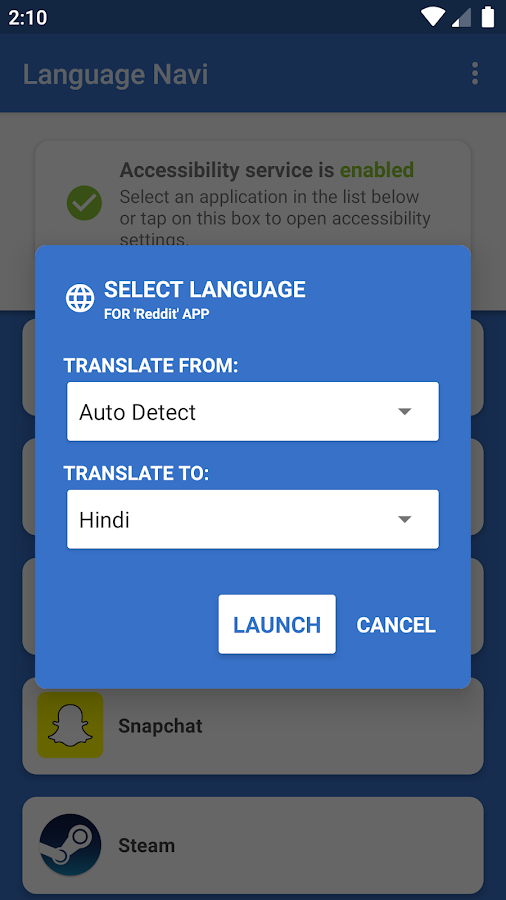
 Price: Free+ Language Navi is an ingenious app that can translate the text in foreign language apps into your native language. So say there’s an awesome app that you’d like to use that’s only available in Japanese. You can load up that app using Language Navi to superimpose English onto the Japanese text. This way you won’t have to waste time copying and pasting text from an app to Google Translate ever again. Monetization: free / contains ads / IAPs $2.99 a piece
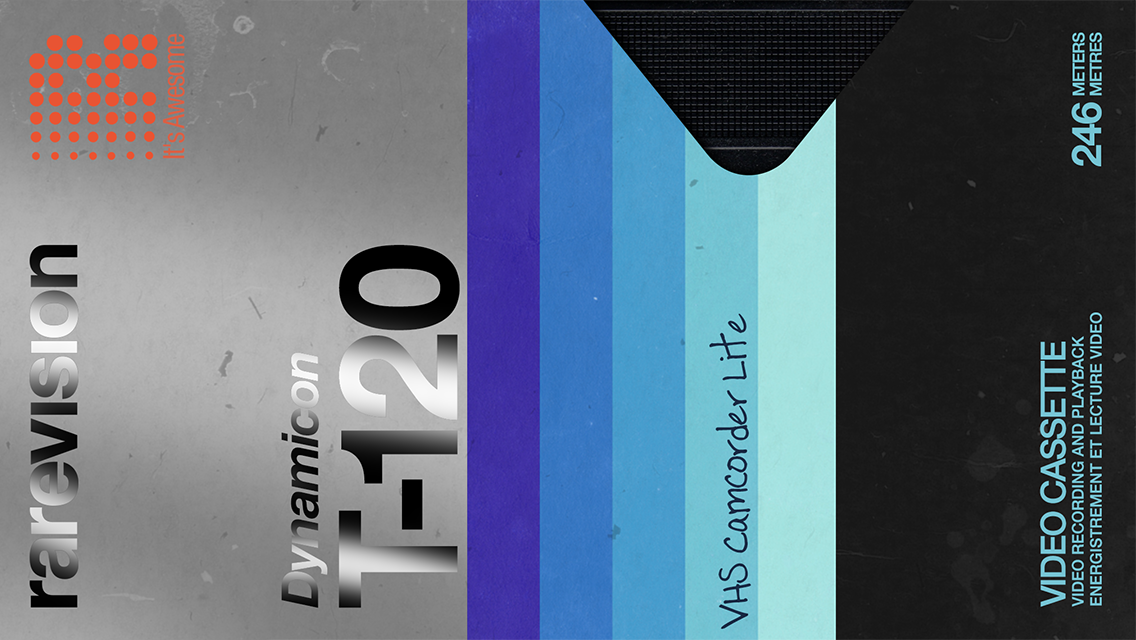
 Price: Free+ VHS Camcorder Lite (VHS Cam) Original VHS AppRarevision’s VHS Camcorder was released as a premium app back in 2016. It’s now three years later, and the developers have finally released a free version for those of you who’d like to check out the quirky video recorder without spending any money. So if you’ve ever wanted to create videos that look like they were recorded in the ’80s on a video cassette, then this is the app for you. Monetization: free / no ads / IAPs $3.99 a piece
 Price: Free+ Clip Cloud – Clipboard Sync between PC and AndroidClip Cloud is a nifty little app that will sync your clipboard between your PC and Android device. As an avid clipboard user that often refers back to earlier snippets, an app like this is a godsend since you’ll always have access to the entirety of your content from both your phone and PC. For anyone who often works away from their home PC that also takes advantage of their clipboard frequently, Clip Cloud can be a godsend. Monetization: free / no ads / IAPs from $0.99 – $4.99
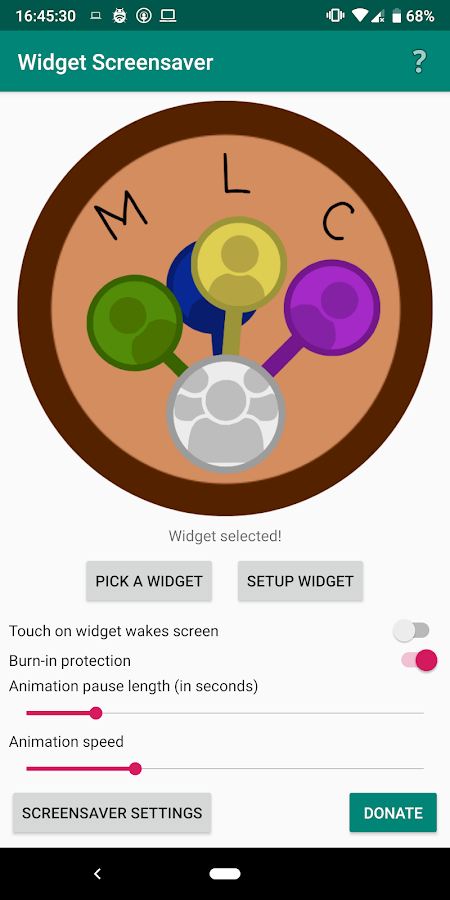
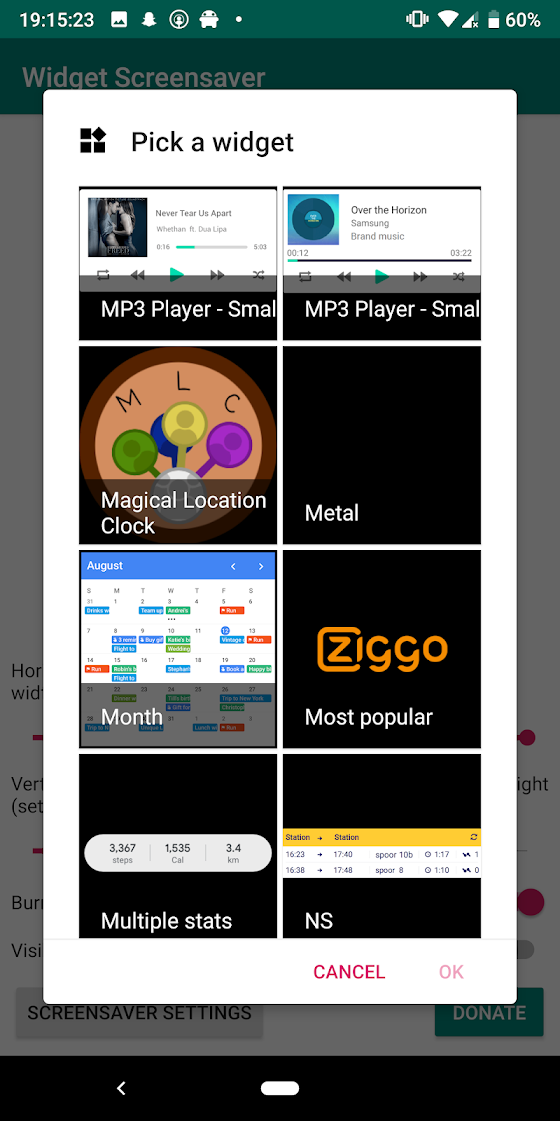
 Price: Free+ Widget ScreensaverJolan Rensen’s Widget Screensaver is an excellent tool for displaying your favorite widgets on your screensaver, and yes, the app does contain burn-in protection. It’s straightforward to set up. All you have to do is install the app, open it up, and choose whichever widget you’d like to display on your screensaver, then switch your screensaver over to Widget Screensaver, and you’re all set. Monetization: free / no ads / IAPs from $0.99 – $10.99
 Price: Free+ Lithodomos Explore – Travel Through History in VRLithodomos VR offers a wide swath of historical virtual reality apps, and its latest release collects a lot of that data into one easily browsed app. Lithodomos Explore allows the user to travel through history to discover all sorts of ancient civilizations. So if you’d like to see with your own eyes what it was like to live centuries ago, Lithodomos Explore is a solid choice. Monetization: free / no ads / IAPs from $1.99 – $35.99
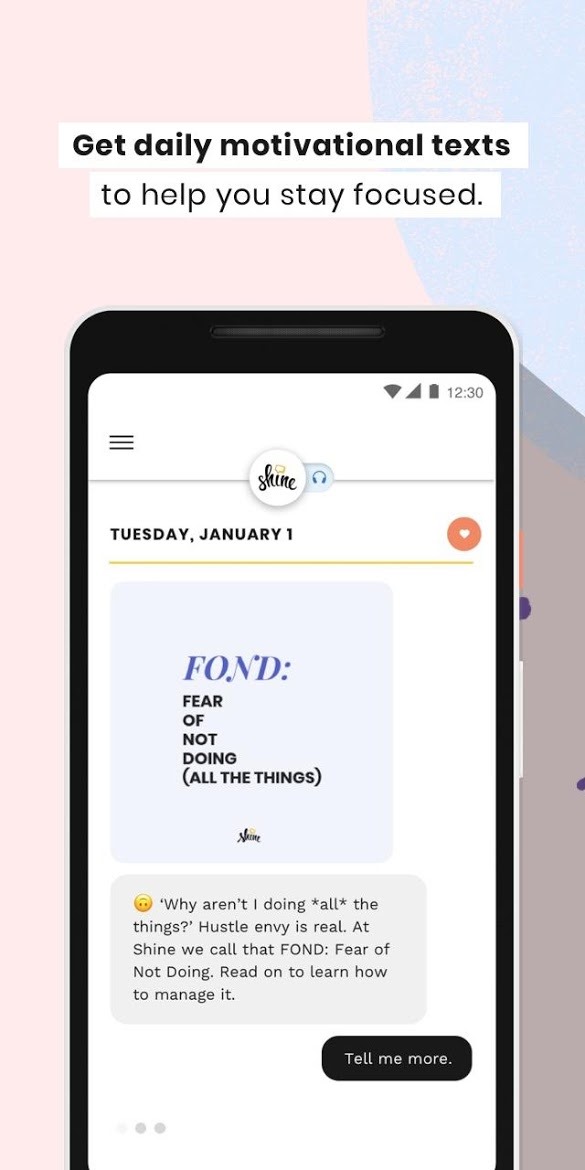
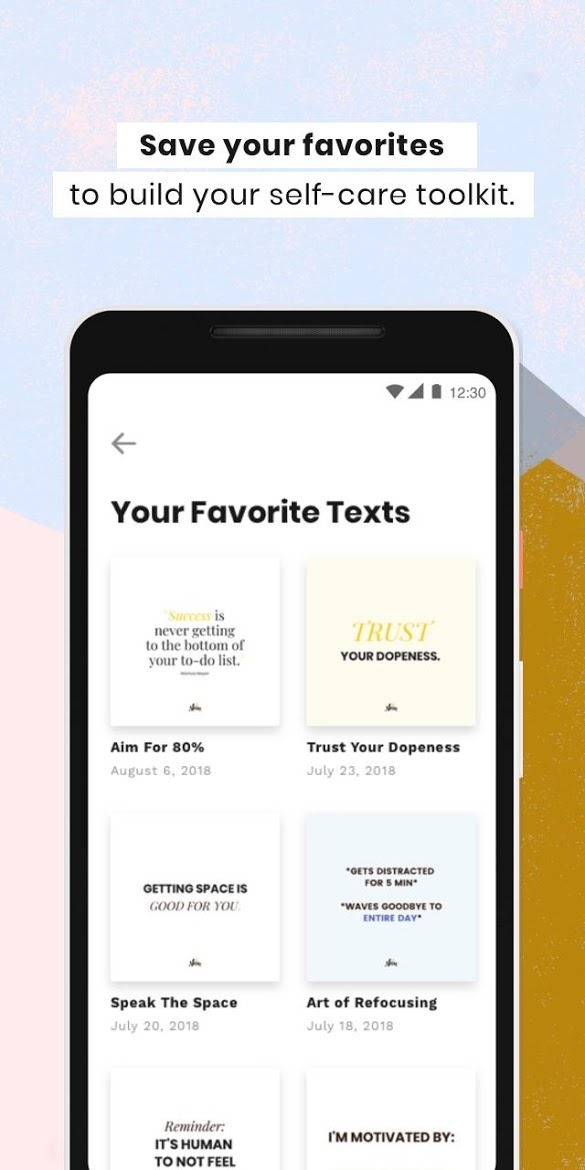
 Price: Free+ Shine – Self-Care & MeditationShine is a self-care and meditation app that comes in handy if you require encouragement for working on your goals. The app mainly functions as a personal pep talk assistant that’s always in your pocket. You can expect to find daily motivational texts as well as an extensive library of self-improvement audio. You can save these audio snippets in your favorites section so you can pull them up on demand anytime you need a little extra push to get a job done. Monetization: free / no ads / IAPs from $9.99 – $54.99
 Price: Free+ Guitar Play – Games & SongsGuitar Play is a new music app designed to help people learn how to play the guitar. Unlike similar apps, this title has gamified the training process. The included game mode makes it easy to acquire the necessary rhythm, timing, and coordination skills for playing the guitar. There are over forty popular songs to choose from that span many different styles and genres, so it should be easy enough to find something you enjoy playing while you learn. Monetization: free / contains ads / IAPs from $39.99 – $64.99
 Price: Free+ Super Bowl LIII Fan Mobile PassThe Super Bowl is almost here. There is only a month to go, and I’m sure the fans that can afford to go to the event physically are eager to see what’s in store. That’s where the Super Bowl LIII Fan Mobile Pass app comes in. It serves as a companion release for the event so that attendees can check in to certain activities, collect badges, and explore a few photos and videos. Fans can also check out the full list of scheduled events as well as peruse a detailed map. Monetization: free / contains ads / no IAPs
 Price: Free Know A Worthy New App? Let Us Know!If you have an application in mind for the next issue of the roundup, feel free to send us an email and let us know. Important: there are 2 requirements in order for the app to be considered, listed below.
Now, if and only if the above requirements have been satisfied, fire up an email to this address: [email protected]. 1 sponsored placement per week is available (your app would be featured at the top and marked as sponsored) – please contact us for details. The post 10 new and notable Android apps from the last two weeks including GitNews, Remote Fingerprint Unlock, and Language Navi (12/22/18 – 1/5/19) appeared first on GuaripeteMagazine. |
| Para masoquistas: esta versión de Tetris siempre te da la peor pieza posible Posted: 05 Jan 2019 12:04 PM PST Tetris, ya de por sí, no es un juego que apueste por la “amabilidad”. Tienes que estar muy concentrado si quieres hacer una buena puntuación y en cuestión de minutos la partida se habrá complicado muchísimo. De todos modos, esto es poco para Sam Hughes, el desarrollador detrás de Hatetris, una versión de este popular juego que siempre te dará la peor pieza posible en cada ocasión.  Una versión de Tetris en la que hacer 5 líneas ya es un éxitoSí, eso significa que (al menos de entrada) tendremos que enfrentarnos a decenas de bloques con forma de “S”. Por si fuera poco, una vez que una vez que hayamos aprendido a lidiar con este patrón nos sorprenderá con algo muchísimo peor. Uno de los puntos positivos de este juego es que han añadido una opción que permite reproducir de nuevo las partidas. Así, si has hecho una partida memorable, podrás presumir delante de tus amigos. Cuando estés acostumbrado a cierto patrón te sorprenderá con algo inabarcable Y si hablamos de hacer una partida memorable en Hatetris estamos hablando de hacer 10 líneas, ya que el propio Hughes “sólo” ha conseguido limpiar cinco líneas en una partida. Por ejemplo, en el siguiente vídeo de YouTube vemos lo complicado que es llegar a hacer 30 líneas en una partida (hay que hacer movimientos que en una “partida clásica” de Tetris serían un tanto impensables o atípicos). Será genial para aquellos jugadores expertos de Tetris que busquen un grado extra de dificultad, o si queremos gastarle una broma a alguien y ver cómo sufren intentando averiguar qué está pasando. The post Para masoquistas: esta versión de Tetris siempre te da la peor pieza posible appeared first on GuaripeteMagazine. |
| Google Chrome: display URL on tab mouse hover Posted: 05 Jan 2019 12:04 PM PST The Chrome browser displays the page title when Chrome users hover over tabs in the desktop version of the browser. While the information is sufficient at times, it may cause issues if sites use similar or identical page titles. Google introduced a new experimental feature in Chrome Canary and Chrome Developer recently that changes this. The feature adds the URL — more precisely a part of it — to the hover card. Chrome users who hover over a tab when the feature is enabled get the page title and the root domain the page is hosted on. The following screenshot highlights how this looks right now:
The feature is called Tab Hover Cards. It is available in Chrome Canary and Chrome Developer only at this point in time. To activate it, do the following:
The hostname is displayed when you hover over tabs after the restart. You may undo the change at any time by setting the experiment to disabled or default on the page mentioned above. How useful is it?Web browsers display different information when users hover on open tabs in the browser. Microsoft Edge displays a thumbnail of the content but no page title or URL, Firefox, Chrome, and Opera only the page title, and Vivaldi a thumbnail preview and page title. The adding of the hostname may be useful in certain situations, e.g. when it is not clear right away on which site a particular page is hosted on. The dual-line that is displayed as a card on hover takes up more space on the other hand. Users who move the mouse over the tab bar regularly may dislike that as it may cover up some part of the webpage. Chrome users who run Canary or Developer versions of the web browser can give this a try right now. Now You: Which information do you want to see when you hover over tabs? (via Deskmodder) Summary  Article Name Google Chrome: display URL on tab mouse hover Description Google introduced a new experimental feature in Chrome Canary and Chrome Developer recently that displays page title and domain on hover. Author Martin Brinkmann Publisher Ghacks Technology News Logo 
Advertisement The post Google Chrome: display URL on tab mouse hover appeared first on GuaripeteMagazine. |







































| You are subscribed to email updates from Software Trending News. To stop receiving these emails, you may unsubscribe now. | Email delivery powered by Google |
| Google, 1600 Amphitheatre Parkway, Mountain View, CA 94043, United States | |


No comments:
Post a Comment