Software Trending News – Guaripete | Online Store |
- Best Apps of the Week January 4, 2018
- Best Games of the Week January 4, 2018
- Mobile Royale Review
- T-Mobile Galaxy Note 9, Note 8 Get RCS Universal Profile 1.0 Support
- Podcast: CES HYPE, If That’s Possible
- Poor, Poor HTC
- Google hardware year in review: What worked, what didn’t, and what we want in 2019
- HTC’s revenue dropped to an all-time low in 2018, down 62% from 2017
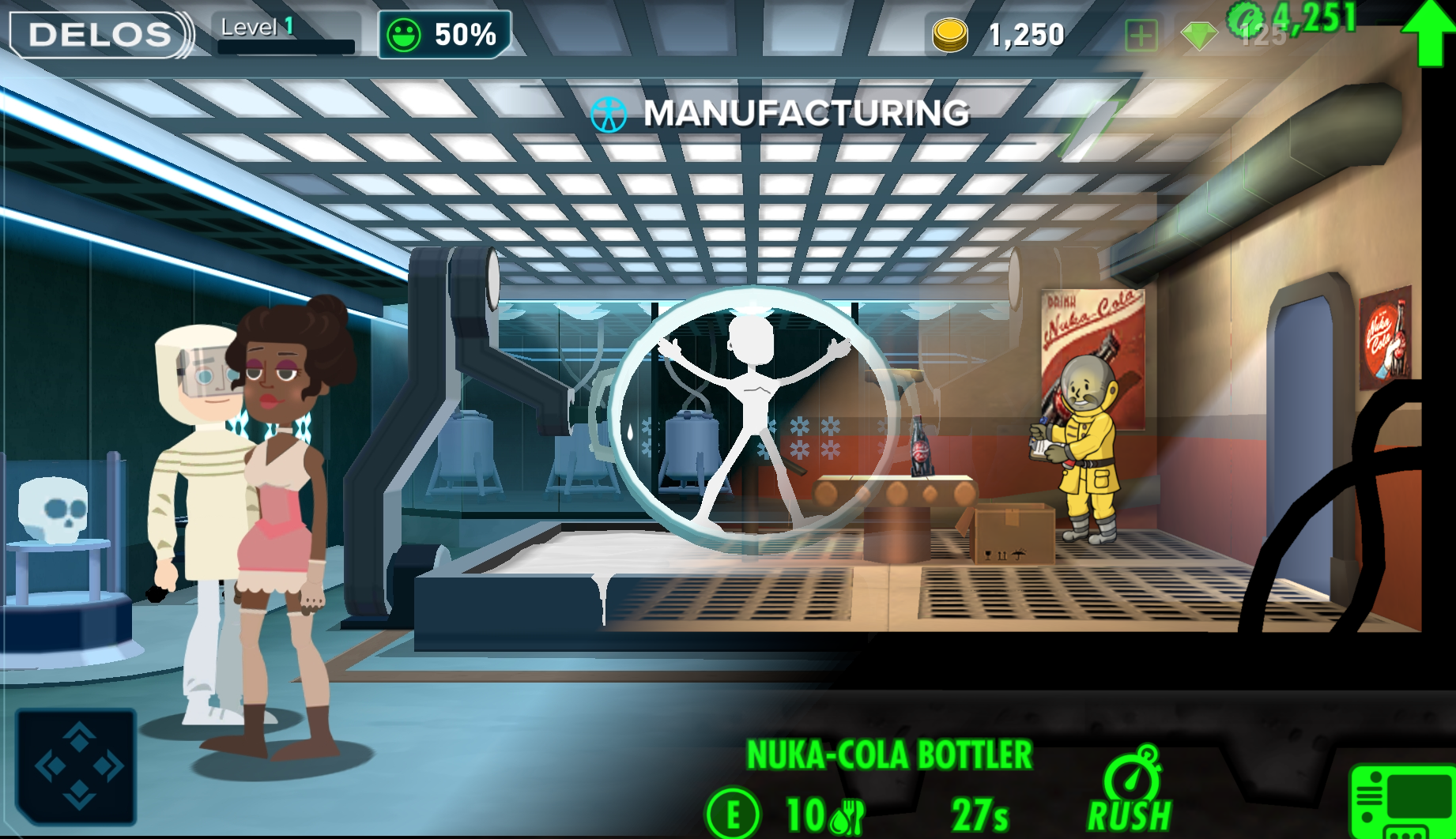
- [Update: Suit resolved] Bethesda lawsuit says Westworld game stole Fallout Shelter code, even has the same bugs
- Tilix 1.8.7 Released, Here’s How to Install it on Ubuntu
| Best Apps of the Week January 4, 2018 Posted: 04 Jan 2019 12:04 PM PST For proper use of this site, you need to enable javascript in your browser! We start 2019 off with a great list of apps to start your new year off right. Some of the best new apps this week include a planning app and nice way to help achieve your fitness goals.   Capsicum by Illuminated BitsIlluminated Bits LLC Be More Organized Taking inspiration from physical planners, Capsicum offers the ability to create multiple notebooks to help be more organized. Along with the ability co create notes, you can even see your schedule and check the weather forecast.  AR Magic CopyAndrea Pedretti Copy and Paste Magic Importing text from the real world to your iPhone is easy with AR Magic Copy. Just frame the text using the iPhone camera and then click Copy. The text can then be used by any app. ALSO |
| Best Games of the Week January 4, 2018 Posted: 04 Jan 2019 12:04 PM PST For proper use of this site, you need to enable javascript in your browser! The weekly new games of the App Store are officially underway for 2019. After the iTunes freeze, things are ramping back to normal with some great looking new games to check out.   Salary Man EscapeRed Accent Studios A Bleak Puzzler In the physics-based puzzler, you'll need to reorganize different bricks and platforms to help the title character escape each level.  HistoryFacesHF Games LLC The Faces of History As you could probably guess by the name, HistoryFaces makes use of more than 600 faces from history, everyone from the famous to the infamous.  Amazing Frog?FAYJU Frogs Gone Wild You'll be hopping around the UK town of Swindon as the titular frog and fly out of cannons, bounce on trampolines, and much more.  Music RacerAndrei Belkov Race to Your Own Music Your own iTunes music is a big part of Music Racer. The different songs will determine the shape, speed, and mood of each ride. There are many different levels and vehicles to select from. There are also four different game modes.  Kaiju RushLucky Kat Studios Kaiju Madness Kaiju Rush is all about destruction. Select your favorite monster and then start tapping to bash buildings.  Rows GardenRobert Bosch A Different Kind of Crossword In the unique crossword puzzle variant, you'll need to answer clues to fill in a fully-packed grid of triangular spaces. ALSO |
| Posted: 04 Jan 2019 12:04 PM PST As you'd expect from a studio with IGG's clout, Mobile Royale looks terrific, from the impressive introductory cut-scene featuring a Kratos-like warrior to your city, which is spread out across a lush cloud-draped mountainscape, giving you an impressive area to scroll around and zoom in and out of. The battles are distinctive in themselves. Rather than moving through stages with a party of heroes you engage in full scale battles, with rows of infantry charging up the screen in block formation. Before each battle you can examine your opponent's army to inform your own tactics. There are three different troop types, each effective against one of the others and relatively ineffective against another. Think rock-paper-scissors, with your three brigades hopefully outranking your enemy's. On top of that you get additional effects for sending more than one brigade of the same kind into battle. These include Shield Wall, Charge, and Barrage. Since three brigades is the maximum number you can send into battle, you have to go without a unit type if you want to make use of a bonus effect, lending the game an extra tactical dimension. You have a relatively high degree of control during battles, too. Each hero on the battlefield (you can have up to four) has a spirit bar that charges as you fight. One a bar is full you can unleash that hero's skill, aiming it by tapping and dragging. You can also choose when to deploy your dragon and, of course, your brigade effect. Naturally, you spend the many spoils of war on upgrading your city, buying new buildings and levelling them up. On top of that you need to summon and upgrade heroes, trade with other players, hunt monsters, occupy villages, and so on. There's always plenty to do in Mobile Royale. The mission system gives you a rational path through this abundance of activities, prompting you to do the things you need to do to keep your forces and your city ticking along and winning battles. All of that will be familiar to anyone who has played any one of the countless strategy MMOs that have hit the app stores in the last few years. Mobile Royale sticks to the formula in most regards, but it brings new features too, and The post Mobile Royale Review appeared first on GuaripeteMagazine. |
| T-Mobile Galaxy Note 9, Note 8 Get RCS Universal Profile 1.0 Support Posted: 04 Jan 2019 12:04 PM PST  T-Mobile updated its Advanced Messaging support page today, the same page that lists out details for RCS Universal Profile 1.0, the messaging standard that may one day be the future of messaging on your phone. In the update, they provided a list of supported devices, two of which had not previously been mentioned as gaining RCS Universal Profile 1.0 support on T-Mobile. The Samsung Galaxy Note 8 and Galaxy Note 9 are now list as being supported with RCS Universal Profile 1.0. They join the Galaxy S7 and S7 Edge, which were the first two devices to gain support, as well as the Galaxy S8, Galaxy S8+, and Galaxy S8 Active. The S8 line picked up support at the end of October through a software update. We reached out to T-Mobile to confirm and they said that the "devices listed all support RCS Universal Profile 1.0." I'm assuming the Note 9 and Note 8 will still need a software update to enable it, but if they are listing them as supported, it should arrive shortly. What is RCS Universal Profile 1.0? Read this. This too. // T-Mobile The post T-Mobile Galaxy Note 9, Note 8 Get RCS Universal Profile 1.0 Support appeared first on GuaripeteMagazine. |
| Podcast: CES HYPE, If That’s Possible Posted: 04 Jan 2019 12:04 PM PST  On this episode of the Droid Life Show, we're catching up after a much-needed holiday break and that means it's CES time. Yes, CES, the Vegas tech conference we aren't sure why we go to every year, is back! Let's preview it some before diving into other topics. Outside of the CES stuff, we want to talk about the first big Galaxy S10 image leak, what's new in Google products, what Essential is up to, when your phone is getting Pie, the first 5G speedtests from AT&T, and more! Trivia is back too! We'll be live at 12:00PM Pacific (3PM Eastern). The post Podcast: CES HYPE, If That's Possible appeared first on GuaripeteMagazine. |
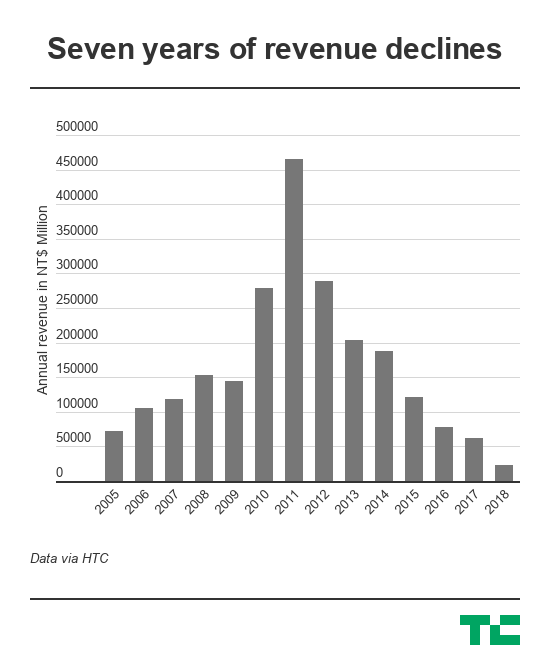
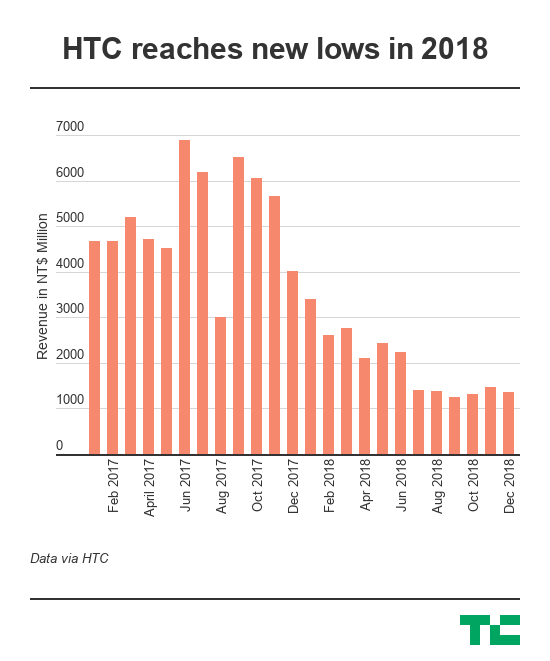
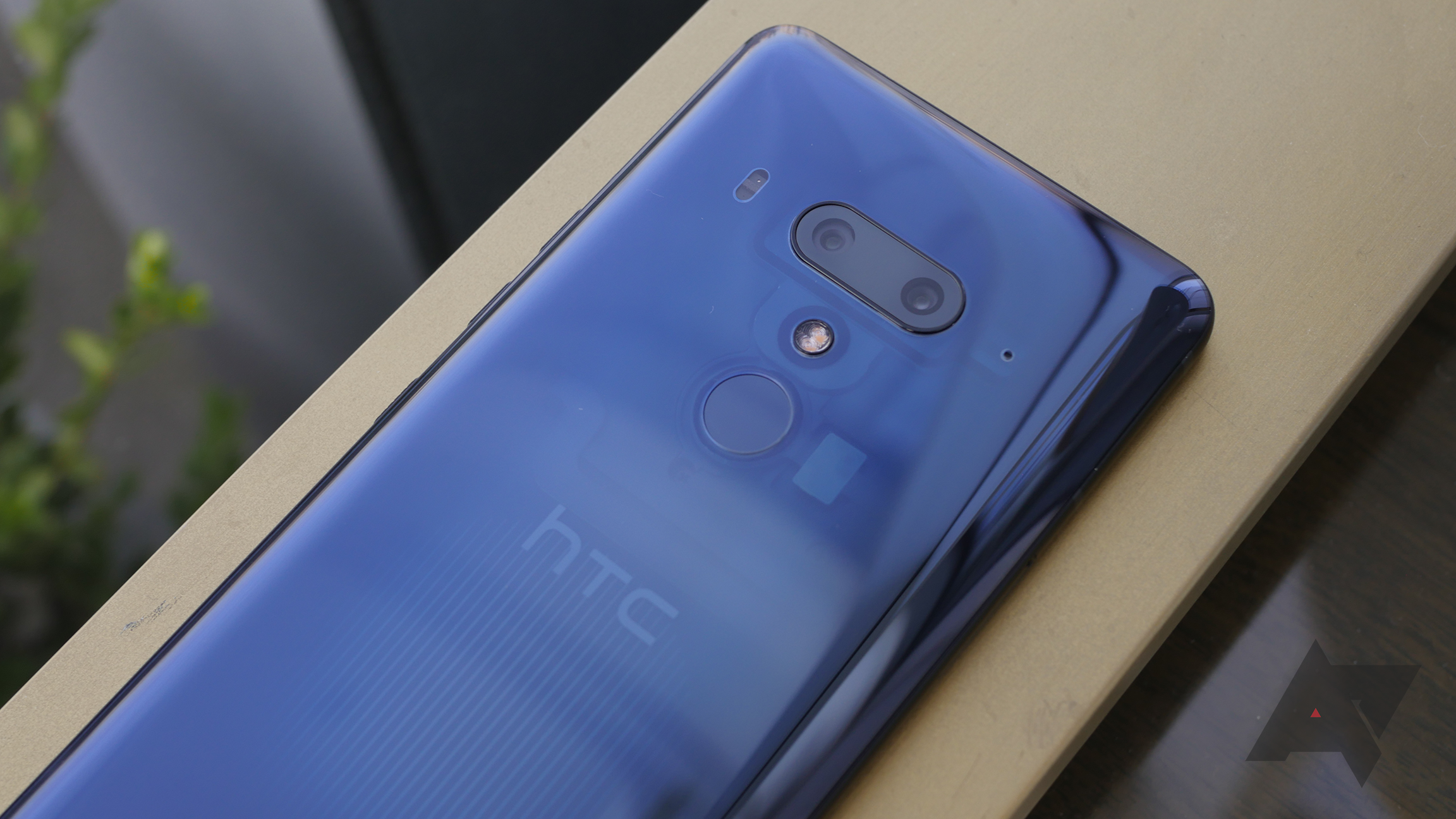
| Posted: 04 Jan 2019 12:04 PM PST  If there is a company out there in dire need of a New Year, New Me campaign, it's HTC. Monthly revenue data for 2018 is now public, with most of the industry shaking its head and wondering how this company keeps the lights on. For numbers, I'll give you just a few to paint a startling picture. In total, HTC brought in just 23.74 billion TWD ($770 million) in revenue over the entire year. According to TechCrunch, that's the first time it has grossed less than $1 billion during a year as a public company. And compared to 2017, that's a massive 62% drop, further confirming that we're a long way from when HTC was one of the hottest smartphone makers on the planet. Total loss for 2018 is not yet known, but when the last three quarterly reports are combined, a total operating loss of 11.13 billion TWD ($361 million) is what you're left with, with one more quarter to add. Words aren't doing it for you? How about two charts, courtesy of TechCrunch. The one on the left shows revenue levels dating back to 2005, while the chart on the right shows monthly revenue levels back to February, 2017.
To put HTC's fall into perspective, it made more money during a single month in 2013 than it did the entire calendar year of 2018. Needless to say, I don't think we'll be writing anymore "I'm excited for HTC" posts for a while. // TechCrunch The post Poor, Poor HTC appeared first on GuaripeteMagazine. |
| Google hardware year in review: What worked, what didn’t, and what we want in 2019 Posted: 04 Jan 2019 12:04 PM PST Google's hardware division is a rare success story inside a remarkably successful company – and one that has taken the better part of a decade to meet that definition. Its ambitions in the physical product space have grown from a geeky internet sideshow into a full-scale retail assault, and 2018 saw that ascendance continue. For all the naysayers it's had – and there have been many – Google continues to position its hardware portfolio exactly where it needs to be: in stores. Chromecasts and Home Minis litter hundreds of Walmarts, Targets, and Best Buys, and Pixel smartphones are in Verizon locations across the country. Based on analyst estimates, that hardware is also becoming a moneymaker – Google reportedly took in $3 billion in profit from the division this year. If Rick Osterloh was getting a report card for his leadership from a business standpoint, he'd undoubtedly be an 'A' student. But more material to us as consumers are the products themselves, and while 2018 certainly won't go down as a "bad" year for Google hardware, it definitely exposed a few areas where the company does need to improve. Home Hub is brilliant, but the standard Home really needs an update
The Google Home Hub is a hit, full stop. It's the digital picture frame we always wanted, but never actually liked because of their cost, impracticality, and limited usefulness. The Home Hub is the world's best digital picture frame, and you can use it for things like playing music, setting an alarm, or if you're more ambitious, controlling smart devices in your home. It's the home control center of the future that has been so long imagined, realized. And since Google Photos is so insanely popular, it's simple to get all your pictures on it right out of the box. Google is going to sell a boatload of them, and I fully expect Home Hub to displace the standard Home in terms of sales in 2019.
Speaking of, the standard Home feels increasingly shortchanged in Google's lineup. The Home Hub and Mini are available in four colors. The regular Home is available in… one. I strongly suspect this is an issue with it being the only Home product which has a plastic housing over its LED ring, making colors other than white potentially difficult to pull off without compromising the look of the lights. My guess is that we'll see a refreshed version of the Home in 2019 with a new fabric-forward aesthetic that will allow Google to produce it in the same four colors it does the Home Mini and Hub. Google also could do with an audio-focused speaker that doesn't cost $400. Amazon has this formula right with the new Echo 2nd Gen and Echo Plus, with the latter offering a better sonic experience without the need for expansive counter space (or the budget to match). The standard Home is perpetually "discounted" to $80 at this point, making for a $320 upgrade chasm in the lineup – it really needs to be bridged. A slightly bigger, beefier Home with more audio oomph would be a welcome addition to the family. The ability to pair them in stereo like you can with the Max would be icing on the cake. Chromecast needs an interface and a remote
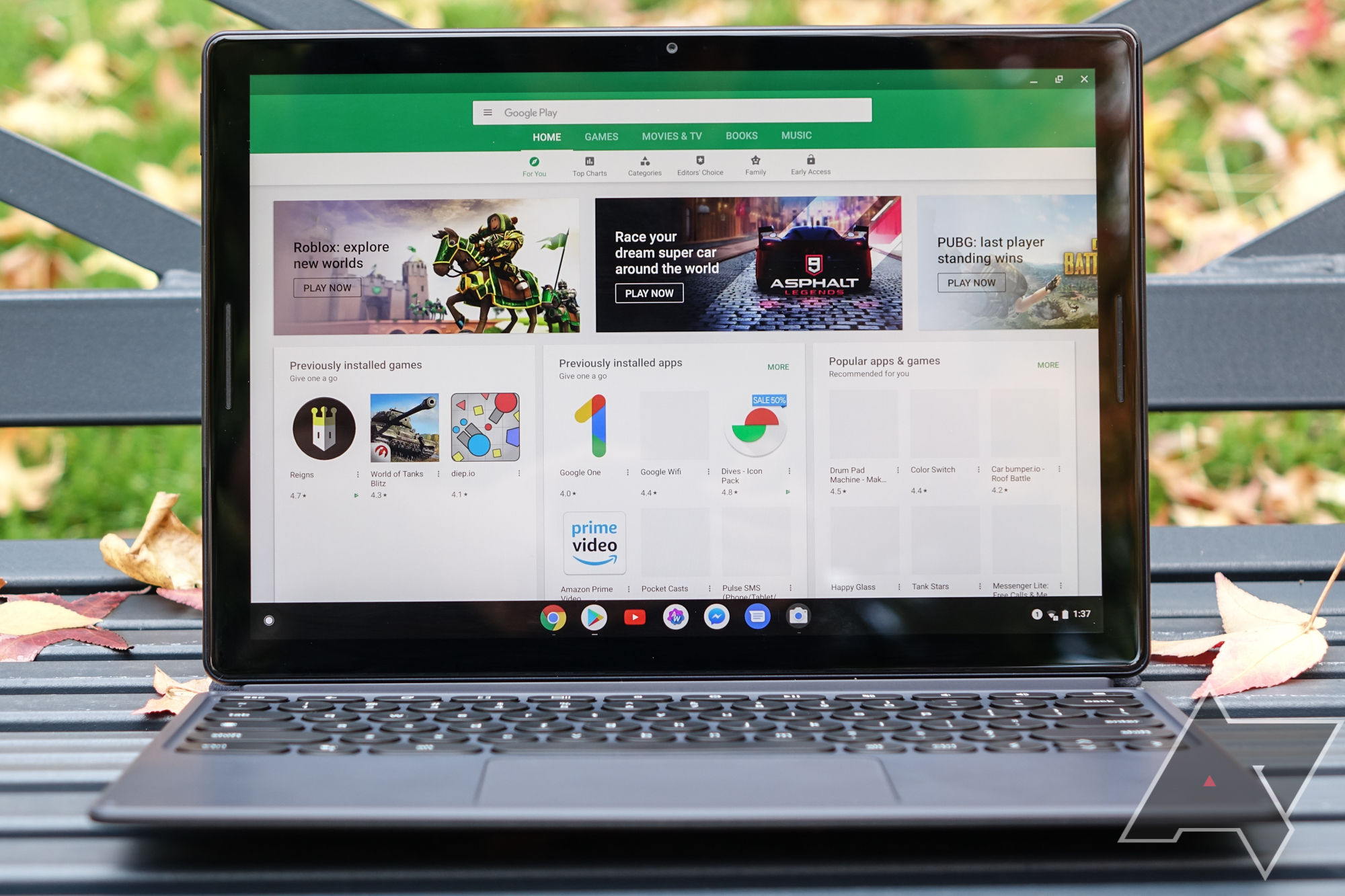
Android TV boxes have failed to penetrate the market in a meaningful way. Chromecast continues to be very successful, but with products from Amazon and Roku offering full smart TV interfaces and remotes for similar prices, it's really starting to feel outclassed. 2019 should be the year we finally get a simple interface and a real remote control for Chromecast. Cable set-top boxes and smart TVs aren't the answer we want, and it's clear that innovation on Chromecast is being stifled specifically because Google wants Android TV to succeed, and a smarter Chromecast could undermine that. That's the kind of backward logic I'd expect of Google five years ago, but in 2018, it really should know a hell of a lot better. If it means an Android TV dongle branded as Chromecast Plus or something, fine! But Google is in serious danger of losing its foothold in the smart TV space if it doesn't do something to get Chromecast back in the running. The Pixel Slate is a total flop, but it should still be fixedGoogle's attempt to replicate the success of the iPad Pro and Microsoft Surface Pro was met with a critical thud, and as I said in our review, there's simply no good reason to buy one. The Slate is all but guaranteed to sell poorly, with ridiculous pricing and a confusing number of SKUs, ranging from $600 for a bare bones tablet with a crappy Celeron processor to nearly $2000 for a fully-loaded Intel Core i7 model with a keyboard and stylus. The Slate will likely be the target of much analysis from the hardware team’s leadership going into 2019 – but I sincerely hope the Google doubles down for a second generation product instead of getting cold feet and giving up on it entirely. Here's the thing: the Slate was doomed to be a half-baked product. Google really had no idea how a Chrome tablet would be received – that much is clear – but learning from its mistakes with the Slate will provide an immensely improved successor.
The Slate's keyboard folio case is a complete disaster, with its one saving grace being a semblance of typing feel (the Pixelbook is still leagues better). It should be scrapped in favor of a new hinged design (the 3rd party Brydge keyboard is simply not great). The tablet's rear camera is an atrocity, but that aside, the actual hardware seems fundamentally very good. The fingerprint scanner is fast, the display is amazing, and the front-facing speakers are fantastic. Battery life is excellent, and the Pixel Slate makes an excellent tablet for watching video. Why, then, is it getting panned so badly? The answer is Chrome OS. Chrome OS wasn't built to be a platform for tablets, and the sorry state of Android app support makes that even clearer. While the Slate can handle the kinds of things a child would like to do on a tablet – and Chrome OS has robust parental controls – it falls incredibly flat when you actually use it for the one thing Google says it was designed for: experiencing the "full" web on a touch device.
The Chrome team needs to find a middle ground between the blown-up phone browsing experience of the iPad, with its intuitive controls and unflappable touch response, and the incredibly point-and-click world Chrome to date has lived in. It should start by looking across the room – at the mobile version of Chrome. Until the Pixel Slate feels as nice to browse the web on as an iPad, its other advantages are essentially moot. This is supposed to be an OS built on a browser, but the browser is often the worst part of using the Slate (as a tablet). That's not good. It's time for a Pixelbook “Pro”
I absolutely adore the Pixelbook. It's my primary laptop, and despite a few shortcomings, it's the one computing product I've owned that I feel totally confident recommending to just about anyone who asks. No, it doesn't run Windows apps, and no, you can't edit video on it. Neither of those things matters to me, and possibly-impending support for dual booting could finally end that inane conversation we're forced to have any time the platform is mentioned. Chrome OS is a grown-up laptop platform, and the Pixelbook is the most grown-up laptop you can run it on. It's time to acknowledge that laptops aren't a one-size-fits-all product, though, and split the lineup into an ultraportable and a larger "pro" level machine. The $1650 i7 Pixelbook has been a silly product since it launched, and it's still silly now: none of Intel's fanless Y series chips are appreciably better than the other, and the m3 model is all anyone really needs. The ultraportable Pixelbook should have two SKUs: one with 128GB of storage and 8GB of RAM, and one which doubles both those figures. That's it. A larger, thicker laptop – perhaps in the 14" range – with a fan-cooled U series Intel chip (meaning four physical cores) and ultra-quick NVMe storage should serve as the professional platform for those who demand the additional performance, like developers and multimedia types. This will free up the smaller Pixelbook to focus on packaging and portability, while the larger pro model can simply refresh its guts every year to include the latest parts. The Pixel 3 played it safe – maybe too safe (also, bugs)
I use the Pixel 3 XL every day – it's an extremely good smartphone. The camera is fantastic (the wide angle selfie blows minds), it's incredibly smooth, and the display is great. I happily recommend it to anyone looking for a phone, especially if they're considering switching from an iPhone. But even as good as it is, the Pixel 3 really isn't the Google phone I wanted to see in 2018. A Google-developed take on Face ID using machine learning is desperately needed to jumpstart the Android ecosystem back into competitiveness with Apple on biometrics. And leaving out a second rear camera for enhanced zoom just feels like stubbornness on Google's part. Yes, we get it: the Pixel has the best digital zoom on any smartphone, ever! But a second camera would provide those amazing Pixel results without all the drawbacks digital zoom entails. Meanwhile, chances to catch up to other phonemakers or leapfrog them were squandered. The OnePlus 6T – a phone costing far less – has a much larger battery than the 3 XL. It also charges far more quickly, and using Bluetooth on it doesn't actively make me want to tear my hair out.
And, of course, there are the bugs. While the very worst of the Pixel 3's various issues seem to have been resolved with the December patch, the number of issues at launch on Google's phones remains legitimately embarrassing. Just run a search of AP for 'pixel 3 bug' and you'll see probably twenty separate articles we've written on distinct bugs and issues, and we don't even cover all of the ones we discover (it would simply get annoying). It does seem Google has improved on hardware QA, as we've received almost no reports of defective phones this year, but the software is still shockingly buggy at launch for the company that literally makes Android. The Pixel 4 and 4 XL must up the game on battery life (the standard 3's is legitimately disappointing), ship with more polished software, and integrate a second rear camera for more photography flexibility. Going with a single lens just to make a point about fancy digital zoom processing is peak Google: reinventing the wheel when all we needed was… a second wheel. The Pixel 3 Lite really makes no damn senseSince the first Pixel phone launched in 2016, Google's phone hardware has been all about premium. You paid a premium for fast and regular updates, good components (usually), and unfettered Android. The Pixel 3 and 3 XL cost $800 and $900, respectively, at full retail in the US (though they've gone on discount constantly). Then all these leaks showing off a Pixel 3 and 3 XL "Lite" came out of nowhere, and it very much looks like Google plans to launch them in the US early next year.
It's hard to imagine a compelling marketing story for these phones, which are almost certain to be outclassed by cheaper or more powerful unlocked handsets globally. This is less of a problem in the US: the OnePlus 6T really is the only Android game in town in the $400-600 range here, and it's only sold on T-Mobile. The cheaper Pixels will be sold on Verizon (and likely Google Fi), which essentially puts them in competition first and foremost with older iPhone models and last year's Samsung and LG flagships. Google's bet here, I believe, is that by announcing close to the launch of Samsung's Galaxy S phones, it can piggyback on a particular group of customers: those who are interested in upgrading to the latest and greatest, but are put off by the rising cost of doing so. Offering a newly-released Pixel with all the requisite "perks" – unlimited photo storage, a great camera, no bloatware – at a price more in line with a smartphone that's a year or two old could prove compelling. But even I still think it's a longshot. Google will be fighting for attention in what has long been dubbed the smartphone "no man's land" in the US, and while I do think these phones will get glowing reviews, I'm not sure any significant group of consumers is going to care. The US smartphone market continues to be be skewed heavily toward the top and bottom ends of the MSRP range, with lots of very cheap phones and lots of very expensive ones, but very few in between. I don't know that there's a real strong interest among mainstream consumers – not to be confused with commenters on an Android blog – for a product in the middle. 2018's theme was growth, 2019's should be renewed leadershipGoogle did a lot of the right things in 2018 to ensure its hardware business kept growing. And in one area – smart displays – Google took the market by storm. The Home Hub is a game-changer in the way the Echo was for smart speakers, and I strongly suspect it will see huge success through word-of-mouth marketing, similar to what Chromecast started five years ago. But it was definitely the exception to the rule, not the broader theme. The Pixel Slate is a brilliant product from a hardware perspective, but its software and positioning in the market all but assure it will fail to woo consumers in meaningful numbers. The Pixel 3 and 3 XL will probably sell well, but they were exceptionally iterative as products, and don't deserve special recognition as milestones in Google's greater hardware history.
In 2019, Google needs to focus on bringing Nest into the larger Google fold (an all-in-one Nest/Google One plan would be nice), redouble its efforts on the smart TV with a premium Chromecast, and be more daring with its fourth-generation Pixel smartphones. Expanding the lineup for the Pixelbook in the form of a premium professional notebook and for Google Home by segmenting into a basic and a premium audio product will help cement Google's leadership in the Chromebook and smart speaker spaces. Will all these things happen? Almost certainly not. And the fact that we have so many kinds of hardware to discuss is, perhaps, most telling: the company is succeeding and growing. But so are its competitors, many of which have years of experience that Google lacks. As its hardware business evolves from a "side bet" into a full-fledged division, Google would do well to remember that a willingness to tear an idea down and start all over again – Chromecast, Chromebooks, and Android itself being perfect examples – is what got it here. With that in mind, perhaps the next idea due for an appointment at the innovation chopping block should be the smartwatch – and a certain smartwatch platform.
The post Google hardware year in review: What worked, what didn’t, and what we want in 2019 appeared first on GuaripeteMagazine. |
| HTC’s revenue dropped to an all-time low in 2018, down 62% from 2017 Posted: 04 Jan 2019 12:04 PM PST
I don’t need to tell you that HTC is in dire financial straits, but I’m still going to tell you how dire because wow. HTC just released its year-end 2018 numbers, and things are looking bleak. HTC took in just 23.74 billion TWD ($770 million) during 2018, the lowest in all its years as a public company. HTC’s December 2018 revenue clocked in at 1.3 billion TWD, the second lowest month in 2018. That’s a month when most device makers see a sales uptick. In fact, HTC’s revenues have dropped progressively throughout 2018 with the full year coming to 61.78% lower than 2017. We don’t even know the full extent of the damage because HTC has yet to confirm how much it lost—we’re only talking about revenue right now. Across the first three quarters of 2018, HTC bled 11.13 billion TWD ($361 million). If we assume the fourth quarter was at least as bad for the bottom line, HTC is looking at around $450 million in losses for 2018.
There were rumors a year ago that Google would acquire HTC, but the company ended up just buying out HTC’s Pixel team for $1.1 billion. It went on to fire about 1,500 workers over the summer. It’s hard to see any way out for HTC. It has been losing money quarter after quarter for years, and the smartphone market is beginning to plateau. Samsung and Apple continue to dominate high-end phones, and ascendant Chinese brands like Xioami and Huawei are gobbling up much of what’s left. It seems like only a matter of time before HTC collapses, and no smartphone reboot is going to save it. The post HTC’s revenue dropped to an all-time low in 2018, down 62% from 2017 appeared first on GuaripeteMagazine. |
| Posted: 04 Jan 2019 12:04 PM PST
Westworld Mobile landed on Android a mere two days ago, and at the time pretty much everyone remarked that the game was very similar to Fallout Shelter. Turns out, it might have a bit too much in common with that game, as Bethesda is suing Warner Bros. and Behavior Interactive, the developers contracted to make Fallout Shelter for Bethesda. Apparently, WB hired Behavior to make Westworld, and Bethesda alleges some of the IP used in the recent game’s creation stems from previous work on Fallout Shelter. It even has some pretty damning evidence. According to the filing, the Westworld game includes a telling bug, with the document stating that “the identical problem appeared in initial versions of FALLOUT SHELTER but was addressed before FALLOUT SHELTER was released to the public.” Bethesda believes that is an indication that the games were developed from the same source code. Other similarities including interface actions, similar animations when zooming and panning, and unique geometry features are also noted in the filing. In itself that re-use of code might not be a problem (even if it’s a bit disingenuous), but Bethesda also states that Behavior was under an exclusive contract for the work it previously did, with Bethesda as the owner of any and all IP related to the game. That would mean any re-use of that code for Warner Brothers is a violation of that contract and an infringement of Bethesda’s intellectual property per the terms of that contract. The suit was filed yesterday in US District Court for the District of Maryland, and among other monetary claims for relief, Bethesda is seeking for the Westworld game to be removed from distribution. Bethesda is suing for breach of contract, copyright infringement, unfair competition, and misappropriation of trade secrets. It seems to be the season for game-related lawsuits, but in the case of Bethesda vs. Warner Bros. & Behavior Interactive, there’s a more substantial argument to be made than mere gameplay duplication. If there’s any merit to the arguments being made in Bethesda’s filing—and an examination of the codebase could easily verify that—WB and Behavior could be in some trouble. Unless they get a comically lenient judge. Were you expecting to see a sensational trial exposing shadowy, corrupt game devs? One that would send shock waves throughout the industry? Well keep right on looking, as this action involving Bethesda, WB, and Behavior has come to a drama-free, and supposedly “amicable” resolution. Exactly what kind of settlement the parties came to remains a secret kept between them, but we do know that Bethesda has dropped its suit for good, and everyone involved is paying their own legal fees. Anti-climactic? Absolutely. But more often than not that’s how these legal showdowns play out. The post [Update: Suit resolved] Bethesda lawsuit says Westworld game stole Fallout Shelter code, even has the same bugs appeared first on GuaripeteMagazine. |
| Tilix 1.8.7 Released, Here’s How to Install it on Ubuntu Posted: 04 Jan 2019 12:04 PM PST
A brand new version of the Linux terminal emulator Tilix is available to download. Now, chances are you already know about this app. It's one of the most popular tiling terminal emulators available for Linux desktops. So good is it that some people think Tilix should be included as part of the GNOME core app suite! Tilix is a tiling terminal emulator, meaning it can display more than one terminal in the same window at the same time However, those among you less au fait with what Tilix is and does can be brought up to speed in our earlier article about Tilix, but to surmise: Tilix is a tiling terminal emulator which uses the VTE GTK+ 3 widget library. It can display more than one terminal in the same window at the same time. It also boasts a raft of features not found in other terminal clients, including the standard GNOME Terminal. For example, Tilix features support for various layouts with drag-and-drop rearranging of panels; input sync between open terminals; custom title support; and the (always helpful) "Quake" mode — drop down terminal to non-gamers. Tilix 1.8.7 ReleasedFor its first release in almost 6 months, Tilix 1.8.7 ships with a number of small improvements, including:
The new icon:  App adheres to GNOME's new icon design Like it? This update also features a bunch of minor-sounding bug fixes that, as always, add up to a stabler, more reliable whole:
Install Tilix on UbuntuOlder versions of Tilix can be installed in Ubuntu 18.04 LTS and up from the Ubuntu Software app — but to install the latest version of Tilix you'll need to venture elsewhere. How I Install Tilix on UbuntuWant to install Tilix in Ubuntu the old-fashioned way? This is my preferred method is to download the .zip file from the Tilix GitHub releases page: Download Tilix 1.8.7 from Github To install Tilix on Ubuntu run these commands in the GNOME Terminal (or any other terminal emulator of your choice): cd /Downloads sudo unzip tilix.zip -d / sudo glib-compile-schemas /usr/share/glib-2.0/schemas/ These commands will extract the zip and move everything to where it needs to be to work. These commands also make sure Tilix is accessible from whichever application launcher your desktop set up uses, meaning you won't have to issue a terminal command to launch it! Tried Tilix? Be sure to let us (and everyone else) know what you think of it You can file bugs against Tilix on Github The post Tilix 1.8.7 Released, Here's How to Install it on Ubuntu appeared first on GuaripeteMagazine. |





| You are subscribed to email updates from Software Trending News. To stop receiving these emails, you may unsubscribe now. | Email delivery powered by Google |
| Google, 1600 Amphitheatre Parkway, Mountain View, CA 94043, United States | |

No comments:
Post a Comment