Software Trending News – Guaripete | Online Store |
- Today’s Apps Gone Free: Antitype, Albert, The Great Coffee App and More
- Floating Keyboard Now Available in Gboard Beta
- Verizon Stops SIM Locking Pixel 3 and 3 XL for Now
- Unsympathetic Apple Forces OnePlus to Bump 6T Launch Up to October 29
- The RED Hydrogen One is an act of will given physical form — but will you share its creator’s dream?
- ASUS announces its first 15-inch Chromebook, the C523
- Alexa’s Whisper Mode is now available, but you have to turn it on
- Happy 14th Birthday, Ubuntu!
- Aprende a crear tu propio videojuego en el navegador usando JavaScript gracias a este curso gratuito intensivo
- Odiómetro, una herramienta que te muestra el odio que hay en Twitter en tiempo real
| Today’s Apps Gone Free: Antitype, Albert, The Great Coffee App and More Posted: 20 Oct 2018 12:04 PM PDT Play a tricky game of opposites, enjoy a collection of mini-games, and learn to make the best coffee with today's collection of apps and games. All app prices are subject to change at any time and without notice regardless of stated free duration. Price changes are solely under the control of the developers.
The Great Coffee App ($2.99 → Free, 75.8 MB): A reference app for the coffee lover. Those who want to experience something new. You're provided with a short introduction to 19 of the most popular espresso-based drinks. Each drink is accompanied by a cut-through visual representation so you can see the layers for yourself, a short description, brewing instructions, and a demonstration video. You're able to favorite drinks, and share them via Messages, AirDrop, Facebook, Twitter, or email. The app also includes relaxing background music, and a quick tutorial. The Great Coffee App is available for free for a limited time. It has a 4.5-star rating with a total of 408 ratings.
Albert ($0.99 → Free, 167.5 MB): Follow Albert through his entire day filled with little adventures in this arcade game. Anyone looking for a quick gaming fix filled with different ways to interact. We really enjoyed Albert thanks to its unique art style and methods of interaction. The game features a charming paper art style that provides Albert with even more character. Each of the mini-games require you to do something different, whether that's tapping to turn off alarm clocks or tilting to steer a vehicle. The best part is, none of the mini-games are complicated, and you can just jump right in. Albert is available for free for a limited time. It has a 4.5-star rating with a total of 3744 ratings.
Antitype ($1.99 → Free, 28.3 MB): Put your knowledge of the alphabet to the test in Antitype. Those who enjoy a good challenge. Antitype is a doozy of a word game. It's a game of opposites where your job is to decipher two words by changing their letters. Tapping on a letter will change the others around it by one position in the alphabet. Letters can only be changed twice, indicated by the small number attached to each one. Tap around the letters to receive a hint. On the surface it may seem simple, but every move needs to be planned wisely in order to avoid backing yourself into a corner and having to start over. The game includes 375 levels in total. Antitype is available for free for a limited time. It has a 4.5-star rating with a total of 228 ratings.
Pose & Draw Dinosaurs ($0.99 → Free, 247.6 MB): Learn to draw dinosaurs with Pose and Draw Dinosaurs. Kids or even the big kid in you. The app includes a total of 40 different dinosaurs to learn how to draw including Tyrannosaurus, Stegosaurus, Triceratops, and Velociraptor. Each lesson includes step-by-step instructions, or you can pose the dinosaur yourself and draw it from any angle. You're able to use the lessons as a reference, open the app in split view with your favorite digital drawing app, or download the steps and poses to your library. Pose & Draw Dinosaurs is available for free for a limited time. It has a 4.5-star rating with a total of 13 ratings. That concludes today's issue of Apps Gone Free. If you like staying on top of these daily deals, don't forget to check out our free AppsGoneFree app.
It provides all the deals each day, and even an archive of past deals that are still active. Developers:If you are a developer who would like to get your app included in our "Apps Gone Free" daily lists, here's our basic set of rules:
To submit an app, simply send a request to [email protected] with the subject "Apps Gone Free." Please include the name of the app, a link to it in the App Store, when and for how long you intend to offer the app for free, and anything else you would like to share. We will take it from there. The post Today's Apps Gone Free: Antitype, Albert, The Great Coffee App and More appeared first on GuaripeteMagazine. |
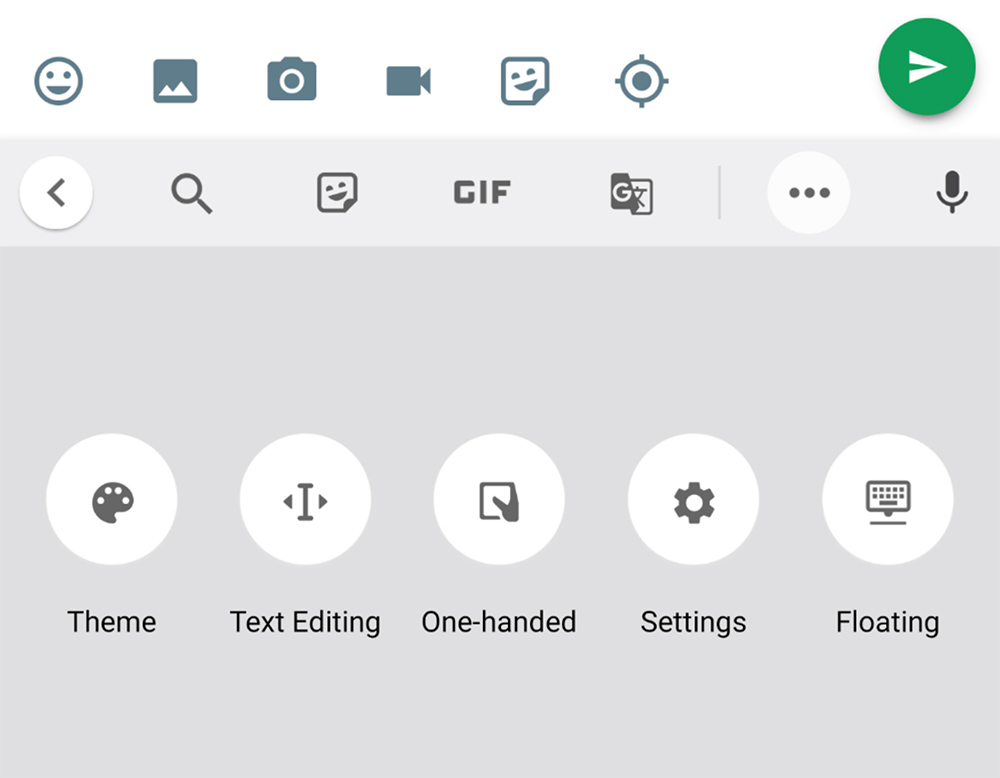
| Floating Keyboard Now Available in Gboard Beta Posted: 20 Oct 2018 12:04 PM PDT  Back in September, Google briefly activated a floating and movable keyboard within their Gboard app. It didn't last long and was quickly removed, but we assumed it would be back before long. It has now returned for good, we think. In the latest Gboard beta that rolled out over night, the floating is once again an option to enable if you like floaty things. You'll need to opt-in to the beta, which you can do through the link below and install version 7.6.13.215505041. Once you've got that build, you'll open up the keyboard, tap on the top left arrow in the Gboard suggestion row, then the 3-dot button next to Google Translate, and you should see "Floating" as an option (see below). Tap that and your keyboard will pop-up from the bottom of the screen. Gboard's floating keyboard can be moved wherever, resized, swiped on for gesture typing, and dragged back to the bottom of the screen to re-pin it to its normal spot.
The post Floating Keyboard Now Available in Gboard Beta appeared first on GuaripeteMagazine. |
| Verizon Stops SIM Locking Pixel 3 and 3 XL for Now Posted: 20 Oct 2018 12:04 PM PDT  The SIM locking of Verizon Pixel 3 and Pixel 3 XL saga will be no more. Verizon reached out to us this afternoon to update us on the situation, telling us that they have temporarily removed the lock on devices, including those sold at Best Buy stores. To back up for a second, for those who missed out – yesterday, Verizon confirmed to us that the SIM locking policy they began implementing earlier this year was being applied to the Pixel 3 and Pixel 3 XL. That policy involved locking Verizon phones to Verizon's network until they had been activated on Verizon's network and then went through an overnight unlocking process. The point of this policy, according to Verizon, was to deter theft. As you know if you read DL comments, people weren't exactly thrilled with this move, especially since the Pixel 3 and Pixel 3 XL are built to work on every single major US carrier, even if Verizon is the exclusive carrier partner. If you want the Pixel 3 or Pixel 3 XL, aren't a Verizon customer, and don't want to order it from Google, this lock made it impossible for you to get one in the US. You couldn't just walk into a Best Buy, buy a Pixel 3, and slap a T-Mobile SIM card into it. Today, that changes some. Verizon relayed the following to us:
When asked specifically if this means that they have removed the lock on Pixel 3 phones, they confirmed that to be the case. For now, if you walk into a Best Buy store to buy a Pixel 3 or 3 XL, you should be able to do so without needing to wait for Verizon's systems to SIM unlock it. The post Verizon Stops SIM Locking Pixel 3 and 3 XL for Now appeared first on GuaripeteMagazine. |
| Unsympathetic Apple Forces OnePlus to Bump 6T Launch Up to October 29 Posted: 20 Oct 2018 12:04 PM PDT  All OnePlus wanted to do was show off its greatest phone ever on October 30. But no, big bad Apple had to come and ruin everything! This week, Apple announced it has an event planned for October 30, which just so happens to be the unveiling date for the OnePlus 6T. Keep in mind, OnePlus has had this date secured since October 8. And because both events are scheduled to take place in NYC (Brooklyn for Apple, to be exact), OnePlus decided to avoid any awkwardness and has bumped up its launch date from October 30 to October 29. October 29 is now OnePlus 6T day! This is a portion of what Pete Lau told OnePlus fans.
If you planned on attending this event and even got a hotel or flight, don't worry, OnePlus says they are willing to, "cover any costs you might incur to change your plans." That's most generous of them, especially when they could've just kept the same date. I mean, it's just an iPad/Mac event after all. If anything, this is cool for the rest of us because we'll see the phone one day earlier. Sweet! // OnePlus The post Unsympathetic Apple Forces OnePlus to Bump 6T Launch Up to October 29 appeared first on GuaripeteMagazine. |
| The RED Hydrogen One is an act of will given physical form — but will you share its creator’s dream? Posted: 20 Oct 2018 12:04 PM PDT This past week in New York City, Red founder Jim Jannard stood before a huddled crowd of tech journalists, passionately making the case for his dream phone: the Hydrogen One. It’s a big, heavy phone that looks little like the sleek handsets that dominate today’s sales, built with a totally different set of priorities than we’re used to seeing from mainstream OEMs. At a time when even Motorola looks like it’s losing passion for modular hardware, Jannard and the Hydrogen One are eager to embrace it. And while we thought 3D screens on phones had died over half a decade ago, Jannard and his baby sure want to convince us there’s life in them yet. How did this oddball phone come to be? Blessed with the success of his Oakley sunglasses fortune, Jannard first redirected his passions toward photography. Having experimented with hundreds of cameras personally, he felt an itch to make hardware that was unlike that being produced by current manufacturers. And though that meant being an untested name going up against some heavy hitters, his Red cameras proved to really resonate with the burgeoning digital cinematography movement. Now with the Hydrogen One, Jannard intends to similarly upset the smartphone market. He feels strongly that many phones don’t address users’ actual needs; take cases, for example. Instead of selling people a super-thin phone and seeing them ultimately wrap it in a bulky shell, he’d rather just give the Hydrogen One a robust, grippy exterior in the first place. That’s the sort of idea that would probably get shot down in committee with a lot of smartphone companies, but the Red phone is special in just how much of it is dictated by Jannard’s own vision.
This “the buck stops with me” mentality may be both the phone’s greatest blessing and its biggest liability. It’s impossible to see the Hydrogen One as anything but a passion project — so many of us muse about all the weird stuff we’d do if we were ever able to design our own “dream phones,” but Jannard has the resources behind him to actually make that happen. Is that a good thing, though? Even the founder seems well aware of the risk he’s taking, as he jokes about one of his biggest resources being a certain cluelessness (or perhaps stubbornness) as to when his grand ideas are going a bit off the rails. It feels almost like Red is throwing those ideas at a dartboard and seeing what sticks. Indeed, Jannard doesn’t claim to be making a phone where everyone’s going to like everything about it; instead, he says he’ll be happy if users find just one feature that really speaks to them. That presents some tricky marketing realities, though, as shoppers are still paying for all those bells and whistles, whether or not they love them all — and with a sticker price coming in well over $1,000, that’s a lot to ask people to pay for a phone if they’re not on board with all its features.
In all fairness, some of those features do sound pretty compelling. When the phone’s modular camera add-on arrives it promises to offer a real Red-quality cinematography experience, complete with support for professional lenses. And while I’m going to have to hold back on my qualitative assessment of the 3D screen for my full Hydrogen One review, I will admit that Red seems to be taking steps to ensure that AT&T users have a good amount of content to consume on it, including free Fantastic Beasts and Ready Player One downloads courtesy of a partnership with Warner Bros. Jannard says he’d consider the Hydrogen One a success if it can sell one-half of one percent of the volume Samsung sees — and while that sounds like it might be a pretty low bar, we’re still talking a good 1.5 million handsets. Honestly, that’s probably a tough target to hit. Though Red certainly has great brand recognition in cinema circles, it’s not a name anyone’s (yet) going to associate with desirable phones. Factor in the steep price, highly unusual design, and unorthodox feature set, and it just seems more and more difficult to convince shoppers to take a chance with the Hydrogen One, rather than pick up the latest Galaxy or Pixel where they know pretty well what to expect. It feels like Jannard and Red know this, but just have to take a shot and see if this wild scheme can work. Will they succeed where companies like Essential struggled? I’ll have a better guess after spending a few more days using the Hydrogen One for myself. Stay tuned for our full coverage of the Red Hydrogen One’s release. In the meantime, whet your whistle a little with this leaked hardware overview, posted a few days back by director/cinematographer Phil Holland:
The post The RED Hydrogen One is an act of will given physical form — but will you share its creator’s dream? appeared first on GuaripeteMagazine. |
| ASUS announces its first 15-inch Chromebook, the C523 Posted: 20 Oct 2018 12:04 PM PDT
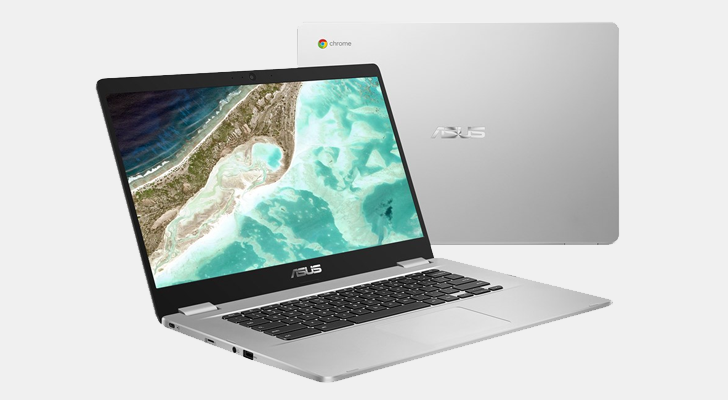
There aren’t many Chromebooks larger than 13 inches across, with the current leader being the Acer Chromebook 15. There will soon be at least one more option, because Asus just revealed its first 15-inch Chromebook — the C523. The C523 is very similar to other low-end Chromebooks ASUS has made recently, like the 12-inch C223 and the 14-inch C423. This one has a 15.6-inch “up to full HD” screen, an optional touch screen, and a battery life of up to 10 hours. It has a thickness of 15.6mm (0.6 inches), and a weight of just 3.2 lb.
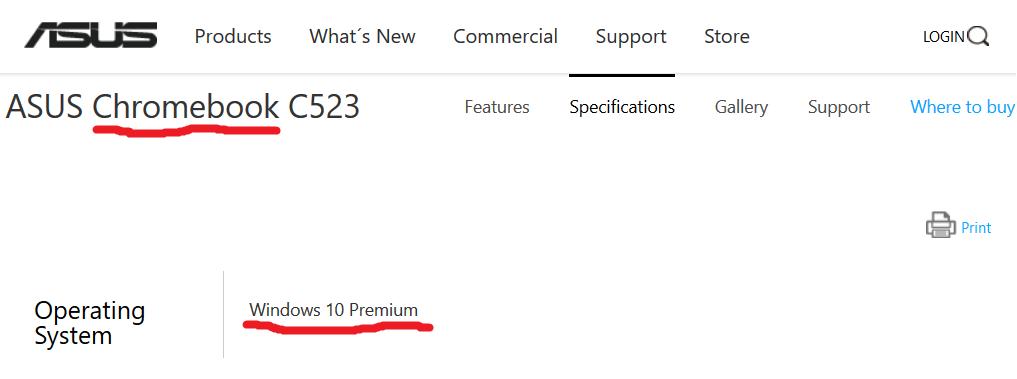
The exact hardware (including the processor) is unclear, because the specifications page is just a placeholder that says the C523 has “Windows 10 Premium.” It’s worth noting that Windows 10 Premium doesn’t actually exist.
I don’t think that’s right. Asus told us that the C523 will go on sale early next year, at least in the United Kingdom. You can see the product page from the source link below. The post ASUS announces its first 15-inch Chromebook, the C523 appeared first on GuaripeteMagazine. |
| Alexa’s Whisper Mode is now available, but you have to turn it on Posted: 20 Oct 2018 12:04 PM PDT
One of my few remaining complaints with my Google Home is that it responds to questions at whatever the current volume is. If I was listening to loud music earlier in the day and forgot to turn down the volume later, my request to turn off the room lights results in “OKAY, TURNING OFF THE BEDROOM LIGHTS” being blasted. This is no longer a problem for Alexa owners at least, with the new ‘Whisper Mode’ feature. Once you turn it on, you can whisper a command to an Alexa speaker and it will respond at the same low volume. It’s a bit creepy, but it’s definitely something I wish my Google Home had. The feature is rolling out now to all Alexa speakers. To turn it on, just say “Alexa, turn on whisper mode.” You can also enable it from the Alexa app on your phone (Settings > Alexa Account > Alexa Voice Responses > Whispered Responses). The post Alexa’s Whisper Mode is now available, but you have to turn it on appeared first on GuaripeteMagazine. |
| Posted: 20 Oct 2018 12:04 PM PDT  Bionic Balloons! Cosmic Cake! Bust out the bunting and start cooking a cake because it's Ubuntu's birthday! Yes, fourteen feature-filled years have flown by since Mark Shuttleworth sat down to share news of the very first Ubuntu release. Ubuntu 4.10 'Warty Warthog' was thrust into the world on Wednesday October 20, 2004. Explaining the USP of the (then newest) Linux distribution, Shuttleworth explained thus: "Ubuntu is a new Linux distribution that brings together the extraordinary breadth of Debian with a fast and easy install, regular releases (every six months), a tight selection of excellent packages installed by default and a commitment to security updates with 18 months of security and technical support for every release." It's interesting how most of that blurb applies to the latest Ubuntu 18.10 release as much as the first (although Ubuntu support was halved for regular releases in 2013, and support for Long Term Support releases increase). Ubuntu 4.10 — A Different EraUbuntu 4.10 'Warty Warthog' boasted a simple, straightforward install from a single CD. That may sound like a given now, but back then — nah. The distro was also famed for its efforts to "detect as much hardware as possible, simplifying the X install."  Ubuntu then and now If you were using Ubuntu back then you'd be sampling the very latest GNOME 2.8 desktop, browsing your favourite web 1.0 websites in Firefox 0.9, checking your AOL mail in Evolution 2.0, and typing up your documents in OpenOffice.org 1.1.2. Other preinstalled apps included GAIM, gFTP, Xchat, GIMP, separate CD and music player tools, the Sound Juicer CD Ripper utility, and Synaptic for managing software. Then, as now, Ubuntu serves up as a stellar showcase of the best open source software that open source software has to offer! If you're keen to hear more impressions there are still a few Ubuntu 4.10 review posts on the web. Teenage Kicks14 years on and Ubuntu is bigger than ever. Not content with being the world's most popular Linux-based desktop operating system, it's a heavyweight in the cloud, on servers, and in the IoT field. No, I'm not tipsy on kool-aid! There's even an epic Ubuntu infographic cheerleading those claims (and more)! So, whatever you're doing today, why not raise a glass of something to Ubuntu, its developers, and its users — happy birthday, you warty warthog! ¹If you get that reference, I love youThe post Happy 14th Birthday, Ubuntu! appeared first on GuaripeteMagazine. |
| Posted: 20 Oct 2018 12:04 PM PDT En freeCodeCamp acaban de compartir un tutorial en vídeo de los que suelen publicar en su canal de YouTube que puede usar cualquier desarrollador para programar su propio juego para el navegador. Es un pequeño curso introductorio al desarrollo de videojuegos usando JavaScript y HTML5 Canvas. En el vídeo, te enseñarán cómo construir un juego completo del estilo “rompe ladrillos” o “brick breaker”, es decir un juego como eel legendario Breakout de los setenta del que se han hecho infinidad de clones.  Es un tutorial rápido, el vídeo dura poco más de una hora y cuarto y cubre una buena cantidad de cosas, como todo lo necesario para establecer el proyecto y configurar Canvas para dibujar el juego en el navegador. Vas a aprender cómo crear cada elemento del juego, desde los ladrillos a la pelota, y cómo hacer que se muevan, que el juego detecte las colisiones, el diseño de niveles, pantalla de pausa, menú de inicio, etc. Tienes disponible todo el código fuente del proyecto terminado En YouTube tienes un índice que te lleva al minuto exacto en el que se explica cada cosa por si quieres repasar varias veces. Y, además tienes disponible todo el código del proyecto completado en Codesandbox. Si te gusta el tema y quieres ahondar más, siempre puedes ir a la sección de Desarrollo de videojuegos en freeCodeCamp donde tienes cientos de lecciones en diferentes lenguajes de programación para aprender todo lo necesario. The post Aprende a crear tu propio videojuego en el navegador usando JavaScript gracias a este curso gratuito intensivo appeared first on GuaripeteMagazine. |
| Odiómetro, una herramienta que te muestra el odio que hay en Twitter en tiempo real Posted: 20 Oct 2018 12:04 PM PDT Se respira cierta tensión en las redes sociales. Desde hace unos años hasta ahora, plataformas como Twitter se han convertido en un sitio en el que abundan personas enfadadas, trolls, insultos, malas formas y un preocupante grado de odio indiscriminado hacia todos aquellos contrarios a nuestras ideas. Puede que sea el anonimato, puede que sea el no ver cara a cara a la persona que está detrás de cada perfil, puede que sea el pensar que nuestros comentarios no tienen consecuencias, pero da la sensación de que las redes sociales, y en concreto Twitter, saca lo peor de nosotros mismos. El odio se palpa en el ambiente, y cualquier persona que use asiduamente el servicio puede comprobarlo por sí mismo.
Ante esta situación, Mikel Torres, un joven desarrollador de Donostia, desarrolló una herramienta “a modo de curiosidad” que “mide en tiempo real” el odio que se vierte en Twitter. La bautizó como “Odiómetro“. Es de código abierto, y si bien dista mucho de ser una herramienta científica de monitorización en tiempo real, cumple con el objetivo de mostrarte de forma visual la cantidad de bilis que los usuarios soltamos por la boca minuto tras minuto. El odio en Twitter visualizado en una gráfica Cuando entras en la web, lo primero que te encuentras es una gráfica que muestra los tweets de odio publicados por minuto, texto, usuarios mencionados y enlaces incluidos. La plataforma cuenta con una lista de entre 50 y 60 insultos (algunos de ellos puedes verlos en las imágenes que acompañan este artículo) que busca en todos los tweets publicados en habla hispana, publicándolos al hallar una coincidencia. La única capa de inteligencia es un filtro que analiza los tweets para detectar cuándo hay sarcasmo e ironía. Por ejemplo, que un “soy idiota” vaya acompañado de “jajaja” De la misma forma, cuenta con un apartado que muestra el usuario que más odio está recibiendo en Twitter. Según Torres, “además de los tweets recogemos los nombres de usuario que aparecen en los tweets y contabilizamos en cada momento el que más odio recibe o genera”. En ese sentido, “puede ser un perfil que está atacando a una persona, como alguien de derechas que ataca a Pablo Iglesias sin ni siquiera mencionarlo, pero si ese tweet recibe respuestas con insultos cuenta para establecer que Pablo Iglesias está generando odio”.  Torres lanzó la herramienta hace un año, monitorizando cuándo se producían los “picos de odio”. “El número de tweets de odio por minutos era muy alto en algunos momentos”, afirma. “Cuando fueron las elecciones de Venezuela en 2017 el nivel estaba muy alto, al nivel de 300 tweets de odio por minuto cuando el nivel normal es de entre 50 y 100 tweets”. Así pues, Torres confiesa que una de las mejoras que se podrían implementar en la herramienta es un histórico que permitiese consultar la evolución en el nivel de odio a lo largo del tiempo, detectando así los picos producidos cuando surjan temas polémicos. La cámara de resonancia de las redes sociales La intención de Mikel al desarrollar esta aplicación es generar conciencia del odio. Cuando hablamos sobre el panorama de Twitter, Torres afirma que es algo que le afecta “personalmente”. “Me da mucha pena que no se puedan establecer debates sensatos con personas que puedan tener ideologías completamente diferentes”, confiesa. “Alguna vez lo he intentado con personas que son algo más viscerales y lo he conseguido, pero exige mucho”. 
Citando al libro “Arden las redes” de Juan Soto Ivars, Torres considera que en muchas ocasiones cedemos ante el contexto. En este libro, el periodista pone el ejemplo de que nos volvemos más agresivos cuando estamos al volante porque la situación “nos lo pide”. Si un coche se acerca demasiado a nosotros nos ponemos nerviosos e insultamos, mientras que si nos chocamos con alguien por la calle somos cordiales y tendemos a pedir perdón. “Estoy convencido de que si la gente que insulta en redes se encontrase con las personas a la que insultan cara a cara podrían mantener un debate, pero el contexto de Twitter premia el comportamiento agresivo”, opina Torres. En ese sentido, Twitter actúa como una especie de caja de resonancia que actúa de la siguiente forma: si un alto porcentaje de las personas que participan en la comunidad generan odio, para yo poder participar también tengo que comportarme de la misma forma. Esta disonancia cognitiva se ve premiada en Twitter con likes y retweets, por lo que retroalimenta el comportamiento. Torres también tiene palabras para los titulares tendenciosos que buscan ser compartidos, provocar y generar ira. “Caemos como moscas. La gente ni necesita leerse la noticia, sino que les vale con el titular”. En ese sentido, Molly J. Crockett, investigadora en psicología de la Universidad de Yale, confirmaba en una entrevista al medio El Confidencial que “hay muchas evidencias de que expresar indignación moral funciona como una fuerte señal social. Expresar nuestro enfado transmite a otros miembros de tu red que formas parte del grupo y que tienes unos valores morales particulares, lo cual hace que la gente que comparte esos valores tenga una probabilidad mayor de confiar en ti”.  Sin embargo, el uso de las redes sociales se ha vinculado en diversos estudios a la depresión en la población más joven. Como señalan en Diario Médico, “el usar 7 de las 11 redes sociales más populares multiplica por tres el riesgo de sufrir depresión y ansiedad comparando con personas que sólo usan dos o ninguna”. Así, el desarrollador concluye diciendo que cree que es interesante desconectar de redes sociales de vez en cuando. “Una vez me fui de vacaciones y aproveché para cogerme vacaciones de Twitter también. Cuando volví, había estado tan bien que decidí alargarlo durante unos meses. Fue muy positivo. Los niveles de estrés eran más bajos. Esto nos afecta a nivel personal mucho más de los que nos pensamos”. The post Odiómetro, una herramienta que te muestra el odio que hay en Twitter en tiempo real appeared first on GuaripeteMagazine. |






| You are subscribed to email updates from Software Trending News. To stop receiving these emails, you may unsubscribe now. | Email delivery powered by Google |
| Google, 1600 Amphitheatre Parkway, Mountain View, CA 94043, United States | |

No comments:
Post a Comment