Software Trending News – Guaripete | Online Store |
- Scan Anything with These Great Apps
- Might & Magic: Elemental Guardians – A Beginner’s Guide
- Test Your Survival Skills With These Great Strategy Games
- Samsung’s Galaxy Note 9 Just Hit the FCC
- Google’s Measure Tool Now Usable in Google Earth for Chrome and Android
- T-Mobile Launches $10/Mo FamilyMode Service
- ZTE pays new $1 billion fine, but its future remains uncertain
- Google Duo v36 drops Jelly Bean and adds some finishing touches for tablets and smart displays [APK Teardown]
- 33 temporarily free and 74 on-sale apps and games to start the week
- GNOME Plans to Move App Menus Back Inside App Windows
| Scan Anything with These Great Apps Posted: 25 Jun 2018 12:05 PM PDT  For people who have paper they want to turn into PDF filesWith Adobe Scan, you can turn almost anything made out of paper into a PDF. Receipts, notes, pictures, documents, business cards, whiteboards, whatever. You scan your paper-based document, turn on text recognition if you want it, and enjoy a gorgeous PDF that you can touch up, crop, rotate, and adjust color on. The built-in optical character recognition engine lets you reuse scanned content by creating a high-quality PDF you can work with in Adobe Acrobat Reader, and you can save your scans to Adobe Document Cloud for easy sharing. The main drawback is that if you want to make things other than text into PDF files, you have to pay for a PDF Pack subscription. Why we love itThis app works great for scanning text into a searchable PDF. It allows you to quickly and easily import your paper-based receipts, business cards, and other documents into Adobe Document Cloud. You can take just about any paper document and make it digital. That mountain of receipts can become a digital library in very little time. I just wish Adobe Scan didn’t force you to make an in-app purchase to turn more than text into PDF files. Then again, the Adobe Document Cloud integration makes the app quite unique, and works well when you frequently (or not-so-frequently) use other Adobe apps. The post Scan Anything with These Great Apps appeared first on Guaripete. |
| Might & Magic: Elemental Guardians – A Beginner’s Guide Posted: 25 Jun 2018 12:05 PM PDT   You may well have played a strategy RPG like Elemental Guardians before. It places you in command of four heroes and tasks you with overcoming enemies in PvP bouts and wave-based PvE missions. Each hero on the screen has a little status bar above their head, The top part of the status bar contains a green health indicator, and underneath that, there's a blue bar that gradually fills up. When it's full, that character can act. There's an array of skill buttons on the bottom-right. Holding your finger down on one of these brings up a little box letting you know what that skill does. To unleash a skill upon your hapless foe, you just tap on a skill icon and then on a target. Pain ensues. Each character in your team has an unlimited basic attack, but skills are not unlimited. Each one is on a timer, meaning you can only use it when its icon fills up with color. If you have difficulty seeing colors, you'll be relieved to learn that you can also check on the progress of a recharging skill by holding a finger down on its icon.  During battle, you'll notice that your opponents all have arrows over their heads. These indicate whether or not you have an elemental advantage over them. If the arrow is red, your attack is unlikely to do much damage. If it's yellow, you'll inflict a respectable but unremarkable amount of pain. If it's green, you'll devastate your target physically. Status effects are visible in each character's health bar. Buffs are indicated in blue, while debuffs are red. And finally, your own avatar can step in and help whenever its magic is full. You can check this on the round gauge to the left of the screen. Tapping on this gauge unleashes your magic, and the beauty of this kind of attack is that it doesn't use up any of your teams' actions. That's all you need to know to get started, and armed with this information you'll eventually be able to strategize with the best of them. Here are a few extra tips to help you on your way.  Focus your attack on one enemy at a time rather than trying to grind them all down at once. In particular, aim for the healers. It may be against the Geneva Convention, but killing enemy healers is relatively easy and once they're vanquished their remaining comrades cannot be healed, so taking them out is a no-brainer. Unusually for a strategy RPG, Might & Magic: Elemental Guardians lets you start each bout with fully charged character skills. In most cases you should use them straight away, to maximize the number of recharges (and therefore uses) you'll get overall, and to get your opponents against the ropes early. If you don't want to play a battle yourself, most likely because the outcome is a foregone conclusion, you can tap the Auto button to have the AI take over for you, and you can also double or triple the normal battle speed. Naturally, if you feel the AI is failing to represent your military ambitions, you can always toggle back to manual control. The post Might & Magic: Elemental Guardians – A Beginner’s Guide appeared first on Guaripete. |
| Test Your Survival Skills With These Great Strategy Games Posted: 25 Jun 2018 12:05 PM PDT  Crash into this insanely good crafting RPG. You’re a galactric trucker, just minding your own business, when your ship is suddenly blown up, causing you and your robot companion to crash-land into an alien planet. What are you to do? A whole lot, including building, adventuring, questing, and crafting. The post Test Your Survival Skills With These Great Strategy Games appeared first on Guaripete. |
| Samsung’s Galaxy Note 9 Just Hit the FCC Posted: 25 Jun 2018 12:05 PM PDT   There's been a lot of talk recently about Samsung possibly announcing the Galaxy Note 9 a month earlier than they usually do. To back that idea up, we thought we should point out that the device just hit the FCC, about a month earlier than the Galaxy Note 8 did. This new Samsung product that arrived at the FCC is not necessarily labeled as "Galaxy Note 9," but Samsung does use model numbers in their FCC IDs. And the FCC ID of the device we believe is the Note 9 is A3LSMN960F. The SMN960F is the part we care about, as that is the model number. Samsung, when they sell this device, will refer to it as SM-N960F. That gives it away because the Galaxy Note 8 was SM-N950, the Note 7 was SM-N930, and the Note 5 was SM-N920. We're still diving into the documents, but so far we're seeing plenty of LTE bands, which one would expect. Just keep in mind that these "F" model numbers of Samsung phones are often international variants, so if you aren't seeing all bands, that's OK. We often see international units hit the FCC before the US models do. The US model we'll want to keep an eye out for is likely to be SM-N960U rather than SM-N960F. Of course, Bluetooth, NFC, and MST are all on board too. MST is for Samsung Pay, in case you were wondering.
To recap the Galaxy Note 9, current rumors suggest that it'll arrive on August 9 at an event in NYC before shipping toward the end of the month. It probably looks just like this. It may have faster fast charging too. We'll continue to update this post if we find more info. // FCC The post Samsung's Galaxy Note 9 Just Hit the FCC appeared first on Guaripete. |
| Google’s Measure Tool Now Usable in Google Earth for Chrome and Android Posted: 25 Jun 2018 12:05 PM PDT   Measure, Google's software tool for measuring things, is now available inside of Google Earth for Chrome users. The feature will come to Android users this week, too. With Measure, you can measure basically anything that's on Google Earth. For example, you can get the distance of your house to the North Pole or you can measure the area of your block. Like I said, you can measure whatever you want, so long as it's on Google Earth. As Google mentions, this feature is live right now for Earth users on Chrome and will be available inside of the Android app this week. If you're on iOS, you'll need to wait a bit longer before you have access to Measure. Go check it out for yourself! The post Google's Measure Tool Now Usable in Google Earth for Chrome and Android appeared first on Guaripete. |
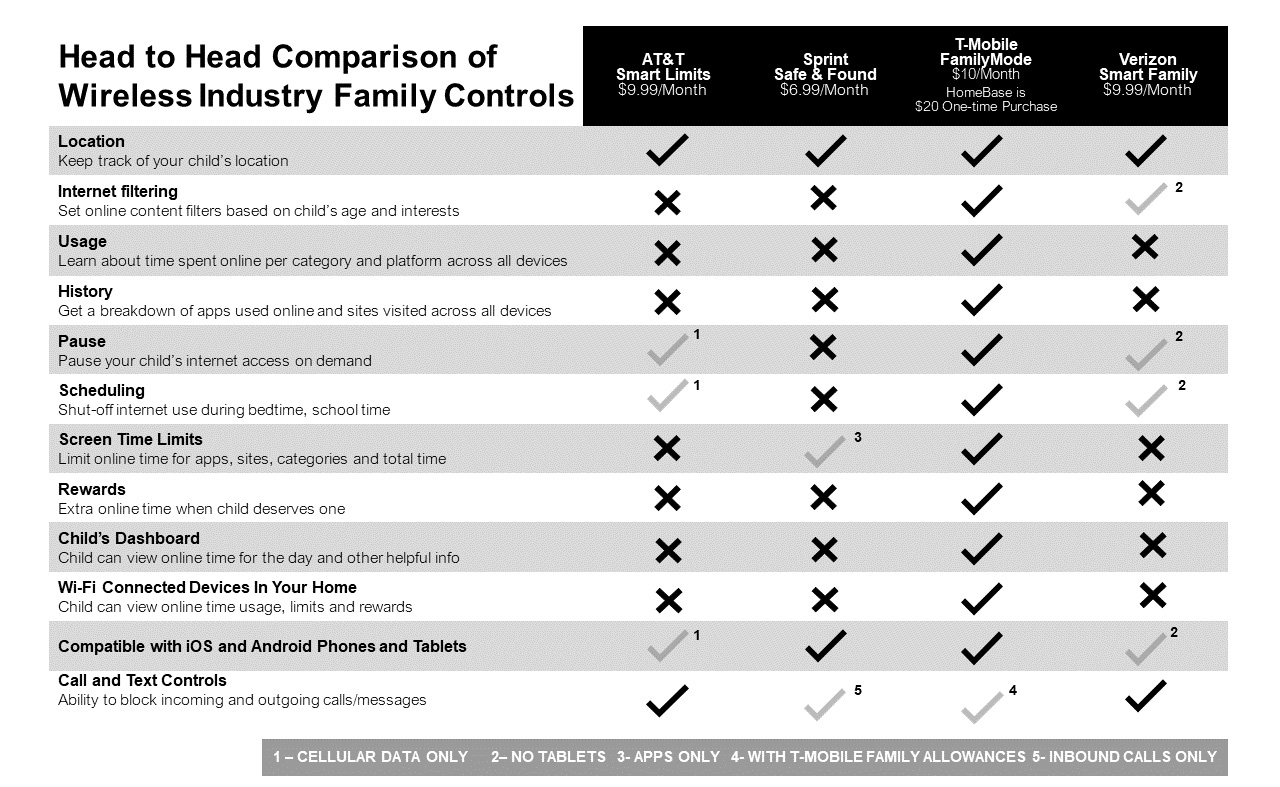
| T-Mobile Launches $10/Mo FamilyMode Service Posted: 25 Jun 2018 12:05 PM PDT   T-Mobile jumped into the digital parenting arena this morning with an announcement for a new product called FamilyMode. Yeah, the name is silly and I'm not sure why there isn't a space between Family and Mode, but the basics are that it costs $10/mo, plus a $20 one-time device fee, to get massive control over the smart devices in your home that your entire family might use. With T-Mobile FamilyMode, you are able to not only manage the phones and tablets that your kids use, but also their gaming consoles, laptops, smart TVs, and other devices. T-Mobile is doing this by selling you the FamilyMode home base, which connects directly to your home's WiFi router via ethernet cable. From there, and with the T-Mobile FamilyMode app setup, you should have all the controls you need to shut down that bratty 8 year old. You can see the FamilyMode features list below and how it compares to Verizon, AT&T, and Sprint offerings, but you'll get things like location tracking, internet filtering, usage monitoring and scheduling, history breakdowns, and screen time limits. T-Mobile also seems very excited about the "level of detail" that this service is able to show you, as well as the controls over your kids' Xbox or TV or computer, which no other carriers are doing. NOTE: FamilyMode and its app will work without the home base if you only need to manage your kids' phones or tablets over cellular networks. If you want the full experience, though, you'll need the home base too.
Again, the FamilyMode home base costs $20 and connects via ethernet to your WiFi router. You then pay $10/mo for access to the FamilyMode app. Within that app is where you'll find the controls for all of the connected devices in your home. You can sign-up here for the launch on June 29. // T-Mobile The post T-Mobile Launches $10/Mo FamilyMode Service appeared first on Guaripete. |
| ZTE pays new $1 billion fine, but its future remains uncertain Posted: 25 Jun 2018 12:05 PM PDT
Chinese technology firm ZTE says it has forked over $1 billion to the US government. This is the first step toward ZTE returning to operation after a ban on purchasing US technology in April forced it to partially shut down. However, it’s not out of the woods yet as the entire incident has become a political firestorm for the US administration. ZTE got itself in this situation by failing to comply with all parts of a previous penalty for violation of US sanctions. It paid almost $1 billion for the original slip-up, but the government demanded a further $1 billion to lift the new technology ban. Having paid the fine, ZTE says it will place an addition $400 million in escrow in the coming days, as required by the deal. That’s intended as an incentive to ensure ZTE continues complying with the law. If it doesn’t slip up, the firm will eventually get that money back. As the Commerce Department deal seems close to completion, there’s still uncertainty over ZTE’s future. After President Trump tweeted about ZTE’s situation, the deal has been under scrutiny from both parties. Congress may even include sanctions against ZTE in a defense spending bill, which is still making its way through the legislative branch. The bill is considered “must-pass,” so including ZTE sanctions in the final bill could spell trouble for ZTE. The post ZTE pays new $1 billion fine, but its future remains uncertain appeared first on Guaripete. |
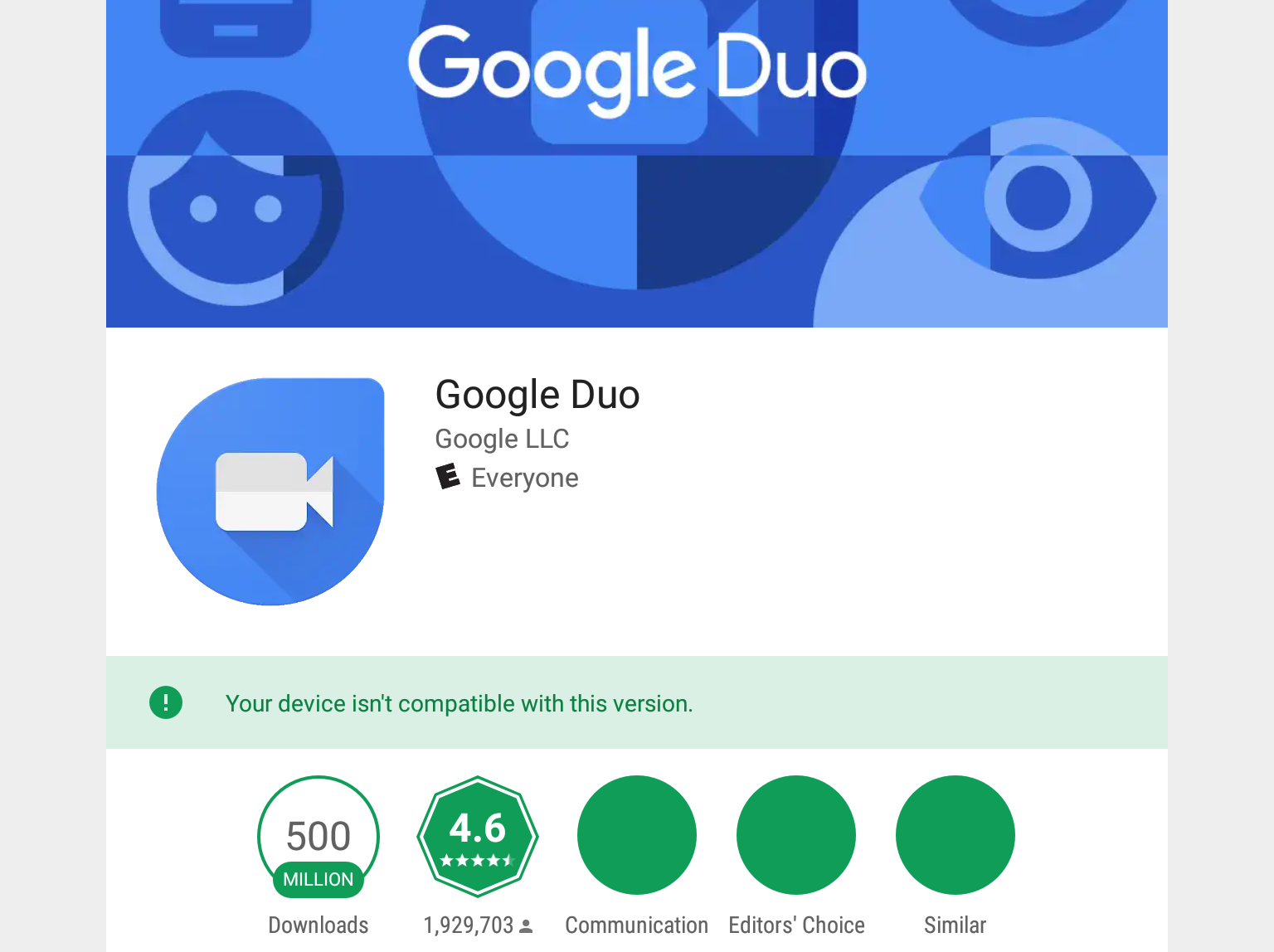
| Posted: 25 Jun 2018 12:04 PM PDT  An update to the Duo app is making its way out, but this appears to be a small-ish service update, at least for now. There’s no specific sign that this version will re-launch the screen sharing feature after it rolled out in a malfunctioning state with v34, but it’s possible that the implementation has been fixed and the feature will be turned on later. Instead, this update marks the end of Jelly Bean support. A teardown also shows that official tablet support is almost here. Dropping Jelly Bean supportWe’ve been seeing it a lot over the last few months, Google apps are shaving off the low end of their support list and bumping to something a bit newer. Duo is the latest to join the trend as it leaves behind Android Jelly Bean (4.1 – 4.3) and sets KitKat (4.4) as the oldest officially supported version. It’s important to note, this doesn’t mean the Duo app will stop working on Jelly Bean, only that it will no longer receive updates to the app. Users on Android 4.3 and earlier will simply stop receiving new versions of the APK, but v34.5 will probably still be available from the Play Store and the Duo service will still work. However, it stands to reason that the app will eventually adopt new protocols and codecs for audio and video that are no longer compatible, and that will ultimately put an end to Duo usage on Jelly Bean. As of May 2018 (Google hasn’t published numbers for June), all three versions of Jelly Bean combine to account for 4.3% of the Android ecosystem. With KitKat as the new base version, Duo still officially supports 95% of devices. TeardownDisclaimer: Teardowns are based on evidence found inside of apks (Android’s application package) and are necessarily speculative and usually based on incomplete information. It’s possible that the guesses made here are wrong or inaccurate. Even when predictions are correct, there is always a chance that products could change or may be canceled. Much like rumors, nothing is certain until it’s officially announced and released. The features discussed below are probably not live yet, or may only be live for a small percentage of users. Unless stated otherwise, don’t expect to see these features if you install the apk. All screenshots and images are real unless otherwise stated, and images are only altered to remove personal information. Preparations for tablets and smart displaysWe’ve known for a long time that Duo would be multi-device compatible. In fact, ever since the Google account support was added and a few bugs were worked out, we’ve been able to log into a phone and tablet at the same time with the same account and use them seamlessly. However, you had to sideload the Duo apk since the Play Store still doesn’t allow a direct install onto tablets.
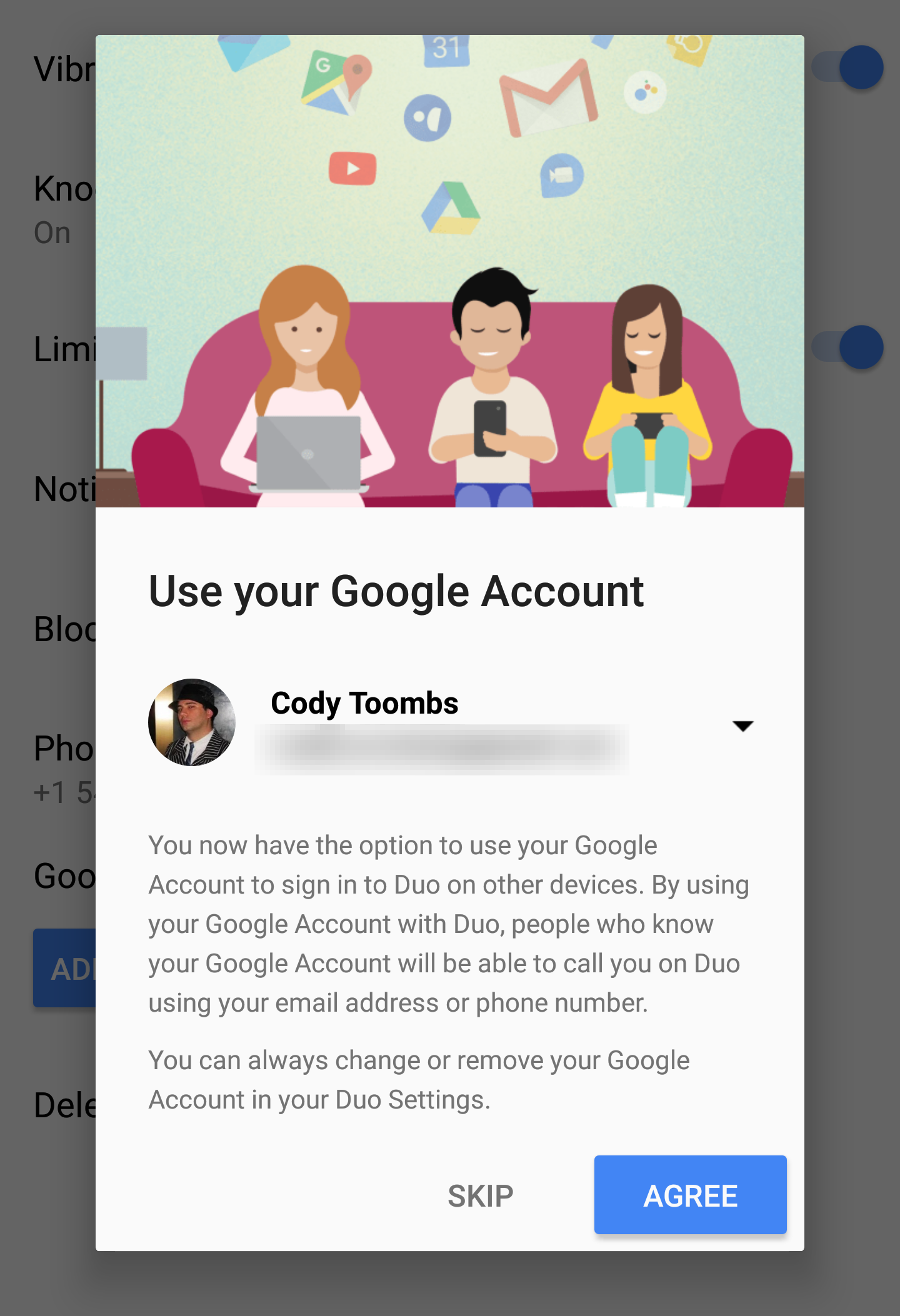
Play Store on Nexus 9 The latest version comes with some new and updated text that suggests the team is almost ready to unveil tablet support. The big addition is promo text that makes no bones about pointing out that users can make and receive calls on tablets. Call friends on your tablet There is also a slightly updated message on the Google sign-in dialog used to explain that you could use your account to be more accessible on Duo. The latest version adds a few words to say that you can sign into “other devices” with the same account. It’s a small difference, but it does mark a change in language where Duo is more clearly described as a multi-device app.
Left: v34.5. Right: v36. This is interesting news for tablet owners, even if it’s just a portent that they won’t have to mess around with sideloading Duo in the near future. Of course, this change is likely motivated by the upcoming launch of smart displays, which are probably still about three months out with the launch of Lenovo’s first model scheduled to ship out in September. DownloadThe APK is signed by Google and upgrades your existing app. The cryptographic signature guarantees that the file is safe to install and was not tampered with in any way. Rather than wait for Google to push this download to your devices, which can take days, download and install it just like any other APK.  Price: Free The post Google Duo v36 drops Jelly Bean and adds some finishing touches for tablets and smart displays [APK Teardown] appeared first on Guaripete. |
| 33 temporarily free and 74 on-sale apps and games to start the week Posted: 25 Jun 2018 12:04 PM PDT
The post 33 temporarily free and 74 on-sale apps and games to start the week appeared first on Guaripete. |
| GNOME Plans to Move App Menus Back Inside App Windows Posted: 25 Jun 2018 12:04 PM PDT   App menus could be moving Application menus in the GNOME Shell desktop environment may be about to move. GNOME developers have proposed moving app menu entries back inside applications windows, in to the "hamburger menu" that most modern desktop apps use. "This would be relatively easy to implement, and even bend in nicely with some third-party apps like Firefox and Chromium, which already use a similar pattern," GNOME devs right in their proposal. But is changing core desktop usability a good idea? GNOME App MenusGNOME application menu currently sit next to the Activities button in the top bar. They display the name of the focused/active application and (depending on the GNOME Shell theme in use) the corresponding application's icon. The app menu itself provides quick access to "global" actions like 'Quit', 'Help', 'Preferences', and 'About', i.e. actions which affect all windows/instances of the app rather than one particular window.
For example, in Nautilus the app menu has options to show/hide the sidebar. Changing this setting will affect all file manager windows that are open, at the same time. Under the "migration" proposal multi-page and split-pane apps would show the "app menu" options in a hamburger menu on the top-level page, with non-top-level or secondary pages offering a "dotted menu" with regular options, settings and actions:
For apps like Nautilus and Web, which aren't multi-paged, the hamburger menu will show both global and window-specific actions, separated by a horizontal dividing line:
Current App Menu Implementation Has "Big Problems"GNOME developers cite some "pretty big problems" with the current app menu implementation. Among them:
The latter point strikes a chord with me. Even I, someone who uses GNOME daily, often forget that there's a menu at the top of the my screen! It doesn't help that most third-party applications do not use the app menu, and the few which do only use it offer a "Quit" and "About" item in. So I think this migration proposal has merit. The app menu is rather moot all things considered; it's unloved and unused, and adds unneeded complexity to the GNOME workflow. I'd wager some users aren't even aware that the app menu is even a menu! GNOME themselves state that no other desktop environment, operating system or platform uses a similar pattern. Next StepsWhat happens next? The currently plan is to keep the existing app menu in the upcoming GNOME 3.30 release (due in September) to give developers some time to adapt their apps. Although GNOME 3.30 will include app menu support the hope is that most apps will migrate over to hamburger menus early. In GNOME 3.32 (due March 2019) devs will remove app menu support from the shell. Any apps which haven't been updated to the new model would use a GTK fallback. Are GNOME devs making the right decision? Let us know in the comments! The post GNOME Plans to Move App Menus Back Inside App Windows appeared first on Guaripete. |





| You are subscribed to email updates from Software Trending News. To stop receiving these emails, you may unsubscribe now. | Email delivery powered by Google |
| Google, 1600 Amphitheatre Parkway, Mountain View, CA 94043, United States | |

No comments:
Post a Comment