Software Trending News – Guaripete | Online Store |
- How to take interesting video of your life for a year
- Apple files lawsuit against the activists that occupied its Paris store
- How to exchange or repair your Apple product if you don’t have an Apple store near you
- Less Than 1,000 Apps Currently Use Apple’s ARKit in iOS 11
- Shinola Canfield Headphone Review: How Did the Watchmaker Do?
- Bring Your Drawings to Life with Animation Apps for iPad
- AT&T Says It’ll be the First to Launch Mobile 5G in 2018
- Dashlane’s Project Mirror Aims to Kill Passwords in 2018
- Here’s the List of Games That Support Razer Phone’s 120Hz Refresh Rate
- Google Home Max review: The best (and most expensive) smart speaker
| How to take interesting video of your life for a year Posted: 04 Jan 2018 12:05 PM PST Have you ever been scrolling through your Facebook or Insta timeline, and you see someone with one of those videos that combines a second of each day for a year, and then they have this super cool, totally not-boring compilation of their life? While there are a few apps available out there to do exactly that, 1 Second Daily allows you to capture a brief moment (around a second or so) of your daily life and edit it into a larger, more epic conglomeration of your entire year! The steps are simple:
You can choose to record a bit of a longer video with the app, but keep in mind that you’ll only be able to salvage only a second of the video. Another option 1 Second Daily gives is to upload a photo in lieu of a video: if you forgot to record something but snapped a selfie, it might be better to add that into your final product rather than have a blank space/miss a day. Of course there are other apps that do similar things: 1 Second Everyday notes that “life is made of seconds” and combines your entire year into a stylish, hip montage. DailySnap functions more like social media, claiming that “Every day you can capture only one snap in each story. A story for your body’s transforms, for traveling, for beard growth, for your dog or hamster.” Regardless of the app you choose, the results are typically the same, and you’ll end up with a picturesque montage of your 2018 that’ll have your reminiscing for hours. Er, I mean 365 seconds… What do you think?Are you a big fan of capturing the world around you in this way? Would your prefer to do something else to document your year? Or do you think shooting videos and taking pictures everyday is silly and a waste of time? Let us know what your thoughts are in the comments below! Powered by WPeMatico The post How to take interesting video of your life for a year appeared first on Guaripete. |
| Apple files lawsuit against the activists that occupied its Paris store Posted: 04 Jan 2018 12:05 PM PST
Last month, members and supporters of French activist group Attac (the Association for the Taxation of Financial Transactions and Aid to Citizens) peacefully occupied Apple’s flagship store in Paris in order to protest alleged tax evasion committed by the company. Now, according to French publication The Local, Apple is reportedly suing Attac for €3,000 (which is approximately $3,600 USD). In addition, Apple is asking for a court order barring the activist group from staging any more protests within Apple stores. The Local’s piece goes on to say that while Apple supports the freedom to protest, the company felt the protest was a safety hazard in this particular situation as the group “blocked the store for several hours” on a busy shopping day, only leaving after they were guaranteed a meeting with company management:
However, Dominique Plihon, a representative of Attac France, believes that the lawsuit is nothing but an attempt to obscure the truth, claiming that the company is trying to “gag Attac and prevent us from holding new citizen actions to condemn tax evasion by multinationals.” He also said that Apple wrongfully accused Attac of vandalism, though the group’s protests are “symbolic, nonviolent, staged openly and with no material damage.” According to a claim made by the EU in August 2016, Apple has accrued an overall debt of €13 billion ($14.5 billion US) in dodged taxes by taking its earnings and processing them through multiple different nations. Apple, however, still maintains that it has followed the laws of each country in which it operates, and is in the process of appealing the ruling. Thoughts?What do you think about Apple suing Attac? Give us a shout in the comments. Powered by WPeMatico The post Apple files lawsuit against the activists that occupied its Paris store appeared first on Guaripete. |
| How to exchange or repair your Apple product if you don’t have an Apple store near you Posted: 04 Jan 2018 12:05 PM PST In some countries, cities, and towns, there are no Apple stores. I know. What fresh hell is that? Many, however, have authorized resellers, but these resellers often can’t perform the same services Apple can. For example, exchanging a defective device may not be possible through a reseller, or if you need a repair, you might have to send it to an authorized repair center. If that sounds like your case, then here’s what you can do to exchange, repair, or return your Apple product. How to exchange your productLet’s get this out of the way first: The only way to exchange your Apple product is to do so in-store, whether that’s at an Apple store or at the authorized reseller you bought from. Whether or not you can exchange via the reseller is completely dependent on that reseller’s policies, which are totally separate from Apple’s. How to return your Apple product for refund if you ordered online through AppleIn order to return something you ordered online through Apple, you’ll have to ship it back to Apple directly, but if you follow the online instructions, it’s not too difficult. You have 14 days from the day you received the item to return it for a refund.
Be sure to affix your labels to the same panel on your box and print out multiple labels if you’re sending multiple boxes. Depending on the carrier, you can schedule a pickup or drop it off at that any of that carrier’s locations. How to return/repair your Apple product if you bought it from an authorized resellerAuthorized resellers have their own return and refund policies, and may even have authorized services centers, so you have to abide by those. However, if you have a legitimate need to return the item and the reseller won’t take it back (because it’s open, used, whatever), then you can return it to Apple directly in some cases. U.S. and CanadaFirst, you can try contacting Apple within 14 days of your purchase. Email Apple at AC_RightofReturn@apple.com to request the return. The customer service will tell you what you need to do from there. Make sure to include the following information:
Be sure to get tracking for the item and to insure it or declare the full value; otherwise, you’re liable for any loss or damage during shipping. If you’re looking to get your product repaired, use your AppleCare+ first. The ways to contact AppleCare and to send them your product will be outlined in your policy. If you don’t have AppleCare+, you can search for authorized service centers in your area. Oftentimes, authorized resellers are also authorized service centers. Find Apple authorized service centers InternationalIf you live outside the U.S. or Canada and bought from a reseller, your best course of action is to contact Apple directly, either via email, online chat, or by phone. The ways in which you can contact Apple will vary based on your region, so use Apple’s support site to select your region in order to get the help you need. Because Apple lets authorized resellers set their own return and refund policies, your reseller may not let you return your product for a number of reasons. So your best bet in that case is always to contact Apple directly. In some cases, you will have to resort to using the standard warranty that comes with all Apple products; otherwise, you’ll need to resort to the methods outlined in your AppleCare+ policy. You can also try to find an authorized Apple service center if the reseller you bought from does not also operate as an authorized service center. Find Apple authorized service centre If all else fails, you can attempt to make the repair yourself. Depending on the repair needed, you may be able to find YouTube tutorials or Reddit threads outlining the repair process. This is only for the experienced and will definitely result in a voided warranty if you’re still within the warranty period. Always contact Apple first. Powered by WPeMatico The post How to exchange or repair your Apple product if you don’t have an Apple store near you appeared first on Guaripete. |
| Less Than 1,000 Apps Currently Use Apple’s ARKit in iOS 11 Posted: 04 Jan 2018 12:05 PM PST  After iOS 11 was released in September, more than 300 apps arrive on the App Store. But after that, those numbers trailed off substantially in October and November only to slightly rebound in December. So far, not surprisingly, most of the apps that have taken advantage of ARKit are Games at 30 percent. Apps in the Other category account for 24.2 of the apps. That's followed by Entertainment and Utilities. Apps from the Education, Photo & Video, and Lifestyle categories round out the list. After announcing ARKit back at WWDC 2017, Apple heavily marketed the framework to developers. And while a number of high-profile apps, like Pokémon Go, have taken advantage of ARKit, it seems that Apple has more work to do convincing developers. Powered by WPeMatico The post Less Than 1,000 Apps Currently Use Apple’s ARKit in iOS 11 appeared first on Guaripete. |
| Shinola Canfield Headphone Review: How Did the Watchmaker Do? Posted: 04 Jan 2018 12:05 PM PST  I'll admit that aesthetics plays a huge role in whether I'll review a new pair of headphones. Regardless, zeroing in on Shinola's new lineup product was a no-brainer. Featuring stainless steel components, interchangeable lambskin ear pads, and a leather headband, the Canfield On-Ear headphones reminds me of the great audio products from New York's Master & Dynamic, which I talk about at AppAdvice often. They're also similar to the iconic Bowers & Wilkins headphones. Looks alone, however, don't determine whether a pair of headphones is good or bad. There's also durability and quality, comfort, price, and sound, of course. Durability and Quality The Canfield On-Ear headphones don't just look good. As soon as you touch them, you'll recognize they're made of high-quality components that should last a long time. In other words, these headphones will almost certainly last for many years to come. Just to be sure, each pair is backed by a lifetime guarantee. At launch, Shinola offers these headphones in three styles, including black + silver version, cognac + silver, and gloss black. I received a silver pair for review purposes. After a month of active testing, these headphones look just like new. It probably helps that I place them in the included case when not in use. Regardless, these are a beautiful looking pair of cans. Comfort I'm found myself less impressed with how these headphones felt on my head even after a short time. The problem isn't the lambskin pads, which felt terrific on my ears. Instead, it was the leather headband at the top. Within 60 minutes of wearing the Canfield On-Ear headphones, I felt that band in a mildly annoying way. So much so that I needed to take the headphones off, at least for a few minutes. This instance wasn't the first time I found a pair of headphones uncomfortable after wearing them for long periods of time. In fact, it has happened often and always when there's a leather headband involved. Over the years, I have heard similar stories from others, although just as many folks I've talked to seem to like leather headbands versus all others. The bottom line here: The Canfields aren't the most comfortable headphones I've worn. Nonetheless, your experience could be different. PriceThe Canfield On-Ear headphones are $495 for the black + silver and cognac + silver versions. The gloss black model slightly higher at $550. Shinola offers premium products so these price points shouldn't come as much of a surprise. Still, as a way of comparison, Master & Dynamic charges $399 for its MH40 over-ear headphones, which are very similar to Shinola's. Powered by WPeMatico The post Shinola Canfield Headphone Review: How Did the Watchmaker Do? appeared first on Guaripete. |
| Bring Your Drawings to Life with Animation Apps for iPad Posted: 04 Jan 2018 12:05 PM PST  For proper use of this site, you need to enable javascript in your browser!  Make it move.Animation Desk Classic  For those who want a drawing animation tool with robust features and sharing options.Animation Desk Classic lets you create hand-drawn animations. You can choose your frame rate, apply a dynamic background, add music or sound effects, and insert pictures or shapes. You will also enjoy being part of Anizone, which is a YouTube platform for Animation Desk Users to explore and share their creations. Note that some features may require a subscription. Why we love itIf you enjoy turning your hand-drawn creations into animated works of art, Animation Desk Classic is the app for you.  Animation Desk®Kdan Mobile Software LTD  For those who want to import video clips and turn them into animations.With Animation Desk Cloud, you can pull in your video clips and transform them into awesome animations. If you prefer to draw new figures, the app offers more than 20 brushes, rotoscoping, and onion-skinning tools. Set up any FPS, play animations backward, and create loops with this easy-to-use app. Why we love itAnimation Desk Cloud gives you the tools to draw or import figures to make amazing animations.  Animation & Drawing by Do InkDK Pictures, Inc.  For those who want an animation app with great drawing and composition features.With editors for drawing and composition, Animation & Drawing by Do Ink is a terrific tool. The app is good for both beginners and skilled artists. It offers flipbook and keyframe animations, frame-by-frame or single-frame options, and draggable motion paths. There are a variety of export options and many other features to explore for your masterpiece. Why we love itAnimation & Drawing by Do Ink is a wonderful iPad animation tool for any level of artist.  Stick Nodes Pro – AnimatorRalph Damiano  For those who want an animation app with automatic frame-tweening.With Stick Nodes Pro, you can use the virtual camera for a great effect, enable the automatic frame-tweening feature, and color or scale on a per-segment basis. The app offers additional features compared to the free version such as the abilities to add sounds and export to MP4 format. The clean and easy interface makes creating animations a breeze. Why we love itStick Nodes Pro is a great tool for stick-figure animations that you can turn into GIFs.  Quickly animate with your Apple PencilAnimatic by Inkboard  For sketchers and drawers who think their art is too staticInkboard’s Animatic will get you making flipbook-style short animations in no time. And when you’re done, you can export them as videos or GIFs to show off your work to the world. Why we love itWe’re old enough to have blown an entire stack of Post-Its making stick figures dance and/or fight. Or fight and then dance. Or the other way around. We kept it simple. But it’s nice to see that technology has reached a point where our artistic aspirations have a fancy new home.  Animation ProStephen Keen  For those who want a full-featured animation app with clones, figures, and audio.Animation Pro is an all-inclusive animation tool for iPad. You can create complex figures with built-in options along with scaling, blurring, distorting, and highlighting. Use the Shadow Wizard for realistic shadows, include audio with a variety of possibilities, share, export, and create something amazing. Why we love itIf you are in the market for an iPad animation app with tons of features and options, Animation Pro is it.  FlipaClip – Cartoon AnimationVisual Blasters LLC  For those interested in creating flipbook animations.FlipaClip – Cartoon Animation lets you create unique flipbook-style animations. The app provides drawing, text, and grid tools, onion layers, an animation timeline, and frames manager. With Apple Pencil support and social media sharing, you can create and share something different. Why we love itIf you want to try something different in animations, check out the flipbook style in FlipaClip – Cartoon Animation.  Animation Creator HDmiSoft  For those who want an HD animation tool for iPad with an array of drawing tools.Animation Creator HD provides a nice variety of tools for creating drawings that you can bring to life. You can have infinite frames and animations, use layers and an animation scrub tool, and add audio to your creations. Pens, pencils, erasers, spray cans, shapes, and so much more are at your fingertips. Why we love itAnimation Creator HD is an affordable animation app with wonderful drawing tools.  FrameFervor – Animation AppDan Fast  For those interested in a free animation app for iPad.FrameFervor – Animation App is a simple and free tool for iPad. The app has ghosting, layering, looping, and rotoscoping. You can scale, translate, and rotate drawings, export to GIF or movie files, and use a handy stylus. Why we love itIf you are just starting out and want to try a free iPad animation tool, check out FrameFervor – Animation App.  StickMotion AnimationStephen Keen  For those interested in a 2-D animation app with a useful Help section.For stick figures, cut-out style, and stop-motion animations, take a look at StickMotion Animation for iPad. The app offers a figure builder and editor, import options for props and audio effects, and export to image or video file formats. With instant previews, a virtual camera, and advanced image blending, StickMotion Animation is a nice animation app. Why we love itStickMotion Animation is a good choice if you want to combine stick figure, cut-out, and stop-motion animations. Powered by WPeMatico The post Bring Your Drawings to Life with Animation Apps for iPad appeared first on Guaripete. |
| AT&T Says It’ll be the First to Launch Mobile 5G in 2018 Posted: 04 Jan 2018 12:05 PM PST  As Verizon continues to ramp up its 5G technology in an attempt to launch residential, 5G broadband this year, AT&T has quietly swooped in to announce that it'll be the first to launch mobile 5G over the coming months. Yep, we're talking about the mobile 5G for your phone that we've been looking forward to and talked non-stop about for the past couple of years. AT&T thinks it can launch mobile 5G in a dozen markets by late 2018, which is kind of insane. Remember, Verizon has only said that it'll launch fixed wireless 5G solutions, like home broadband internet. T-Mobile isn't expecting 5G until 2020. AT&T says it's doing it this year in a dozen locations. That's pretty exciting if they can actually accomplish that. AT&T said in a press release that they've "taken a different approach" to building out this new network, which appears to amount to them working with 3GPP, the group that puts together standards for technologies like 4G LTE and 5G. You may recall that the first 5G spec was set by 3GPP only a couple of weeks ago. AT&T seems to think that because they are a part of 3GPP's standards process, they are further ahead of schedule. OK, but doesn't everyone now have access to the 5G standards? How is AT&T ahead because they were in on the talks? I don't know, just roll with it. The dozen markets weren't provided by AT&T, so we don't even know exactly where to look for the first 5G deployment. They also didn't mention anything about devices, if any of us will even be able to connect to this network, or what a plan structure might look like involving 5G. In addition to that 5G fun, AT&T shared its other plans for the year. For one, they'll continue to expand 5G Evolution, which is their faux 5G. They've already launched 5G Evolution in 23 major metro areas, but plan to push it into hundreds more. AT&T also wants to continue turbo-charging their LTE network using LTE-LAA (Licensed Assisted Access) in another 2 dozen metros, launch more fixed wireless internet in rural areas, and continue pushing their LTE-M network to keep the world's IoT solutions powered. Sure sounds like a big year for AT&T in terms of network improvements. // AT&T Powered by WPeMatico The post AT&T Says It'll be the First to Launch Mobile 5G in 2018 appeared first on Guaripete. |
| Dashlane’s Project Mirror Aims to Kill Passwords in 2018 Posted: 04 Jan 2018 12:05 PM PST  Many of you might already use a password manager, which is a great tool for keeping your digital passwords in order. Well, Dashlane introduced Project Mirror this week, with the company declaring war on the institute of passwords as a whole. Interestingly, though, Project Mirror is essentially a password manager, but also a keeper for all things digital security, including biometrics and automatic handling of multi-factor authentication steps. Project Mirror, at least the way Dashlane explains it, seems quite comprehensive. Here's what they write that sums up the project. "Through Project Mirror, the Dashlane App will be the source for your digital identity — a mirror of sorts, reflecting the personal information and credentials that you use throughout the internet so that you don't have to worry about it." With Dashlane taking over all forms of logging into things, they're basically killing the password, which is cool. Project Mirror has a roadmap for 2018, with the first feature, Critical Account Recovery, scheduled to release soon. With this feature, users will import and secure their most important passwords in Dashlane, with the app identifying any high-risk accounts and automatically resetting and securing those credentials. You can store any ol' account information in here, but think of your bank login, Facebook, Twitter, or anything else you might label as critical. The video below details Critical Account Recovery in full. Over the course of 2018, we'll learn more about Project Mirror and its features. As soon as we hear more, we will keep you posted on it. Do you use a password manager currently? If so, which one? // Dashlane Powered by WPeMatico The post Dashlane's Project Mirror Aims to Kill Passwords in 2018 appeared first on Guaripete. |
| Here’s the List of Games That Support Razer Phone’s 120Hz Refresh Rate Posted: 04 Jan 2018 12:05 PM PST  As you should know, the Razer Phone features a display capable of producing a 120Hz refresh rate, something not yet seen widespread in mobile devices. While 120Hz is something you can already spot simply by scrolling through the Android UI, it takes a game to better experience major differences in refresh rate. Thanks to Razer, we now have an official list of games that support the increased refresh rate. According to the list, gamers can play the Injustice titles, Minecraft, Asphalt 8, Runescape, Hitman Sniper, Pokemon GO, plus the series of Go titles from Square Enix, all at a max refresh of 120Hz. The entire list can be viewed below, which is a pretty solid collection of titles. [ Go check out these titles! // Razer Zone Powered by WPeMatico The post Here's the List of Games That Support Razer Phone's 120Hz Refresh Rate appeared first on Guaripete. |
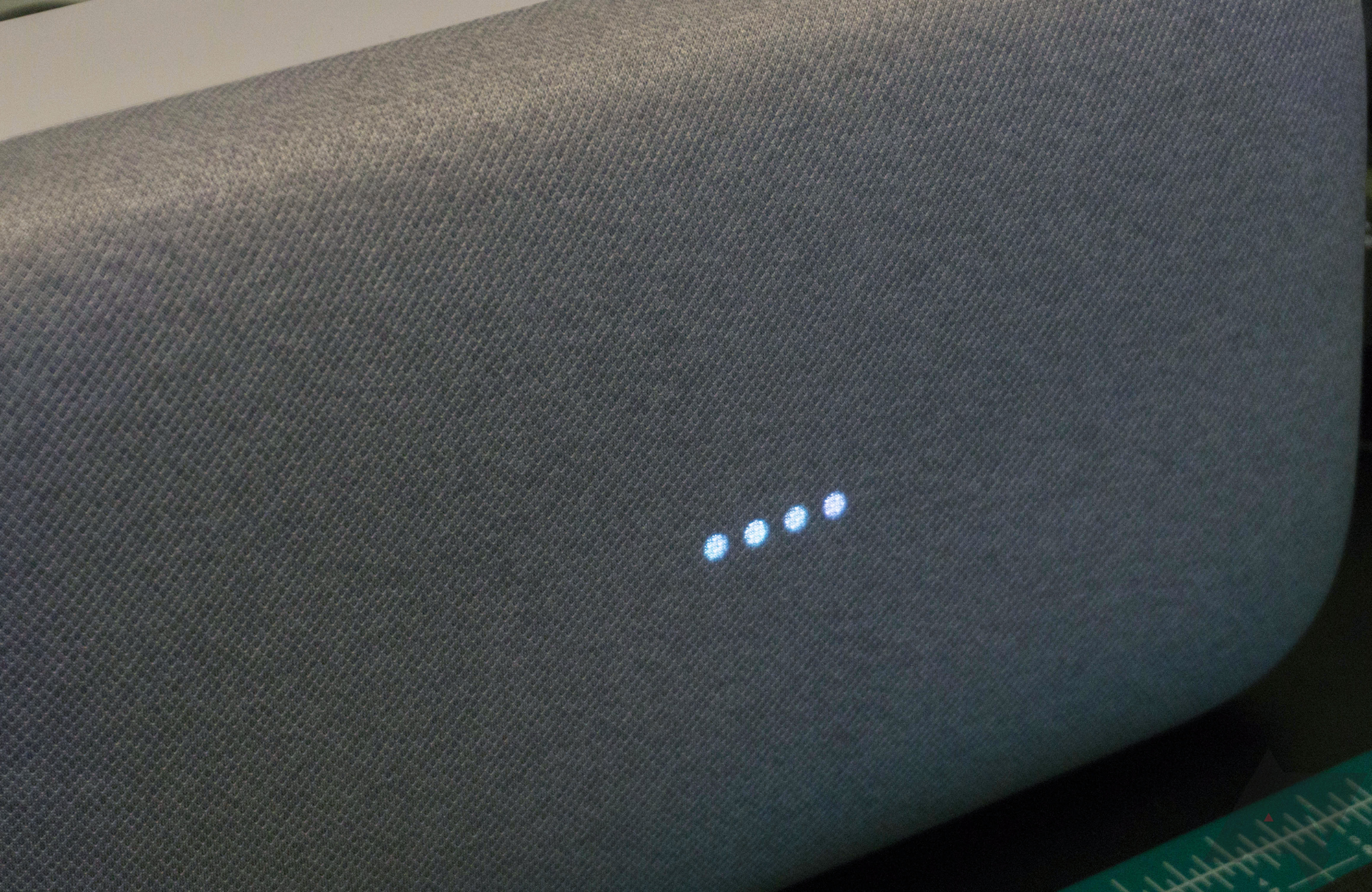
| Google Home Max review: The best (and most expensive) smart speaker Posted: 04 Jan 2018 12:05 PM PST  The chances are almost 100% that everyone reading this has some way to access the Google Assistant. You might even have more than one Assistant device now that most phone released in the last few years have support and Google is handing out Home Minis like they’re going to expire. The original Google Home has a respectable speaker for the size, and many people use it to listen to music. Yet, for anyone who’s serious about their tunes, the Home and Home Mini just don’t cut it. That’s where the Home Max comes in. This smart speaker is not screwing around—it’s big, heavy, and incredibly loud. The Home Max is an expensive speaker, and it’s not alone in that respect—you can spend a lot on speakers of all shapes and sizes. However, Home Max could be a great option if you care deeply about audio quality and want easy Assistant integration. The Home Max is smartly designed, feature-rich, and sounds excellent, but most consumers will find it tough to justify that $400 price tag. DesignLike other smart speakers in the Home lineup, the Google Home Max is not designed to attract attention in spite of its large size (it weighs 12 pounds). It comes in either white/gray or black colors with a fabric sheath covering the front portion where the speakers live. The traditional quartet of Assistant LEDs shine through the center of the fabric when you interact with the speaker by voice or change the volume. Behind the fabric cover are a pair of 114mm subwoofers, two 18mm tweeters, and six Class-D amplifiers. Five microphones are spread across the surface of the Home Max as well. Around back is the power port, a USB Type-C, and AUX in. The inclusion of AUX is a nice touch if you want to pipe in audio from a non-smart piece of audio equipment. I also love that the wall end of the plug is so compact. The regular Google Home has a giant plug because it contains the power circuitry, but that’s all inside the Home Max. There is also a physical mute switch on the rear of the Max, which is similar to the switch on the Home Mini. Google says it’s moved to using a switch instead of the button so people can always be assured of mute status at a glance.
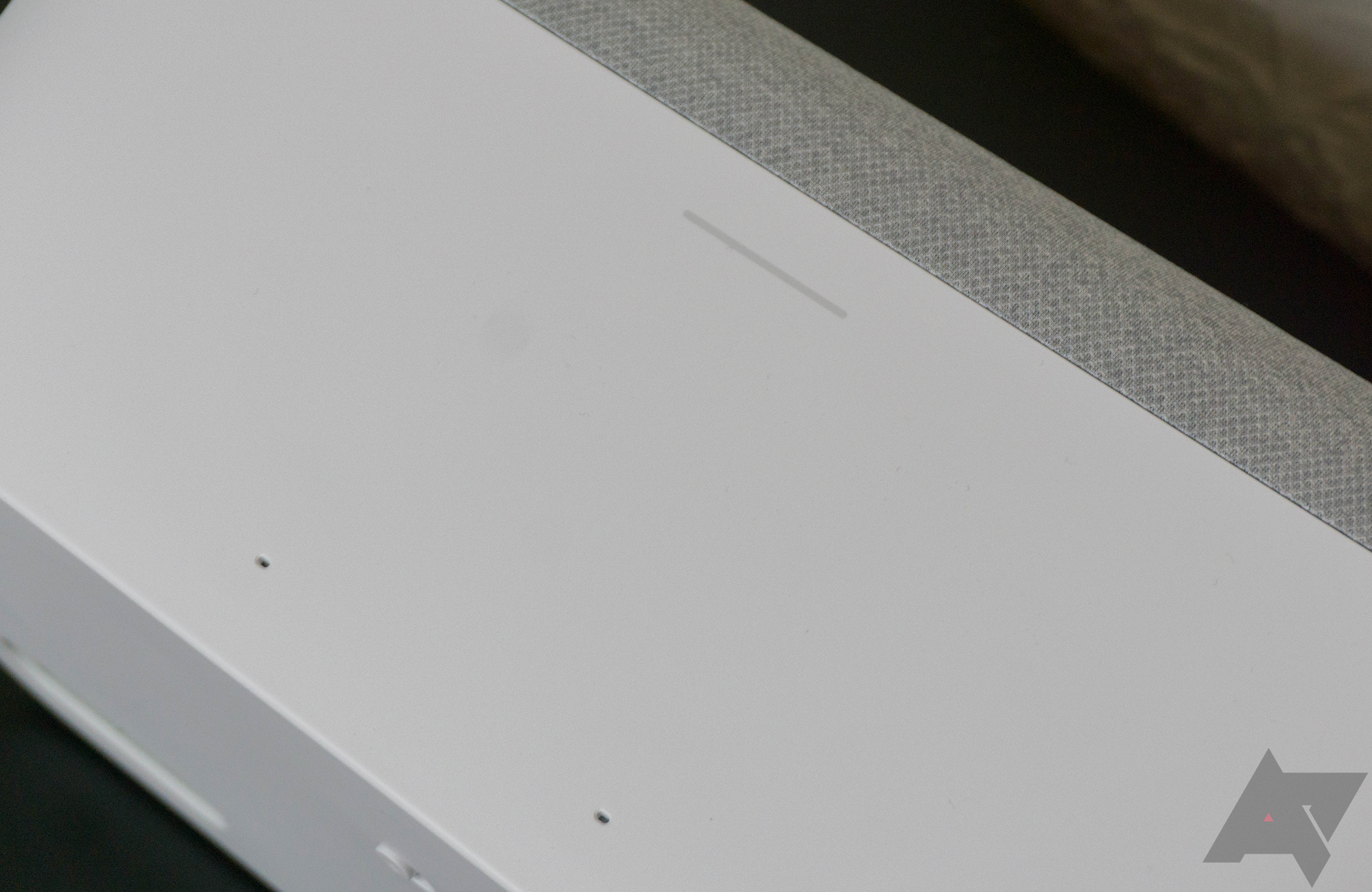
The fabric section of the Max is the widest part. The plastic cabinet tapers down slightly, ending in a flat back. On the top surface is a touch-sensitive region allowing you to play/pause music and change the volume. Oddly, this area is denoted only by a small gray bar in the middle of the device, but the touch sensor extends almost all the way to the edge. There’s a sticker on the device when you get it that indicates the tap region in the center (play/pause) and volume control (sliding left and right). I didn’t realize this was a sticker at first. I wish Google did a bit more with this sensor bar—maybe let us skip tracks? You can’t even long-press to call up Assistant. I’d be fine with a few more controls printed on the housing in the name of improved functionality.
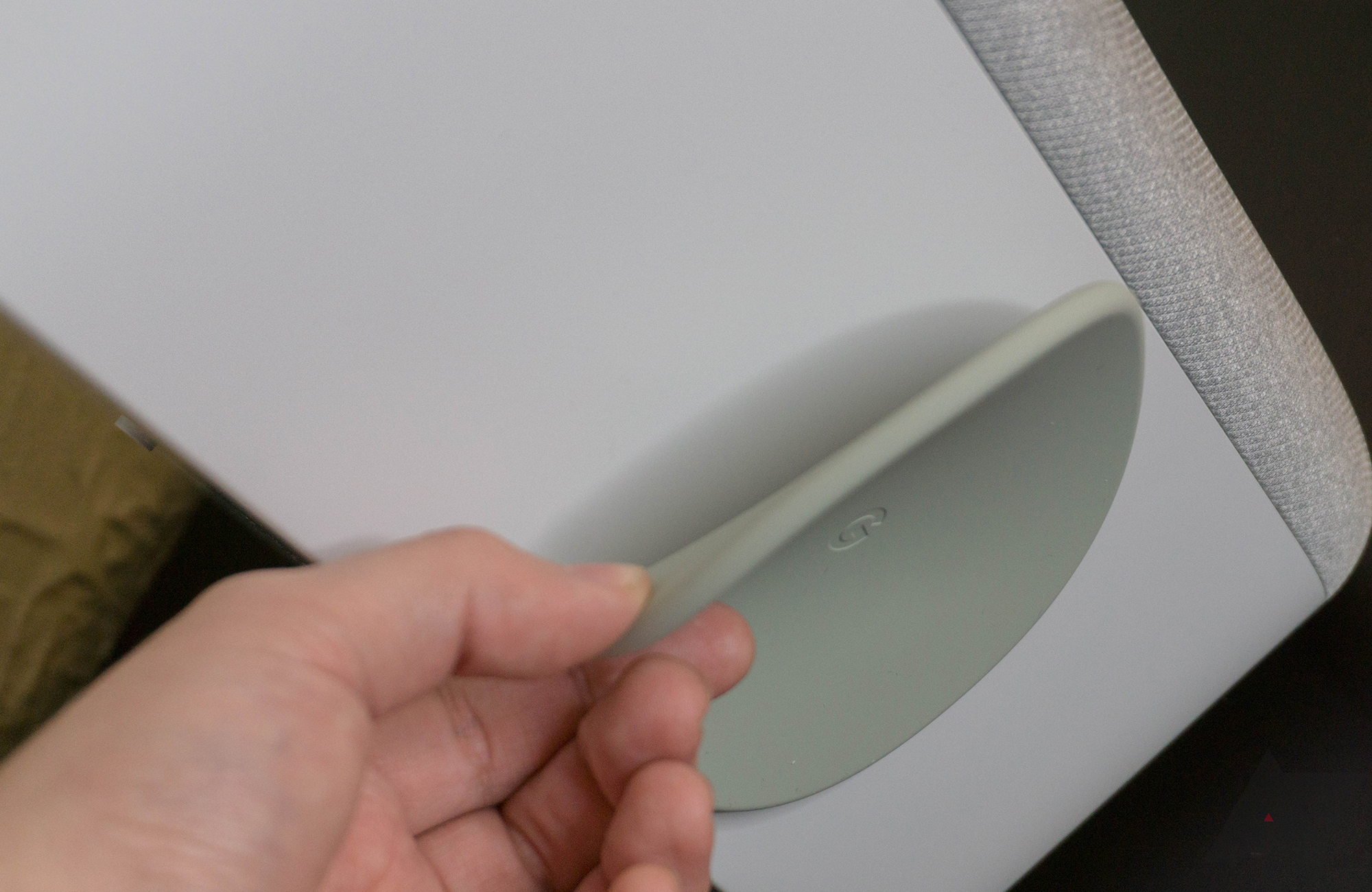
The magnetic base. The Home Max comes with a base mounted to the bottom of the speaker, but that’s not necessarily the bottom. The Max works in “landscape” or “portrait” mode, so you can peel the rubbery base off the bottom and affix it to the right side. When you prop the speaker up that way, an internal orientation sensor recognizes that and switches to mono playback (like most phones with dual speakers). Audio and voiceYou’ve probably noticed something quite unusual about the Google Home Max—it’s not an omnidirectional device like most other smart speakers. Google designed this device from the ground up with audio quality in mind, and that meant dispensing with the myth that people are going to place a speaker in the middle of the room. Not only are most speakers a little too gadgety to work as the centerpiece of your decor, but you also need to plug them in, and that’s not convenient on your coffee table. Most people put speakers on a shelf or table near a wall, and Google Home Max is prepared for that. The five microphones I mentioned earlier aren’t only for listening to your voice. They are also the key to Google’s Smart Sound feature. The Home Max listens to its own sound output in order to model acoustics in the room. According to Google, placing a speaker near a wall (as most of us do) can increase the bass response and muddy the overall sound. The Home Max identifies the acoustic properties of the room based on its location almost immediately and adjusts sound output over the course of about 30 seconds. So, if you move it, the output will gradually change until it’s once again true to the intended sound.
The touch bar indicator and two mics. That’s what Google says will happen. I moved the Home Max around a few times, and I didn’t notice a difference in sound quality. I suppose that means Smart Sound is working? What I can say is the Home Max sounds fabulous. At lower volume levels the Max has big bass and highs, and the mids are pulled back just a touch. This is the custom EQ setting from Google (this isn’t a reference monitor, so don’t expect a flat EQ). The Home app includes a slider for bass and treble, and that’s all. The Max really shines when you crank the volume to around 50%. The bass pumps, but you don’t lose clarity across the rest of the spectrum. When you push the Max past 50% volume, it gets almost unbelievably bassy. Very few speakers I’ve heard can hit the bass so hard without distorting the music, but the Max still sounds crisp and extremely good. 75% volume is about as loud as I can reasonably go. My office isn’t big enough to contain more sound, and you can hear the music clearly throughout the house at that volume. The few times I pushed it a bit more in the name of science, I could detect some slight, almost not-worth-mentioning distortion. In a larger space, you could probably crank it all the way up and still have a good experience. You’d probably have to buy some very expensive, complicated enthusiast audio hardware to do any better.
LEDs light up behind the fabric to indicate the speaker is listening. The Max also works in pairs, which you set up via the Home app. This is when you’d rotate the speaker to stand up and play in mono mode. Then one speaker gets the left channel, and the other gets the right. I can only imagine how loud they are in true stereo. For $800, I should hope the answer is “really” loud. Another benefit of having all those microphones is that the Home Max can hear you incredibly well. Even when I’m blasting music at 75% volume, I can use Assistant voice commands. In my experience, as long as you can hear yourself saying “OK Google,” so will the Home Max. As soon as it hears the hotword, the audio is turned down for the duration of your command. The Assistant voice that comes out of the Max is almost eerie sometimes. It sounds like someone is standing in the room, which is aided by Google’s increasingly realistic speech synthesis ConclusionThe Google Home Max is the best-sounding smart speaker you can purchase right now. It has all the same Assistant capabilities as the smaller members of the Home family, but the audio quality is fantastic. Tracks sound crisp, and the bass is powerful without being overbearing. I love listening to music on this device, and it won’t miss Assistant commands even with the volume cranked up. It’s remarkably minimalist for being so gigantic, but the touch bar controls are a bit clunky. The “Chalk” colored speaker will probably fit most decor better than the “Charcoal” version. In either case, the fabric cover gives the speaker a cozy vibe.
All the Homes. Does a $400 smart speaker make sense for most people? Probably not. Although, Apple is going to try and sell the HomePod for only $50 less. In that context, the Home Max seems like a real bargain. You could probably get a more flexible sound system for a similar price with some high-end bookshelf speakers and a Chromecast Audio, but it’s nice having everything ready out of the box with the Home Max. This seems like a vanity project for Google, but it’s a good one. Powered by WPeMatico The post Google Home Max review: The best (and most expensive) smart speaker appeared first on Guaripete. |



| You are subscribed to email updates from Software Trending News. To stop receiving these emails, you may unsubscribe now. | Email delivery powered by Google |
| Google, 1600 Amphitheatre Parkway, Mountain View, CA 94043, United States | |

No comments:
Post a Comment