Software Trending News – Guaripete | Online Store |
- How to permanently delete your Snapchat account
- This $27 Lightning cable will change the way you use cables forever
- Pokémon Go Gen 2 Guide: What's new and when it's coming!
- The Week in Tech: Is Now the Time to Consider App Rentals?
- Cinco razones por las que Arch Linux sigue siendo una de las mejores distribuciones actuales
- Windows 10 Creators Update: new options to defer updates
- Cómo instalar una versión portable de Vivaldi y poder llevar un navegador completo a cualquier lado
- Así ha reaccionado el mundo tenológio en redes sociales frente al veto anti-inmigrantes de Trump
- Trails: Lossless Web Navigation experiment by Mozilla
- Some Johto region (Gen 2) Pokémon will start to appear in Pokémon GO very soon
| How to permanently delete your Snapchat account Posted: 29 Jan 2017 07:07 AM PST 
Snapchat is fun, fast, and super-popular, but it’s not for everyone all the time. And that’s okay. Updated 1/29/17 to reflect Snapchat’s new 30-day account deactivation policy. Snapchat can be really fun for sending quick snaps to your friends or looking at specialty content. But it’s not for everyone. If you made a Snapchat account and you’ve decided that you want to step away for awhile, you can deactivate your account in just a few easy steps using a web browser. (Sadly, you can’t delete your account from the Snapchat app for iPhone.) How to deactivate your Snapchat account
Once you’ve done this, your Snapchat account will be deactivated. Your friends will no longer be able to send you snaps, and you won’t be able to log in to Snapchat without reactivating your account. You’ll also receive an email to your contact address confirming the deactivation, as well as instructions on how to reactivate your Snapchat account within 30 days of deactivation. How to reactivate your Snapchat accountIf you’ve had second thoughts about deleting your Snapchat presence, you can reactivate your account in a jiffy.
How to permanently delete your Snapchat accountWant to say goodbye to Snapchat forever? Just follow the deactivation steps, then wait 30 days. After that time period, your account will be filed as permanently deleted and you’ll no longer be able to recover it. Just remember that once this happens, there’s no going back.
If you want to make sure your account has truly been deleted, attempt to log in using your old credentials. If the account has been wiped, there’ll be no way to log back in. Powered by WPeMatico The post How to permanently delete your Snapchat account appeared first on Guaripete | Online Store. Related posts: How to download, sign up, and get started with Snapchat How to download, sign up, and get started with Snapchat  How use Memories on Snapchat How use Memories on Snapchat  How to delete your Yahoo! data and shut down your account How to delete your Yahoo! data and shut down your account Related posts brought to you by Yet Another Related Posts Plugin. |
| This $27 Lightning cable will change the way you use cables forever Posted: 29 Jan 2017 07:07 AM PST Ever get tired of plugging your Lightning cable into your iPhone everytime you want to charge it or sync it with your computer? Don’t you wish there was an easier way? Sure, the Lightning cable can go into your iPhone and iPad either way, which makes it a little easier to use, but you still need to find the charging port, which can be a pain in the dark. This Lightning cable will change your life! Learn More With the Pluggie Lightning cable you leave the charging end in your Lightning port all the time, and the magnetic end of the cable connects to it for even easier charging. The cable should last longer than other options thanks to its braided nylon & anodized aluminum casing, and it comes with a silicon strap to help keep it neat and organized.
Some of the key features of this cable include:
Save 30% on this Lightning cable today! Learn More Don’t fumble around with trying to get your iPhone or iPad plugged in at night, and make it so much easier. At just $27 it isn’t much more than you’d pay for another Lightning cable from Apple, but this one adds some great additional functionality. You can also get them in a Micro-USB option or combo pack, depending on your needs! Powered by WPeMatico The post This $27 Lightning cable will change the way you use cables forever appeared first on Guaripete | Online Store. |
| Pokémon Go Gen 2 Guide: What's new and when it's coming! Posted: 29 Jan 2017 07:07 AM PST 
When will Pokémon Go roll out Gen 2? Babies, new evolutions, new Pokémon and more! Pokémon Go is getting new Pokémon from the second generation. It starts with Togepi, Pichu, and the other Gen 2 babies the Johto Region in Pokémon Gold and Pokémon Silver video games, but there’s lots more to come. That includes new evolutions — and new split evolutions! — for Gen 1 Pokémon, and all new Gen 2 Pokémon as well. Here’s everything you need to know! Trending: Hatch Gen 2 babies | Evolve Togetic | Prepare for Gen 2 evolutions Guides: Pokémon Go tips and tricks | Pokémon Go cheats Wait. Stop the video and replay that! Gen 2 Pokémon are already here?!Some of them! From Pokémon Go:
Babies! Which ones?
Almost all of them! Here’s the deal, though — you have to hatch them from eggs. No catching, no spawns, no lures, no incense. Just. Eggs.
No Tyrogue yet (baby Hitmonchan, Hitmonlee, and Hitmontops), likely due to the mechanics involved in the split evolutions, one of which hasn’t been introduced yet, and merging the Hitmon candy. How to hatch Pichu, Togepi, and more babies in Pokémon Go! Can Togepi be evolved into Togetic yet?
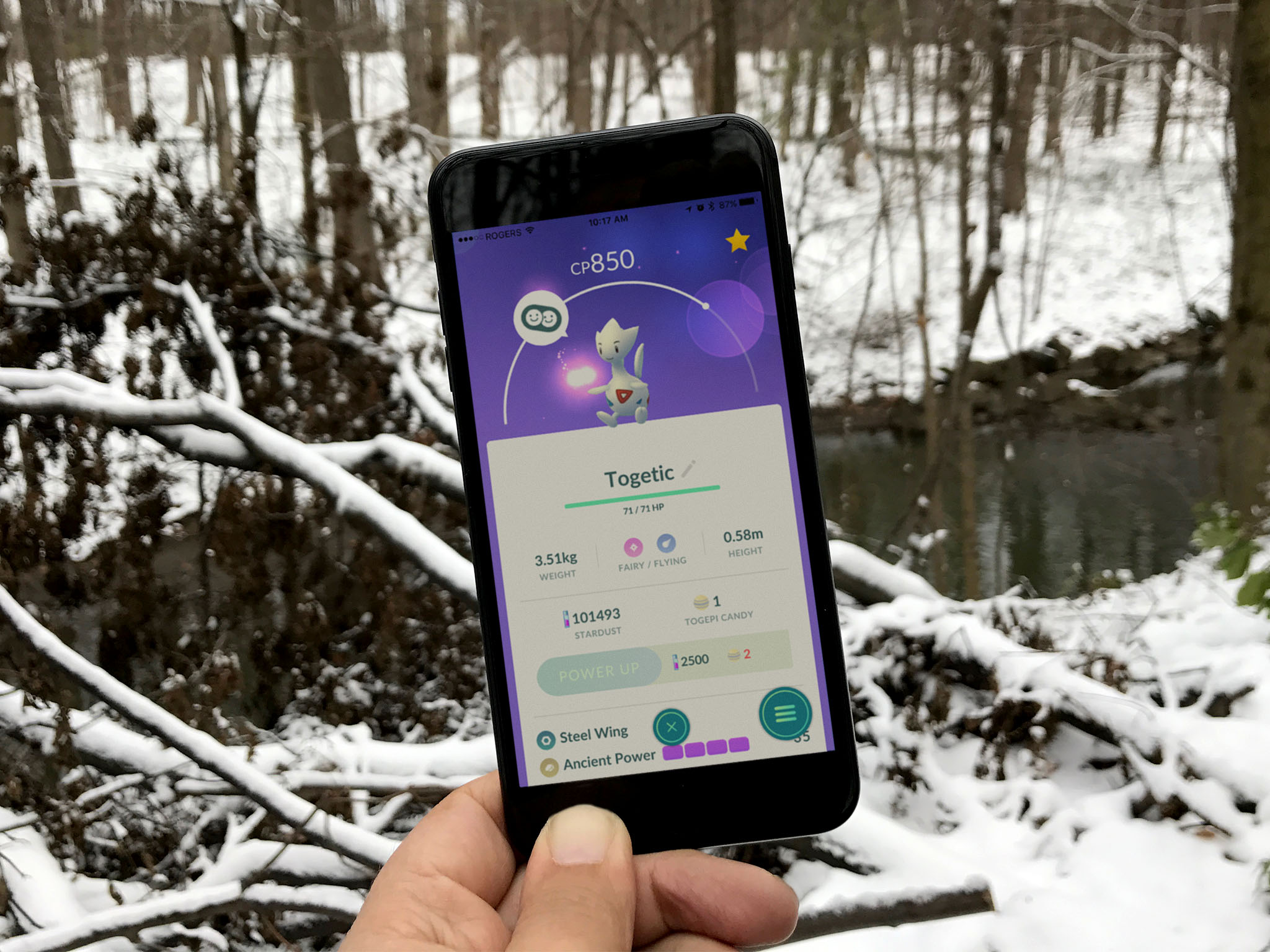
Sure can! Togetic is the only other Gen 2 Pokémon already in the game and since she can’t be hatched from an egg or caught in the wild, evolving Togetic is currently the only way to get her. And yes, that makes Togetic one of the rarest Pokémon in the game right now! How to evolve Togetic in Pokémon Go What about new evolutions for Gen 1 Pokémon in Gen 2?They’re on their way! Evolution items have been found in the code for the latest version of Pokémon Go. Based on their names, it’s possible you might need to acquire these items in order to get the Gen 2 evolutions. From The Silph Road:
Here are all the new evolutions expected for Gen 2:
So, yeah, start saving that candy and getting those high-stat Pokémon ready to evolve! Here are all the Pokémon and Candy you need to prepare for Gen 2 evolutions! Which all-new Pokémon are coming in Gen 2?There’ll be 100 new Pokémon for the Gen 2 Pokédex in Pokémon Go. With the babies and new evolutions for Gen 1 Pokémon, the full list is as follows, including types and max CP (as estimated by GamePress.
For images and more on all the Gen 2 Pokémon, see Bulbapedia So when are the rest of the Gen 2 Pokémon arriving already?Here’s what Pokémon Go said in December of 2016:
That means we should see more by February or, if things go long, by March of 2017. Keep this page bookmarked and we’ll let you know more as soon as it’s announced — or spawns! Any Pokémon Go Gen 2 questions?If you have any questions on Pokémon Go Gen 2 or any theories you want to share, drop them in the comments below? Pokemon Go
Powered by WPeMatico The post Pokémon Go Gen 2 Guide: What's new and when it's coming! appeared first on Guaripete | Online Store. Related posts: How to hatch Pichu, Togepi, and more babies in Pokémon Go! How to hatch Pichu, Togepi, and more babies in Pokémon Go!  How to hatch Pichu, Togepi, and Gen 2 babies in Pokémon Go! How to hatch Pichu, Togepi, and Gen 2 babies in Pokémon Go!  How to get Togetic in Pokémon Go How to get Togetic in Pokémon Go Related posts brought to you by Yet Another Related Posts Plugin. |
| The Week in Tech: Is Now the Time to Consider App Rentals? Posted: 29 Jan 2017 07:07 AM PST  Has the time come to consider app rentals? What's coming in iOS 10.3? We look at both topics in our Sunday week in review. Trending, Jan. 22-28, 2017 Apple launches iOS 10.3 to developers The next significant iOS update has now entered the beta testing phase. Version iOS 10.3 offers a new Find My AirPods feature and updated Apple ID Profile. Other notable iOS 10.3 features include a new app ratings API, a floating iPad keyboard, changes to app animations, and more. Apple is likely to release iOS 10.3 to the public this spring. See also:
 A new way to get Mac apps This week, digital app renting became a reality. For $9.99 per month, Setapp subscribers can enjoy more than 60 Mac apps. Access to these apps is unlimited and includes all updates and in-app purchases. To get started with the Setapp app rental service, subscribers download a small app which creates a folder that's available via the Finder on your Mac. From here, you'll see all of the apps available, including descriptions and screenshots. To install, simply click on the app icon. Are you considering app rentals?  Other tech stories you might have missed this week:
Around the App Store Our finely curated app collections lists continue to grow, with the following entries added or updated in the last week:
 Meanwhile, Christine Chan added four new titles to the AppAdvice app review library:
Gadget News Popular game controller maker Gamevice has rolled out second-generation devices for the iPhone and iPad. The new controller for the iPhone/iPhone 7 Plus features revamped buttons and thumbsticks to offer even more comfortable game play. It's also lighter than the original version. Instead of a built-in battery like the first generation, the new model uses power from the iPhone itself. Also compatible with the iPhone 6/6s and iPhone 6/6s Plus, the controller offers a built-in Lightning port. That means users can charge their iPhone and Gamevice simultaneously. It also adds a headphone jack to the equation, which is perfect for Apple's latest handsets. Looking for a new accessory? Perhaps one of these new lists will help:
Powered by WPeMatico The post The Week in Tech: Is Now the Time to Consider App Rentals? appeared first on Guaripete | Online Store. |
| Cinco razones por las que Arch Linux sigue siendo una de las mejores distribuciones actuales Posted: 29 Jan 2017 07:07 AM PST  Instalar Arch Linux es algo comparable a construir tu propia casa. Tienes que excavar los cimientos, levantar las paredes, construir los techos, instalar la fontanería y la electricidad… Y luego todo lo que falta. En pocas palabras, Arch Linux no es comparable a cualquier otra distro, que instalas y está lista para funcionar con su escritorio y su lista de software base. Tengo varios ordenadores en mi posesión: dos de sobremesa con Windows, uno de ellos en casa (que uso para jugar) y otro en mi estudio de grabación (que utilizo para mi otro trabajo diario). Además, tengo un ordenador portátil que me llevo a todas partes donde tengo instalado Arch Linux. En este portátil, por cierto, desarollo la mayor parte de mi trabajo como blogger. ¿Por qué? En pocas palabras, porque estoy enganchado. Creo que hay razones para considerarla como una de las mejores distros de la actualidad. Vale la pena comentar que hasta hace pocas semanas en este ordenador usaba Ubuntu MATE porque siempre he tenido un cariño especial por GNOME 2, pero siempre acabo volviendo a Arch. Además, he utilizado otras distros como openSUSE, distintos sabores de Ubuntu, Elementary OS, Linux Mint, Debian… he probado muchas, pero para mi gusto Arch les lleva muchísima ventaja. ¿Por qué? Aquí están mis motivos. Por la comunidad, para la comunidadEste es uno de sus puntos fuertes. Se trata de un proyecto dirigido única y exclusivamente a los usuarios, no tiene que preocuparse por lo que quiere el mercado o sus clientes, lo que podría afectar a su desarrollo de formas muy, muy negativas. Ni siquiera estoy seguro de que Arch tenga una estructura organizada. La distro sobrevive debido a los esfuerzos de muchas personas en la comunidad y el círculo de desarrollo principal. A ninguno de sus contribuidores se les paga por su trabajo, y dependen de los esfuerzos de los usuarios, y de ciertas instituciones como RedIRIS en el caso de España, para mantener sus servidores up-and-running. Lo que sí tienen es un gestor de paquetes propio (Pacman) y repositorios oficiales para los componentes principales del sistema, pero más allá de eso es todo de la comunidad, para la comunidad. Y esto lleva bastantes años funcionando bien, doy fe de ello. Arch Linux no parchea nada. Se parece en este sentido a una experiencia con Android puro y duro, donde usas lo que se ha desarrollado. Cuando instalas y usas un paquete no ha sido ajustado por el equipo de desarrollo de la distro, sino que te llega tal y como se liberó. Un enorme repositorio de softwareAún no he encontrado un sólo paquete que esté disponible para otras distribuciones Linux y que no lo esté para Arch Linux a excepción, quizá, de ciertos paquetes específicos de algunas distros. La responsabilidad de esto la tiene el Arch User’s Repository o AUR. Este repositorio lo mantienen los usuarios, y a través de él se pueden instalar y compilar paquetes desde el código fuente, usando gestores específicos como Yaourt. Y estos gestores se usan de la misma manera que el principal. Supongamos que queremos instalar el paquete
Ahora, imaginemos que queremos instalar Google Chrome usando Yaourt:
Cuando instalamos un paquete del AUR no tenemos que proporcionar la contraseña administrativa, a no ser que el proceso de instalación nos la solicite más adelante (que lo hará). Cualquier programa que se aloje en este repositorio se puede instalar usando esta fórmula, sin añadir PPAs ni nada parecido. Además, los PPA de Ubuntu no tienen una función de búsqueda centralizada. La verdad es que openSUSE, a través de software.opensuse.org, implementa el sistema de búsqueda de cualquier programa de forma más eficiente, pero no hay forma de hacerlo e instalarlo desde la terminal. El AUR cuenta con la búsqueda centralizada y, además, permite instalar cualquier programa que busquemos desde la terminal. Casi todos los entornos de escritorio a tu disposiciónTodos sabemos que muchas distribuciones Linux cuentan con un escritorio predefinido: Ubuntu tiene Unity, Linux Mint cuenta con Cinnamon, openSUSE con KDE… Y aunque se puedan instalar otros entornos gráficos, tienden a provocar conflictos que malogran la experiencia de uso. Lo he intentado con Ubuntu, pero siempre termino con un escritorio que no acaba de funcionar. Con Arch tengo XFCE, LXQT, Budgie y Deepin (escritorios ligeros, no es una máquina muy potente la pobre) instalados en una sola máquina y no he tenido un solo problema. Es cierto que en los sistemas basados en Ubuntu sí suele haber más problemas debido a que tienen componentes basados en GNOME, que suelen crear conflictos. Otras distribuciones, sin embargo, toleran la convivencia de distintos entornos gráficos sin problema. Control total para el usuarioEn la filosofía de Arch Linux, el usuario tiene el control. No hay intermediarios. No hay una agenda empresarial u objetivos que cumplir tras el proyecto. Como eres tú el que lo construye todo desde cero, puedes elegir los componentes que tendrá el sistema y que crees que te darán una experiencia de uso óptima. Y como los desarrolladores no parchean nada, lo que obtienes es una experiencia de uso pura. Eso es lo que significa que Arch Linux sea personalizable: la auténtica personalización va mucho más allá de hacer que el sistema tenga mejor o peor aspecto, se trata de hacer que el sistema sea justamente lo que el usuario necesita. Ni más, ni menos. Resumiendo: Arch será lo que tú quieras que sea. Y en mi humilde opinión eso es algo muy bueno. Aprender lo que es Linux, desde ceroDebo decir que cuando empecé a sumergirme en el mundo de Linux con Ubuntu 9.10 Karmic Koala, la experiencia me gustó mucho pero no entendía cómo funcionaba el sistema. Era todo transparente al usuario, veía todos los pasos que la distribución daba cuando se actualizaba o cuando instalaba un paquete (algo que siempre me ha parecido muy positivo), pero no entendía el porqué. Cuando a principios de 2012 me puse con mi primera instalación de Arch Linux (que me costó unas cuantas horas) de repente lo entendí todo: por qué el sistema de archivos se organiza como lo hace en lugar de creérmelo porque sí, qué era el dichoso asunto de las dependencias que Ubuntu resolvía por mí, qué paquetes de un escritorio me interesan de verdad y cuáles no, me tocó editar archivos de configuración a mano… En esas horas de instalación y configuración aprendí mucho. Ahora ya llevo unas cuantas instalaciones de Arch a las espaldas, incluso en alguna ocasión he optado por el camino fácil y he instalado Manjaro Linux, aunque en la actualidad ISOs como Arch Anywhere facilitan mucho el proceso de tener Arch Linux puro y duro en tu máquina. Ahora bien, tal y como algunos de vosotros ya dijisteis en algunos comentarios sobre el artículo de Arch Anywhere, Arch Linux es para aprender. Usar los scripts automáticos de instalación pueden hacer que el sistema pierda su esencia más pura, de acuerdo, pero perder un fin de semana leyendo la guía de instalación de la wiki no está al alcance de todo el mundo. ConclusionesComo decía el anuncio aquel, “cuando haces pop, ya no hay stop“. Esa ha sido mi experiencia hasta ahora con Arch: voy y vuelvo mucho (padezco de un síndrome conocido como distro-hopping), pero esta distribución sigue siendo siempre mi primera opción. Es lo bueno de Linux: puedes probar las distros que quieras y volver a alguna concreta si te gusta más que otras. Te enganchará porque te da un sistema sin bloatware y totalmente personalizado. Te encantará lo fácil que es instalar programas, y te encantará que siempre puedas tenerlo al día gracias a su modelo rolling release. Te encantará que sus foros sean tan activos y que siempre puedas encontrar una solución a un problema buscando un poco. Personalmente, esto es lo que yo quiero como usuario de Linux. Dicho esto, Arch no es para todo el mundo. Cuesta mucho instalarlo y dar los pasos necesarios para ello, y hay que tener ganas de aprender y de esforzarse para lograr que funcione (tampoco está de más contar con la ayuda de una persona con conocimientos de Linux en esa primera experiencia). Ya lo dije en otro artículo: mi primera instalación duró ocho horas, conmigo leyendo la wiki y yendo muy, muy despacito, pero cuando lo conseguí la sensación de victoria y satisfacción fue inenarrable. Arch Linux es para aquellos que quieran invertir tiempo en tener una distribución Linux robusta. Debido a su filosofía, aprenderás mucho en el proceso. Sobre todo, los aspectos básicos sobre cómo funciona un sistema Linux. Y una vez lo hayas hecho, todo lo demás será coser y cantar. Si estás dispuesto a hacer todo eso, entonces no lo dudes: instala Arch Linux desde cero. Si te pica la curiosidad pero no te atreves, entonces puedes probar con la ya citada Manjaro o con Antergos, que está recibiendo críticas muy positivas. Arch Linux es un mundo que vale la pena descubrir, y te animo a que en algún momento intentes instalarlo en su forma más pura. Imágenes | painlessrob, kant-o También te recomendamos – Powered by WPeMatico The post Cinco razones por las que Arch Linux sigue siendo una de las mejores distribuciones actuales appeared first on Guaripete | Online Store. Related posts: Arch Anywhere te permite instalar Arch Linux puro y duro sin volverte loco en el proceso Arch Anywhere te permite instalar Arch Linux puro y duro sin volverte loco en el proceso  Las distribuciones Linux más interesantes de 2016 Las distribuciones Linux más interesantes de 2016  Steam se hace por fin compatible por defecto con drivers gráficos Open Source en GNU/Linux Steam se hace por fin compatible por defecto con drivers gráficos Open Source en GNU/Linux Related posts brought to you by Yet Another Related Posts Plugin. |
| Windows 10 Creators Update: new options to defer updates Posted: 29 Jan 2017 07:07 AM PST  Microsoft is working on improving the updating options of some editions of its Windows 10 operating system currently that provide users with better options to defer updates. The option to defer updates in current versions of Windows 10 is limited in several regards. First, it is only available if the Windows 10 edition is Pro, Enterprise or Education. Second, deferring only allows you to postpone the installation of feature updates, but not other updates. Microsoft released two feature updates so far for Windows 10, the November 2015 update, and the Anniversary Update in 2016. The next feature update will be the Creators Update which supposedly comes out in April 2016. Windows 10 Creators Update: defer updatesOne of the new options to defer updates is the ability to pause updates in Windows 10. This allows you to block the installation of updates for up to 35 days but no longer. This prevents the installation of updates, including those of feature updates. What it does not do however is block Windows Defender definitions from being downloaded and installed. The most recent Windows 10 Insider Build 15019 comes with added options to that. You see the new options on the screenshot above. If you do open the Advanced Options under Settings > Update & Security > Advanced Options however, you won’t see those new preferences listed there. They become available only when you pause updates, and unpause them again. It is unclear right now whether this is a bug or intended. The reason I think this is bugged right now is that the menu vanishes after a couple of seconds. The following three options become available:
I could not find out whether those options are also available for Home editions of Windows 10. My guess is that this won’t be the case. The new options make it easier for users and administrators to delay the installation of updates on machines running a Windows 10 edition that supports these new options. Closing WordsThere you have it: new options to pause updates or delay them, and to switch between the two available branches are now easier to access than before. Now You: Good addition, or not far reaching enough? What’s your opinion? Ghacks needs you. You can find out how to support us here or support the site directly by becoming a Patreon. Thank you for being a Ghacks reader. The post Windows 10 Creators Update: new options to defer updates appeared first on gHacks Technology News.       Powered by WPeMatico The post Windows 10 Creators Update: new options to defer updates appeared first on Guaripete | Online Store. Related posts:Windows 10 Creators Update: Pause Updates feature added  Block Windows Updates with Windows 10 Update Switch Block Windows Updates with Windows 10 Update Switch  Windows 10 Creators Update: new System Reset option Windows 10 Creators Update: new System Reset option Related posts brought to you by Yet Another Related Posts Plugin. |
| Cómo instalar una versión portable de Vivaldi y poder llevar un navegador completo a cualquier lado Posted: 29 Jan 2017 04:04 AM PST  Vivaldi es un navegador web bastante nuevo que ha llamado la atención rápidamente por ofrecer varias características novedosas e interesantes en un mercado donde a veces parece que ya no quedaran ideas. A la cabeza de Vivaldi está Jon von Tetzchner, co-creador y antiguo CEO de Opera, que cree que todos tenemos necesidades diferentes como usuarios, pero los navegadores parecen ser todos iguales. Es por ello que Vivaldi está orientado bastante a usuarios avanzados y también apuesta mucho por la personalización. Una característica interesante que incluye este navegador en la posibilidad de usar una instalación “standalone”, que es casi igual que una versión portable. Es decir, puedes instalar el navegador en otro medio como un pendrive y usarlo en cualquier otro equipo manteniendo tu configuración y favoritos.
Si decides instalar Vivaldi de esta forma en un medio extraible podrás usar el navegador donde sea que lo insertes. Solo debes tener en cuenta que no es exactamente igual que una aplicación portable, porque sí necesita instalación como tal y no usa una sola carpeta para almacenar todos los archivos, de forma que puedas mover esa carpeta de un sitio a otro y el navegador siga funcionando perfectamente. La instalación “standalone” simplemente está separada del sistema operativo y podrías instalar múltiples versiones de Vivaldi en tu mismo disco duro y ejecutarlas de forma separada sin que una sobrescriba a la otra. Instalar Vivaldi en modo StandaloneInserta el dispositivo en el que quieres instalar Vivaldi y descarga el la última versión del navegador desde su web oficial. Una vez descargado el instalador, haz doble click sobre él para iniciar la instalación. Cuando aparezca la primera ventana de bienvenida, haz click en el botón “Advanced” para cambiar las opciones de instalación. Elige idioma y bajo el tipo de instalación, selecciona “Install standalone” en lugar de para un usuario o todos. Por último, en el campo donde se selecciona la carpeta de destino haz click en el botón “Browse” para navegar por los directorios y elegir el medio externo donde vas a instalar Vivaldi. Ahora puedes aceptar e instalar. Vivaldi creará dos carpetas en el medio, una llamada “Application” y otra llamada “User Data”. En la primera se encuentra el ejecutable de Vivaldi que deberás pinchar para lanzar el navegador en otro ordenador. Esta instalación conserva tu configuración, las opciones de personalización y todos tus marcadores. En Genbeta | Jon von Tetzchner, creador de Vivaldi: Opera tiró por la ventana 19 años de trabajo También te recomendamos – Powered by WPeMatico The post Cómo instalar una versión portable de Vivaldi y poder llevar un navegador completo a cualquier lado appeared first on Guaripete | Online Store. Related posts: Neon es el nuevo navegador experimental de Opera y luce como un mini sistema operativo Neon es el nuevo navegador experimental de Opera y luce como un mini sistema operativo  Cómo controlar qué webs pueden hacer uso de Flash en cada navegador web Cómo controlar qué webs pueden hacer uso de Flash en cada navegador web  Cómo abrir todos tus archivos PDF con el navegador sin tener que instalar programas adicionales Cómo abrir todos tus archivos PDF con el navegador sin tener que instalar programas adicionales Related posts brought to you by Yet Another Related Posts Plugin. |
| Así ha reaccionado el mundo tenológio en redes sociales frente al veto anti-inmigrantes de Trump Posted: 29 Jan 2017 02:04 AM PST  Donald Trump ha conseguido unir a los líderes tecnológicos en una sola voz en su contra. Ha pasado después de que este viernes firmase una orden ejecutiva para suspender durante 90 días la concesión de visados a todos los ciudadanos de Libia, Sudán, Somalia, Siria, Irak, Yemen e Irán bajo el pretexto de querer proteger el país frente a los terroristas islámicos. Esta norma es injusta para miles de refugiados que huyen de las guerras y atrocidades de sus países, y ha hecho que todo el mundo salga a la calle en manifestaciones y protestas. Los altos cargos de las mayores empresas tecnológicas también se han manifesto públicamente contra ella en las redes sociales, aquí tenéis lo que han dicho algunos de ellos.
Las reaccione del mundo tecnológico
Sundar Pichao, CEO de Google, ha publicado un memo interno pidiendo a los empleados de los países afectados que vuelvan a Estados Unidos cuanto antes. También ha dicho que más de 100 empleados de la empresa se verán afectados, y ha retuiteado un artículo sobre cómo le afectará la medida a una de sus trabajadoras manifestándole su apoyo. Mientras, el cofundador de Google Sergey Brin ha sido visto en una de las manifestaciones en contra de la orden ejecutiva diciendo que está ahí porque él también es un refugiado.
Mark Zuckerberg fue uno de los primeros en reaccionar, recordando que sus abuelos eran de Alemania, Austria y Polonia, y que los padres de su esposa son refugiados de China y Vietnam. “Estados Unidos es un país de inmigrantes y deberíamos estar orgullosos de ello”, ha dicho. “Necesitamos mantener a este país seguro, pero debemos hacerlo centrándonos en las personas que realmente representan una amenaza”. Por su parte, Tim Cook le ha escrito una carta a sus empleados en la que ha asegurado que ha dejado claro en Washington que Apple cree profundamente en la importancia de la inmigración, tanto para el futuro de su empresa como para el del país. Ha dicho que Apple no existiría si no fuera por los inmigrantes, admitiendo que algunos altos cargos se verán afectos, y ha terminado citando a Martin Luther King: “Podemos haber venido en diferentes barcos, pero ahora estamos en el mismo.”
Elon Musk ha sido criticado en varias ocasiones por formar parte del equipo de consejeros de Trump, pero tiene clara su postura. “Muchas personas afectadas negativamente por esta política son fuertes partidarios de los Estados Unidos”, ha dicho. “Han hecho bien, no han hecho nada malo y no merecen ser rechazados“. Mozilla por su parte ha emitido un comunicado calificando la medida de “perjudicial para fomentar una cultura de innovación y el crecimiento económico”. Aseguran que cerrándole la puerta a inmigrantes talentosos, incluídos los que ya están en Estados Unidos, creará una barrera para la innovación en el país.
Brian Chesky, co-fundador de Airbnb también se ha manifestado en contra tuiteando que no está bien no permitirle la entrada a refugiados o ciudadanos de otros países a América, y defendiendo que deben estar del lado de los afectados. También es uno de los que más ha arrimado el hombro, anunciando que Airbnb proporcionará alojamiento gratuito a refugiados y a a quienes no tengan permitido entrar en los Estados Unidos. Ha prometido más información próximamente. Brad Smith, presidente de Microsoft, también le ha enviado un correo electrónico a sus empleados, correo hecho público por Satya Nadella, el CEO de la empresa. En él se asegura que Microsoft cree en fuerte sistema de inmigrantes capacitados. “Creemos que las leyes de inmigración pueden y deben proteger al público sin sacrificar la libertad de expresión o religión de la gente”.
Y por último está Jack Dorsey, máximo responsable de Twitter, que ha manifestado que el impacto humanitario y económico es real y preocupante. También ha asegurado que Estados Unidos se beneficia de lo que los refugiados e inmigrantes le dan al país. Ya hay varios medios que, como VentureBeat están sugiriendo que si Trump va a expulsar a algún empleados de Twitter del país quizá él debería expulsar a Trump de Twitter. En Genbeta | ¿Por qué los científicos se están levantando contra Trump en Twitter? También te recomendamos – Powered by WPeMatico The post Así ha reaccionado el mundo tenológio en redes sociales frente al veto anti-inmigrantes de Trump appeared first on Guaripete | Online Store. Related posts: Guía completa para borrar todas tus cuentas de redes sociales y que no quede ningún dato Guía completa para borrar todas tus cuentas de redes sociales y que no quede ningún dato  Así es la polémica ley con la que Comunidad de Madrid quiere penar los mensajes de odio en redes sociales Así es la polémica ley con la que Comunidad de Madrid quiere penar los mensajes de odio en redes sociales  Pasaporte y Facebook. EEUU te preguntará por tus redes sociales cuando visites el país Pasaporte y Facebook. EEUU te preguntará por tus redes sociales cuando visites el país Related posts brought to you by Yet Another Related Posts Plugin. |
| Trails: Lossless Web Navigation experiment by Mozilla Posted: 29 Jan 2017 01:04 AM PST  Trails is a new lossless web navigation experiment by Mozilla with the aim to fix the tabbed browsing issue of losing information during navigation. The traditional tabbed browsing model has not changed all that much in the past 15 or so years. The majority of modern browsers supports tabs, and browsers keep track of the browsing history of each tab individually. Mozilla visualizes the current — flawed when it comes to the preservation of information — tabbed browsing procedure in the following way:
What Mozilla means by that is that the actual navigational trail does not include all user actions, not that the actual information is lost (as you may load opened sites using the browsing history for instance). A look at TrailsTrails is part of Browser.html, a Mozilla research project.
Mozilla tries to preserve the whole browsing of a user using Trails, not just what is preserved right now by tabbed browsers. So, Trails preserve information that would otherwise get lost due to navigation but won’t change what users see when they use the browser. Mozilla hints that Trails might enhance the user experience in other ways, such as providing options to share entire trails and not just URLs, allowing annotation of trails, collaboration, or persisting trails. It is not clear right now how Mozilla would implement Trails in a browser like Firefox. A short demo has been uploaded to YouTube, but it shows Trails not in an actual browser interface, but on its own. Closing WordsIt needs to be noted that Trails is an experiment right now that may or may not find its way into Firefox at one point in time. While it is certainly true that some information is lost, I’m not sure if there is a really a need for something like Trails as it may add complexity to the browser depending on its implementation. While the actual trail “how did I get there” may be lost at times, tabs are usually opened in relation to one another, and users may open pages in new tabs when they don’t want to lose information displayed on the current tab. (via Sören Hentzschel) Now You: What do you think of Trails? Ghacks needs you. You can find out how to support us here or support the site directly by becoming a Patreon. Thank you for being a Ghacks reader. The post Trails: Lossless Web Navigation experiment by Mozilla appeared first on gHacks Technology News.     Powered by WPeMatico The post Trails: Lossless Web Navigation experiment by Mozilla appeared first on Guaripete | Online Store. Related posts: Mozilla: support for Windows XP and Vista until September 2017 at least Safari App: The Ultimate Guide Mozilla: support for Windows XP and Vista until September 2017 at least Safari App: The Ultimate Guide  Firefox Cliqz Test Pilot experiment available Firefox Cliqz Test Pilot experiment available Related posts brought to you by Yet Another Related Posts Plugin. |
| Some Johto region (Gen 2) Pokémon will start to appear in Pokémon GO very soon Posted: 28 Jan 2017 08:04 PM PST  The rapid success of Pokemon GO was one for the history books. Immediately following release, it not only became the dominant game on both iOS and Android, it was a sensation that seemingly everyone played. But, like almost every smartphone game, it lost most of its steam after a month or two. Pokémon GO’s audience has diminished, but still retains a following with dedicated fans. It was previously announced in December that some Pokémon from the Johto region (the region that Pokémon Gold and Silver take place in) would become available through eggs. Some Johto region (Gen 2) Pokémon will start to appear in Pokémon GO very soon was written by the awesome team at Android Police.       Powered by WPeMatico The post Some Johto region (Gen 2) Pokémon will start to appear in Pokémon GO very soon appeared first on Guaripete | Online Store. |









| You are subscribed to email updates from Software Trending News. To stop receiving these emails, you may unsubscribe now. | Email delivery powered by Google |
| Google Inc., 1600 Amphitheatre Parkway, Mountain View, CA 94043, United States | |

No comments:
Post a Comment