Software Trending News – Guaripete | Online Store |
- How to watch the BAFTA Film Awards on iPhone, iPad, and Apple TV
- Understanding screen addiction and parental controls
- Eufy’s $20 mini smart plug is perfect for a smart home beginner or expert
- Apple Launches New ‘Close Your Rings’ Website to Promote Apple Watch
- Evleaks: LG Waiting Until June to Launch Judy, Its Next Flagship Device
- Amazon Lands Exclusive Halo Gray Essential Phone and It’s $150 Cheaper Than Other New Colors
- Today Only Deal: Save $400 on a Verizon Pixel 2 XL at Best Buy
- LG’s next flagship reportedly launching in June
- Today only: Get $400 off the Pixel 2 XL at Best Buy when you activate on Verizon
- Android Auto v3.0 prepares to launch Wi-Fi projection support [APK Teardown]
| How to watch the BAFTA Film Awards on iPhone, iPad, and Apple TV Posted: 16 Feb 2018 12:05 PM PST The 2018 BAFTA Film Awards take place this Sunday, February 18, celebrating the best of the past year in film. The awards ceremony will be hosted by Joanna Lumley, taking over from Stephen Fry. Unlike other awards shows, like the Oscars or Emmys, the BAFTA Awards are not broadcast live, but rather, an edited version of the ceremony is presented on television after the actual ceremony has concluded at 9:00 p.m. on BBC One. But what if you want to skip BBC One and watch on your iPhone, iPad, or Apple TV? Well, you have some options, but those depend on where you live. In the UKIf you’re looking to watch the BAFTA ceremony right when it’s broadcast, then you’ll need to watch it on BBC One. You cannot watch the initial broadcast on a streaming device, and instead must watch your television at the appointed hour, like some sort of caveman. But if you don’t mind waiting until after the initial broadcast, the award ceremony should be available on BBC iPlayer app for iPhone, iPad, and Apple TV immediately after it plays on BBC One. Around the worldIf you live outside of the UK, your options for streaming the BAFTAs are somewhat better, but only somewhat. According to the Mirror, the BAFTA ceremony will be live streamed on the BAFTA Facebook page for international viewers. This means you should fire up the Facebook app on iPhone, iPad, and Apple TV, and watch the ceremony as it’s broadcasting on BBC One. The BAFTAs will also broadcast in America on BBC America at 8 p.m. ET. If your cable company has a live TV streaming app and you get BBC America, you can watch the ceremony as it’s broadcast through the app. Additionally, the following TV streaming services will also allow you to watch the BBC America broadcast live. QuestionsIf you have any questions about watching the BAFTA film awards on your iPhone, iPad, or Apple TV, let us know in the comments. Powered by WPeMatico The post How to watch the BAFTA Film Awards on iPhone, iPad, and Apple TV appeared first on Guaripete. |
| Understanding screen addiction and parental controls Posted: 16 Feb 2018 12:05 PM PST Subscribe to VECTOR on YouTube Prefer to listen rather than read? Hit play on the podcast version: Rene Ritchie: I’m Rene Ritchie and this is “Vector.” Today I wanted to talk about parental controls, restrictions, the things we use to control what other people can do with the devices that we control but they get to use, namely parents. This is a big topic lately. I’ll get into why in just a minute but I’m going to give you quick examples. Parental controls on iPhone and iPadOn an iPhone or an iPad you can go into Settings and then the General tab here. You can go down to Restrictions. There’s a lot of things you can control, everything from Safari, to Camera, to Siri and Dictation, FaceTime, AirDrop. You can control the ratings for explicit music, TV shows, books. You can also do privacy, location, contacts, calendars, reminders, photos. You can lock down changes so that people, for example, cannot change the accounts, the cellular data provisions. You can also control gaming. Everything from multiplayer games, to adding friends, to screen recording. Once that’s set up, unless or until they guess your passcode you can give that iPhone or iPad to your children and they will be bound by whatever restrictions you set. There’s even guided access. You can turn that on in Accessibility and then you can lock your child to just one app. The Parental Controls controversyRecently the topic of parental controls and restrictions has gotten a lot more attention. That’s largely due to this open letter from JANA Partners and CALSTRS to the board of directors of Apple, Incorporated. It’s up on the URL called ThinkDifferentlyAboutKids.com. They put it this way. More than 10 years after the iPhone’s release it is a cliché to point out the ubiquity of Apple’s devices among children and teenagers, as well as the attending growth in social media use by this group. What is less well known is that there is a growing body of evidence that for at least some of the most frequent young users this may be having unintentional negative consequences. Apple responded to this. They sent me a statement. They sent a few other people a statement. Here it is. Apple has always looked out for kids and we work hard to create powerful products that inspire, entertain, and educate children while also helping parents protect them online. We lead the industry by offering intuitive parental controls built right into the operating system. Let’s skip down to the conclusion here. We think deeply about how our products are used and the impact they have on users and the people around them. We take this responsibility very seriously. We are committed to meeting and exceeding our customers’ expectations, especially when it comes to protecting kids. Earlier on they said, “We have new features and enhancements planned for the future to add functionality and make these tools even more robust.” When rumors hit that iOS 12 was going to be scaled back, that Apple’s going to focus on reliability, this was one of the few features which was reportedly not on the chopping block — Apple’s emphasis on these parental controls — likely because of all the attention it’s been getting. Case in point, “The Wall Street Journal,” “Parent’s Dilemma — When to give Children Smartphones.” “The battle for the attention of America’s children pits parents against some of the world’s most advanced companies. It is a fight as lopsided as it sounds.” It’s a lead in an article as lopsided as it reads. “Is you child a phone addict? On the heels of two large Apple investors urging to company to address kids’ phone addiction, many parents may be wondering, ‘How do I know if my child is addicted to his/her smartphone, and how can I prevent problematic overuse?'” He went from a letter designed to get attention to a ton of attention, from The Wall Street Journal, “The New York Times.” It’s a very deep issue, a very broad issue. It has a lot of facets, and I sort of want to step back and look at the gem. To do that, I’m bringing on a guest. One screen addictionJoining me today, we have my good friend, frequent co-host, Georgia Dow. How are you Georgia? Georgia Dow: I’m good. Rene: You went to school for a long, long time. Georgia: [laughs] I did. I did a degree in psychology, I did a degree in education. Rene: I dropped out and got into computers, and you just kept going. Georgia: You did well for yourself, though, so it worked out. Rene: Not too bad. You got an education degree and a… Georgia: Psychology degree. Rene: And you worked as a teacher for a while. Georgia: I did. Rene: And you’re a mother. Georgia: I’m a mom. Rene: And you’re a chronic overachiever. [laughter] Georgia: We both have that in common, yes — type As. Rene: You’re the mother of two children? Georgia: Yes, two boys. Rene: It’s safe to say that this whole issue of screen time and device addiction, Internet addiction, social addiction, it’s not foreign to you at all? [laughs] Georgia: No, it’s… Rene: …the first time you’re hearing about it right now. Georgia: It’s not. It’s dear to my heart, one, for my own boys, but also in my practice. I deal with a lot of parents that are coming in with severe addiction to their children. I deal with parents that, because of addiction to technology, even the family is broken up to that, so it’s a big issue to that. And it’s many layered. I don’t think that there’s one easy answer to this. Rene: When people write a big letter to Apple just to get headlines and say, “You must do something to protect the tiny children and the dogs,” that’s maybe a cry for attention, not a serious look at the subject. Georgia: It’s really a parent’s job to monitor what your child is doing and to let them use or not let them use whatever you decide to do that. Apple can’t do that job. They cannot monitor your children. Rene: Tim Cook can’t come to my house and babysit? Georgia: That sounds awesome, but I… Rene: That would be so great. My kids’ hike, but it would be phenomenal. Georgia: I think he’s busy. [laughter] Georgia: I think he’s busy, and he’d probably say, “Come out and hike with me,” right? Rene: A little bit, a little bit busy. It’s always unclear to me what they mean when they say, “The government should do this,” or, “Apple should do…” and there are tools. The tools can always be better. I would love to see time-based parental controls, for example. But ultimately, it’s me, it’s my child, it’s the device in their hand in my home. Georgia: I would worry if the device itself did everything, then we would be disconnected from this conversation with our child. I like the fact that we have to time our children. That keeps me in check. I have children. [laughs] I have to remind myself to do things, so we set, sometimes, the timer on the stove or we deal with other ways, but then we’re still interacting. We look at them and say, “Are they still…?” because we’re looking at them. The phone isn’t saying, “Oh, look, they’re still on technology.” Or we’re like, “Where have they snuck off to?” We’re going, “They’re really quiet.” That’s usually a danger thing. When they’re loud, you know they’re not up to trouble. When they’re quiet, that’s when you have to… [crosstalk] Rene: You just flashed on a — please forgive me, Bill Waterson — 20th century Calvin & Hobbes remake where instead of a stuffed tiger that comes to life, and they go off sledding in the woods, Hobbes is a little Tamagotchi on his iPhone, and he’s just sitting in the kitchen all day playing, no parents around. Georgia: Yeah, that sounds sad. Rene: It’s nowhere near as fun. Devices as babysitters — or silencersGeorgia: It’s not as fun, but it does work. That’s the problem for parenting is that it works exceptionally well in being able to babysit the kids. Rene: I wouldn’t call it a babysitter. It’s a silencer. Georgia: It is a silencer. Rene: It doesn’t babysit. There’s nothing attractive going on, not on an external level. Georgia: That’s a very good point. Rene: It’s all intrinsic. Georgia: Right. Rene: You have children. Georgia: I have children, two of them. Rene: Do they use digital devices? Georgia: Yes. Yes, they do use digital devices, for sure. Rene: Was that a debate in your family, about whether they’d be allowed to, or which ones they could use? Georgia: I think that it’s a really important debate, so yeah, we did have to debate about what they were going to use, when they were going to use it, and how long they were going to use it for. Rene: Did they start off with iPod Touches, computer or tablets — iPads? Georgia: This is a little bit of a difficult question because I have every set of technology underneath the sun, so that… Rene: You work in the tech industry. Georgia: I work in the tech industry. My husband and I love video games. We have a full arcade in Maine. We have the Wii, the Nintendo, the Nintendo 64, Xbox. Rene: You’re avid gamers. Your husband’s a former IT…? Georgia: We love gaming. We love that, and so at first, we just let our kids play as they wanted to, and we realized that for one of my kids, it was not a great thing for him. He seemed agitated and upset, so then we had to have that discussion of, how much…? When we did this, that was 11 years ago. We hadn’t really talked about gaming and technology and what happens. It wasn’t really in mainstream yet. Rene: It wasn’t part of the conversation. Georgia: Not yet, and so we had to have this discussion with my husband and I going back and forth with, how much is good? What should they use? Why? Rene: To be clear, there’s nothing more that you would have enjoyed as a family as just playing Halo all together. Georgia: We would love to just play video games all day and enjoy it. I don’t think that video games are bad or evil, or do all kinds of horrible things, but I did notice that for my boy, it was not great for his brain. He seemed more agitated. He seemed rude. He was a little bit more upset. He would… Rene: All he wanted to do was play more games. Georgia: All he wanted. We stopped doing the other things that we used to do, because video games was more salacious, and took up a whole bunch of time. Children and screen timeRene: Let’s back up for a second. Is there any concern about screens in general in children? I know right now, there’s, in The Wall Street Journal, The New York Times, screens are getting a really bad name. We didn’t just invent them. People have had television sets for — I’m going to say 50 years, probably a lot longer than that, and they’ve had movies and things. We’ve been looking at screens as a species for a long time. Georgia: Right. I’ll go on the contrary and say they’re not bad for you, but they’re not good for you either. We spend a lot of time passively looking at screens. TV, you’re not really doing anything great. You’re not evolving anything to it, but they’re not highly addictive, such as social media and other video games. Screens, in and of itself, technology in and of itself, you do for your developing child’s brain. It’s good that you monitor how much time they spend looking at any screen. I would say that for doing almost anything. You just want to monitor it. Rene: It’s not so much the screen, but if the screen is overwhelming, you miss out on other things. Georgia: Yes. It’s not the screen itself. It’s not a flickering light that you are… Rene: It’s not streaming into your brain. Georgia: No, though if you’re having sleep issues, yes maybe having the spectrum of light in the blue wave spectrum might not be great for your sleep set. There’s a whole bunch of different issues that are dealing with screens, and we do probably spend too much time staring at screens, and I will put TV into that. Rene: I have many, many feelings about this issue. Georgia: Please. Rene: I feel on one side that as a society, we’ve lost our ability to take personal responsibility from a lot of things, so when I read the shareholder letter — the Jana Partners and CALSTRS letter, to me this is an attention grab. This is, “Hey, we’ve put Apple in a headline. We’ll get a lot of attention for this new initiative that we’re launching.” I always sort of doubt the motivation when that happens, because as far as I know, Apple, they’re not doing everything they can. No one does everything they can, but they’re doing a lot. They’ve had parental controls in iOS for years, in Mac OS, and they’re not all the controls that everybody wants, but they have iOS Configuratror if you want to get complete mobile device management on your family… [laughs] [crosstalk] Georgia: Right. Rene: You have a great deal of control, but I feel like we as individuals, and we as parents, have to take that control as well. Georgia: I agree with you fully. I think that one is it’s not just the phone, the phone itself is not the problem that makes it so addictive. It’s not that there’s this screen that has button, beeping, and stuff like that. It’s the apps that they look at, the websites that they go to. It’s what someone is doing on the phone. I think that Apple, in comparison to many other companies, they have done a really good job of trying to maintain a certain median of control that you can have over it, plus they really do a good job with privacy, and I feel safer with my children using an Apple product because of that. I think that you’re right. Parents, and teenagers themselves, need to take a certain responsibility of, what do you choose to spend time at, and what age do you want your child to be able to deal with that. When we went through this, when we were deciding, what would we allow our children to do, it wasn’t Apple’s fault that we had this problem. Video games, television, different types of social media, they’re out there, and we have to now navigate, what are we going to allow our children to do. I think it’s a parent’s job when your child is young to be able to help them learn restraint, because you can’t give someone a highly addictive set of technology and apps and just let them run wild with it. Rene: You can’t use it as a babysitter, and then… Georgia: But it works. Rene: …demand that the state control how the baby is being sat. Georgia: Yes, you’re absolutely right, but it works so well. Rene: They’re so quiet. [laughs] Georgia: They’re so quiet, and that’s what most parents that come in — and I have a lot of phone addiction, gaming addiction, social media addiction that I deal with. Defining screen addictionsRene: What is that? We hear the term addiction all the time. Usually you think of drug addiction or alcohol addiction as in substances you introduce to the body that has a chemical effect on our brain. How do video game and, I guess, gambling, and other addictions work? Georgia: It’s exactly the same thing. What happens is if you’re on social media, you get a nice text or you get a lot of things, you get a whole bunch of dopamine, which is the happy candy. Rene: “Oh, people like me.” Georgia: Yes, happy candy for your brain, which makes you feel motivated. It makes you feel good about yourself, and so Facebook, Snapchat, and all kinds of other sets of social media really try to engineer the most amount of addiction as possible, and the same thing for video games, so that you keep on coming back for more. I have children that come into my office that have a 1,000 Snap streak on their phone, and when they go away for holidays, they have a friend use their account to try to keep their streak up. This is very important to people. We’re unfortunately hard-wired to want to have other people like us and to feel part of the group. Rene: It’s a survival mechanism. Georgia: It is, and so we’re dealing with that. We get the same…I deal with — it’s my number one addiction that I deal with right now in session. Rene: Interesting. Georgia: It’s huge. There’s a lot of kids, and the problem is is that a lot of parents, if you let your children start very early, and they’re on social media, the problem is is it’s hard to pull them away from that. I’ve had… Rene: They’ve got their entire friend network there, their entire community. We don’t live in small little villages anymore, and I think for a lot of years, until the Industrial and the Information Age, we were isolated. Now in the Internet Age, we’ve reformed our villages, but they’re villages that exist online, and not in proximity. Georgia: Right, and we feel like we’re going to miss out, that fear of missing out, if we’re not part of this. Rene: FOMO. Georgia: Everyone else, and “all my friends are doing it, they’re all on here, and they’re chatting, and I won’t be invited to the parties, because it’s on this.” It’s a big deal. Our entire society is warped around this. Rene: Is that different, though, than — and I’ll go back to the ’50s, but I don’t know, “Happy Days,” whatever — when you had social clichés. And you were worried about whether you were popular, whether you were one of the jocks or the cheerleaders, or you were invited to this party or to that party, or you were popular, or you were a nerd. [laughs] Is this just a magnification of that, or is it a whole different thing? Social at scaleGeorgia: It’s a magnification of that, because now it’s so much easier. Before, you would leave school, and you would have to go to bed, or you’d be home, and so you had the down period. Right now, most people have their phones within — probably you have your phone within five feet of you right now. I’d say five feet is probably way too far. Probably most people have their phone within three feet, arm-reach distance to them. Rene: I’m like Billy the Kid with that phone. It’s in my hand. Georgia: [laughs] Yes, it’s always there, and most people are constantly clicking… [crosstalk] Georgia: …95 times a day. You are probably checking your phone. This has become ubiquitous to who we are as a person. Rene: The old joke is that, when you had the phones with the curly cords, that you’d be sitting in the kitchen, like, “I can’t believe Becky said this about…” and you’d be on there for hours. People would try to call the house, and, beep, beep. Busy signal. Ask your parents. Busy signals. Or you’d have call waiting. We still have call waiting. My sister would ignore it. My friends were calling, and she was on the phone for three hours with her friends. There was no screen, but it was still a connection. Georgia: There was no screen, plus when you went to sleep, no one was going to be calling you at certain hours, because your parents would find out. Rene: They’d turn the ringer off, and then you had an agreed time that you could pick up… Georgia: I would hide my phone underneath the pillow. It was true, but it was not the same thing as this. This is so much easier, and also, we end up with getting our Internet credits, like we get those little Internet Like points that we want to maintain and deal with… Rene: I have this many followers, this many friends, this many Likes. Georgia: Exactly, and that means who I am as a person. I have this many followers. I’m a better person than the person who has less followers. Rene: I am validated by the Internet. Georgia: Exactly, but it works. It works, and we’re kind of hard-wired to that. I’ll say the same thing for me. I’ll get a post that lots of people like, I feel good about it, and I know it’s my little dopamine system, and I shouldn’t be feeding into this. Rene: You know better. Georgia: I still do. You have someone that’s young, before their brain is fully cooked, and our prefrontal cortex, our area that deals with consequences to actions is only developed at 24. Put this highly addictive item in front of a 14-year-old, a 16-year-old, and you’re going to expect them to self-monitor this? It’s impossible. Or it’s hard, not impossible. Rene: It also depends. Some people have incredible self-discipline. I know people who have just quit. “I’m never going to smoke again,” and they literally have never smoked again. Georgia: It’s true. Rene: There are other people who have absolutely no self-control, “I’m never going to…,” like not a second. Georgia: I have an easier time getting people off smoking and drinking than I do off of technology. Everything old is new againRene: Wow. The old thing was, back before the whole mobile revolution is you don’t have a computer in your kids’ bedroom. The computer was in the family room, in the kitchen, the TV room, so it was public, and you couldn’t really use it behind a door. Now mobile devices are with us all the time. How does that change the dynamic? Georgia: I think that, again, when you’re dealing with young children, you have to decide when do you want them to have what device, and what controls are you going to have on that device too, and at what age is that proper? We want to try to wait for social media so they don’t get the part of the brain that deals with addiction and the wanting for others to validate them, to be developed later on, so that their brains are a little bit more calm before they get to that. What I would say is that you want to keep a child’s — especially if they’re 12 years old, or maybe even your child is using technology at 7 — to less than an hour a day. That’s what we’re looking at, and so for us, we don’t have our kids use…Where we’ve gotten to now is they don’t use during the week. That’s for school and for other things. On the weekends, they can then use up their time. We have a payment system. They get good grades, they can earn points to be able to play video games, or watch TV, or deal with other things. We try to monitor that way so that we can curb it. Rene: To me, that is outside the purview of government or businesses. There’s a whole layer before I want Apple or anybody involved… [crosstalk] Georgia: Of course. Rene: The home is a secure area. You come in, the drawer gets opened, the devices go in. It closes, it locks. It’s like the Joker’s having his meeting with the Legion of Doom, and you don’t want anyone eavesdropping, so you got to put all the devices away. That’s an absolute way to control it. Georgia: You need to take care of this. This is not anyone else’s job to be able to take care of what happens with your child on the device, because you can’t hold Apple accountable to that. It could be also the Xbox, or it could be TV use. It could be many other things to that that you should be parenting your child. A lot of parents say to me, “Well, but they’ll be upset, and they might be looked at as weird because everyone else is doing it.” You have to parent your child to make sure that you’re doing what’s best for them. Again, we’re also dealing with personality types. For some kids, it wouldn’t make as much of a difference. They might be very, very calm in nature. They may be someone that’s very good for moderation and don’t lead towards having addictive tendencies. In that case then, it wouldn’t matter as much how much time they spend on it. You also have to look at what is their interaction with that. It’s your responsibility. Even if they’re upset, your job is not to always make them happy and love you. Your job is to equip them with the skills to be able to mediate, and moderate, and deal with life. Unreal lifeRene: That’s in general, I think we’ve become a culture where we just feed instant gratification and ego gratification. Mobile devices are so good at that, because they’re on in a flash, interactive in a flash. We get rewards so quickly, it’s like we’re punching that little button over and over again. [laughs] Georgia: Yeah, and they’re quiet and calm during this period of time. Whenever I deal with… Rene: Outwardly. Georgia: Outwardly. Inside, their brainwaves are actually going…They’re very high. Rene: They’re microwaving themselves. [laughs] Georgia: They are. We always say, “You’re melting your brain.” You’re not really melting your brain, but you’re not adding anything to it. Rene: You’re not learning patience. You’re not learning forbearance. You’re not learning resilience. You’re not learning coping skills. Georgia: Delay of… Rene: You’re not learning interacting with the physical world. Georgia: Exactly. It takes up a lot of time and space. Every once in a while, we’ll do a day of video games. We’ll play together as a family, but that does take the place of doing other things where we might be interacting more. That’s the problem with technology is we’re often interacting with the technology instead of interacting with each other. Now, we have a whole bunch of…a full generation of children that are losing their social skills, and manners, and being able to be patient and wait, be bored, sit at a table and be able to wait. Rene: Speak nicely to a personal assistant instead of… Georgia: Yes, exactly. How do you treat Siri? Rene: Yeah, I say thank you. Georgia: [laughs] You should. Rene: Katie and I say sorry as well. Georgia: It’s really difficult. I often ask, I talk to parents all the time, and I say, “Well, you know, your child at the age of 10 should be able to stay at the table for at least two hours minimum.” Many parents look at me like that’s an insane amount of time for my child to sit at the table quietly, and listen, and be bored. Rene: I’d take two minutes if I could. [laughs] Georgia: We’re not teaching them anymore some skills that they will need to be able to go through school, like in difficult period of times, and that’s our job. It’s a hard thing. I tell parents all the time that you’re not going to be happy with me when you start weaning your children off of technology, because now they’re not going to know how to handle themselves. They’re going to be more annoying. Rene: Yeah, they’re all yours. [laughs] Georgia: They’re going to be bugging you. They’re going to be trying to break you down to get back the technology. We’re tired, and the day is long, and we’re doing more things with our day, and probably we’re also setting that model of spending too much on tech as well. What companies need to doRene: I do think all the companies — I think Google, Amazon, Apple, all of them — should provide tools that parents can use. I don’t think they can substitute for parents, but I love the parental restrictions in iOS already, where you can turn off I don’t want you on the Internet. I don’t want you on certain apps. I don’t want you messaging. You can turn all of that off. You can also set ratings for things. I’d love to see a timeout, like you give the kids a phone and it says, “You can use this for half an hour,” and then it turns off. Georgia: Locks it down, yeah, until the parents’ code goes back in. Rene: I also think that you can’t just take it away. You’ve got to give them board games, or art projects, or music projects, or guitar lessons. You’ve got to fill their time with real-world things so they don’t notice the absence of the digital. They notice the presence of the real. Georgia: Yeah, and if they’re upset about it, that’s OK. It’s OK to have your child be upset sometimes because they’re having to moderate different things. I think that you want to make sure that your technology is used in a public place, not somewhere where they’re in their room and hidden away until they’re of the age of 15, 16, where they then deserve to have some privacy and some time. That’s also important, because the problem is that sometimes they’re going to see something online that they’re not ready for. They don’t know what they’re ready for… [crosstalk] Rene: I’m not ready for the half the stuff I see online. I cannot unsee it. I wish I could. I wish I’d never know it existed. Georgia: I’ve had many children that have come with panic attacks or night terrors because they went to a website. Even one of my own children went to a site that one of their friends said, “This is really cool. Go to here.” Then after that, they felt really traumatized, could not sleep after that. I’ve had to deal with a lot of fears and phobias because of that. Apple does a pretty good job of trying to lock out different spaces, but you also want to have those conversations, ask them where they’re going to, and delay social media. You don’t want them needing Internet points online. One is people can reach out and get to your kids that way. Even if not, you don’t want them having to feed into the machine of needing social gratification from others and strangers that are out there. Rene: You don’t want to gamify social interaction. Georgia: Yes, I like that. Rene: There’s this theory in security called defense in depth, which means that there’s not one thing that’ll protect you from an attacker. You have to have the anti-malware, and you have to not click on links. Basically, you want all these layers in front of you. It sounds like what you’re talking about is parenting in depth. That you want to have the restrictions available on the device, so like guided access. You can lock a child into one app if you want to or timeout on there. Then you also want to have knowledge of when the kids have the device. You don’t want them to have unfettered access. That might involve you keeping the device until it’s their turn to play with it. Then you also want to fill their lives with things that aren’t device-related. You really want to have a full strategy to this. It’s easy to yell and say, “Apple needs to do more. Google needs to do more,” but all of us need to do more. [laughs] Georgia: Yeah, and it’s hard. It’s a difficult thing, because we’re so busy these days that this takes… [crosstalk] Rene: No, they can fix it for me. Just do it. Just fix it for me. Georgia: This takes a lot of time. Even if Apple did all of those things, but you let your child have their phone all the time, it doesn’t matter. Even just staring at YouTube videos, even if they’re all innocuous, it’s not great for their brain. Even if we did all of those things, you want to monitor. You want to be a part of a conversation, but then what I’m asking is a lot of time, it takes a lot of energy, and it’s difficult if you’re not that technologically savvy. You have to be engaged in your child’s life. Just a kid and their stuffed tigerRene: What I’m hearing is get the child a stuffed tiger that they think comes to life, a sled, and let them go in the woods, and they will grow up to be Calvin. Georgia: I love that idea, but it’s also a little bit terrifying. [laughter] Georgia: Don’t let your child out in the woods alone. Rene: Repent now, repent. Georgia: No, but it’s difficult. It’s difficult for sure. Rene: If people want to learn more about your technique, you have a whole video site that they can go to. Georgia: Yeah, sure. You can check out anxiety-videos.com, and we deal with parenting there, boundaries, and consequences, sleep issues, and all kinds of others. Rene: Awesome. If they just want to reach out to you on Twitter, where can they go? Georgia: They can check me out. It’s @Georgia_Dow. Rene: Thank you so much, Georgia. Where do we go from here? Obviously, iOS 12 coming this year will have even more restrictions, even more parental controls. I’m interested more so in the conversation. Do you think there’s enough parental controls? Are there too many already? [background music] Rene: If you’re a parent, if you’re a child, if you’re someone who sees children out in the wild and you think they’re not getting enough restrictions or enough control, or you think they’re getting far too micromanaged, let me know your thoughts. You can drop them in the comments right below this video or in this podcast, or let me know on Twitter @reneritchie. Thank you so much. This is Vector. Powered by WPeMatico The post Understanding screen addiction and parental controls appeared first on Guaripete. |
| Eufy’s $20 mini smart plug is perfect for a smart home beginner or expert Posted: 16 Feb 2018 12:05 PM PST
Eufy, a sub-brand of Anker, makes some great home accessories, and the company’s smart outlets are no exception. Mini smart plugs are some of the most popular options because they don’t take up much space and you can stack two of them on top of each other without any issue. For a limited time, you can pick up Eufy’s mini smart plug for $19.99 at Amazon, which is $10 lower than it normally sells for. You can control the outlet using the free iOS or Android app or with your voice through Amazon’s Alexa. Smart plugs are great to have around to control lamps, small appliances, scent warmers, and so much more. If you don’t want to commit to trying one out for $20, Eufy has its slightly-larger regular smart plug down to $13.99 right now as well. Ready to go all-in on some new smart home gear? Be sure to check out Eufy’s Lumos smart bulb for $17.99 and its Genie smart speaker with Alexa built in for $19.99. Powered by WPeMatico The post Eufy’s $20 mini smart plug is perfect for a smart home beginner or expert appeared first on Guaripete. |
| Apple Launches New ‘Close Your Rings’ Website to Promote Apple Watch Posted: 16 Feb 2018 12:05 PM PST  For proper use of this site, you need to enable javascript in your browser!  That iThingy You’re Wearing February 16, 2018 If you own an Apple Watch, you know what it means to "close your rings." For added motivation, Apple has now introduced a special website to help you close your three rings each day. On the website, you'll find words of encouragement as you seek to close your move, stand, and exercise rings each day. You'll also see how-to instructions to push your Apple Watch exercise goals to new levels. The new site also serves as a marketing tool, of course.  On Apple Watch, you can compete to close three so-called rings each day. The Stand ring requires that you are upright for a least one minute during at least 12 hours each day. To close the Exercise ring, you must complete at least 30 minutes of activity at or above the level of a brisk walk. Finally, the Move ring help keep track of your burned active calories. You can change this number to suit your needs. This isn't the first new Apple website to launch this week. A new site focused on the company's ARKit is also online.  Powered by WPeMatico The post Apple Launches New ‘Close Your Rings’ Website to Promote Apple Watch appeared first on Guaripete. |
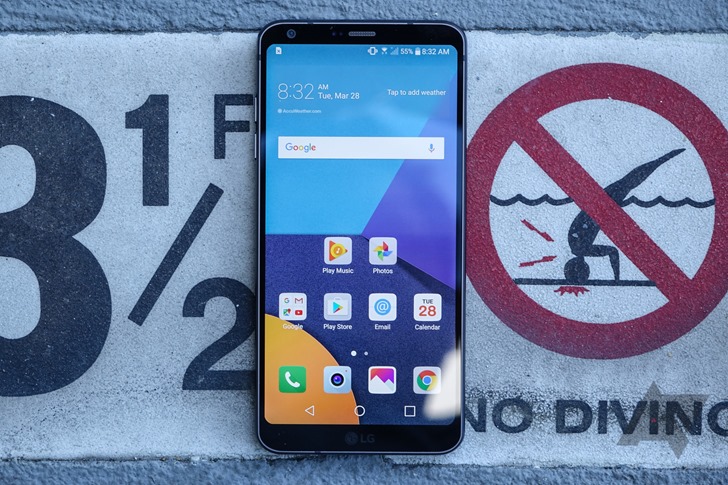
| Evleaks: LG Waiting Until June to Launch Judy, Its Next Flagship Device Posted: 16 Feb 2018 12:05 PM PST   According to @evleaks, LG is targeting June for its launch of Judy, an apparent codename for its 2018 flagship device. This is welcomed news, considering we've been waiting since early January to get an idea of what LG's plan for 2018 is. However, while it's good to have a timeframe in mind, we can't help but think this timing could doom the OEM for yet another year. Last year, LG put forth two of its best devices in the G6 and V30. After reports that the company scrapped all of its work on the reported G7 and started over, it seems that there may be a serious lack of direction over at LG, at least from an outsider's perspective. If LG was on the ball when it came to competing with Samsung, they'd have had this year's flagship ready to go against the Galaxy S9 at MWC, but instead, we're left with what should be a revamped V30 in Barcelona, the same phone we got last year, but with some AI software additions for the camera. That's not a good look. If it was me, I'd be following up on my best phones with more best phones, proving that I can be consistent and competitive. On the bright side, launching a phone in June means they will most of the attention from Android media, because by that point almost every other major OEM (except for Google) should have announced their 2018 flagships. Basically, it means they don't have to fight for attention with Samsung, and let's face it, that's a battle LG would likely lose. @evleaks' report doesn't only discuss announcement timing, though. According to the report, Judy, which won't be called the LG G7, will feature a 6.1″ 18:9 display, Snapdragon 845 processor, 4GB RAM, 64GB storage, dual 16-megapixel cameras (f/1.6), IP68 water and dust resistance, stereo speakers, HDR10 imaging, as well as wireless charging. For the display in particular, LG is reported to be using a "fairly new type," called MLCD+. Thanks to the usage of a white sub-pixel, the display is reported to be capable of 800-nit brightness while consuming 35% less power than a standard LCD panel. If you browse the web on your phone, you'll know that white is used quite commonly for the background of pages, so having that extra power savings would be good. So, I guess we can chill out on LG rumors until around May-June, but that sure does give Samsung and the Galaxy S9 a whole lot of time in the spotlight. Not that Samsung is going to complain about this.
Powered by WPeMatico The post Evleaks: LG Waiting Until June to Launch Judy, Its Next Flagship Device appeared first on Guaripete. |
| Amazon Lands Exclusive Halo Gray Essential Phone and It’s $150 Cheaper Than Other New Colors Posted: 16 Feb 2018 12:05 PM PST   Essential isn't done after announcing three new "limited" colorways of the Essential Phone. Today, the company announced that Amazon has its own exclusive colorway called Halo Gray. It's like Stellar Gray, only with silver sides instead of black titanium. In even better news, it's available for just $449.99 at the moment, which is $150 cheaper than the other limited colorways. I'm actually shocked to see the price here. Remember, the three colors announced yesterday all carry a $100 premium over the original black and white models. They cost $599, whereas this Halo Gray model is listed currently at $449.99. If you want an exclusive color of the Essential Phone, you might want to hurry before they jack up that price. Then again, this is the "first Essential Phone to come with Alexa built-in," so there is always the chance that Essential worked out a deal on the price with Amazon in exchange for Alexa integration. The phone is up for pre-order right now and will release on February 21. Amazon Link
Powered by WPeMatico The post Amazon Lands Exclusive Halo Gray Essential Phone and It's $150 Cheaper Than Other New Colors appeared first on Guaripete. |
| Today Only Deal: Save $400 on a Verizon Pixel 2 XL at Best Buy Posted: 16 Feb 2018 12:05 PM PST   For today only, you can save $400 on a Pixel 2 XL through Verizon at Best Buy, with the only caveat being that you'll need to activate the phone on a monthly installment plan. The way it works is easy enough. When you purchase the phone, either 64GB or 128GB, you'll receive $100 in instant savings. Following that, you'll receive $300 in monthly bill credits, bringing your monthly total for the Pixel 2 XL down to $18.74 for the 64GB model and $22.91 for the 128GB model. Over the course of the two year installment plan, you'll have saved the $300 (on top of the $100 instant savings at time of purchase). These deals don't come around too often, so if the Pixel 2 XL strikes your fancy, now would be a good time to make a move. Follow the link below to get started. Cheers Rich! Powered by WPeMatico The post Today Only Deal: Save $400 on a Verizon Pixel 2 XL at Best Buy appeared first on Guaripete. |
| LG’s next flagship reportedly launching in June Posted: 16 Feb 2018 12:05 PM PST
Earlier this year, LG announced that it would no longer release smartphones on a yearly schedule, opting to launch new models “when it is needed.” Shortly afterwards, a report from The Investor claimed that LG was starting over on its next flagship. And all the while, there were conflicting reports on whether the phone would be called the G7 at all. According to a new report from VentureBeat, the phone will not be branded as the G7, and has a codename of “Judy” inside the company. It is expected to have a 6.1-inch 18:9 display, using a new ‘MLCD+’ panel capable of 800-nit brightness while consuming around 35% lower battery (compared to conventional IPS LCD screens). As for the rest of the hardware, it will have a Snapdragon 845 chipset, 64GB of internal storage, 4GB of RAM, dual 16MP rear cameras (capable of shooting HDR10 images), IP68 water resistance, stereo speakers, and wireless charging. The phone will also include a camera AI, presumably the same one LG just announced. LG is currently targeting a June launch for the G6, so it probably won’t be announced at MWC as previously rumored. You can find the original report at the source link below. Powered by WPeMatico The post LG’s next flagship reportedly launching in June appeared first on Guaripete. |
| Today only: Get $400 off the Pixel 2 XL at Best Buy when you activate on Verizon Posted: 16 Feb 2018 12:05 PM PST 
Google increased the price of its larger Pixel phone to $850 this generation, which is a lot to spend on a phone. There have been a few deals, but the latest offer from Best Buy and Verizon is the best one we’ve seen yet. You can get $400 off this phone (nearly half price), but there are some strings attached. First of all, this deal is today only (February 16th). You must head to Best Buy (online or IRL) and buy the Pixel 2 XL before the end of the day to get the discount, which comes in two parts. At purchase, there’s a $100 instant rebate. The remaining $300 discount comes in the form of monthly bill credits ($12.50 per cycle for 24 months). That means the 64GB phone will cost you $18.74 monthly and the 128GB will be $22.91 per month.
In order to get the deal, you must activate the phone on Verizon in-store. Additionally, the monthly discounts end (obviously) if you cancel service or pay the phone off before 24 months have passed. If you’re going to be on Verizon anyway, this is a great deal. Powered by WPeMatico The post Today only: Get $400 off the Pixel 2 XL at Best Buy when you activate on Verizon appeared first on Guaripete. |
| Android Auto v3.0 prepares to launch Wi-Fi projection support [APK Teardown] Posted: 16 Feb 2018 12:05 PM PST  Since the launch of Android Auto, drivers have been disappointed by the requirement to have their phones tethered to a cable. Not only was it inconvenient to plug in each time you got in the car, especially if you had a lot of quick stops to make, but it was also problematic when most cars didn’t feed enough power through the designated port to keep phones from draining. Google finally let it slip that Wi-Fi support would be launched for Auto, and with the latest version, it looks like Google is just about ready to make it a reality. What’s NewUnofficial Changelog: (the stuff we found)
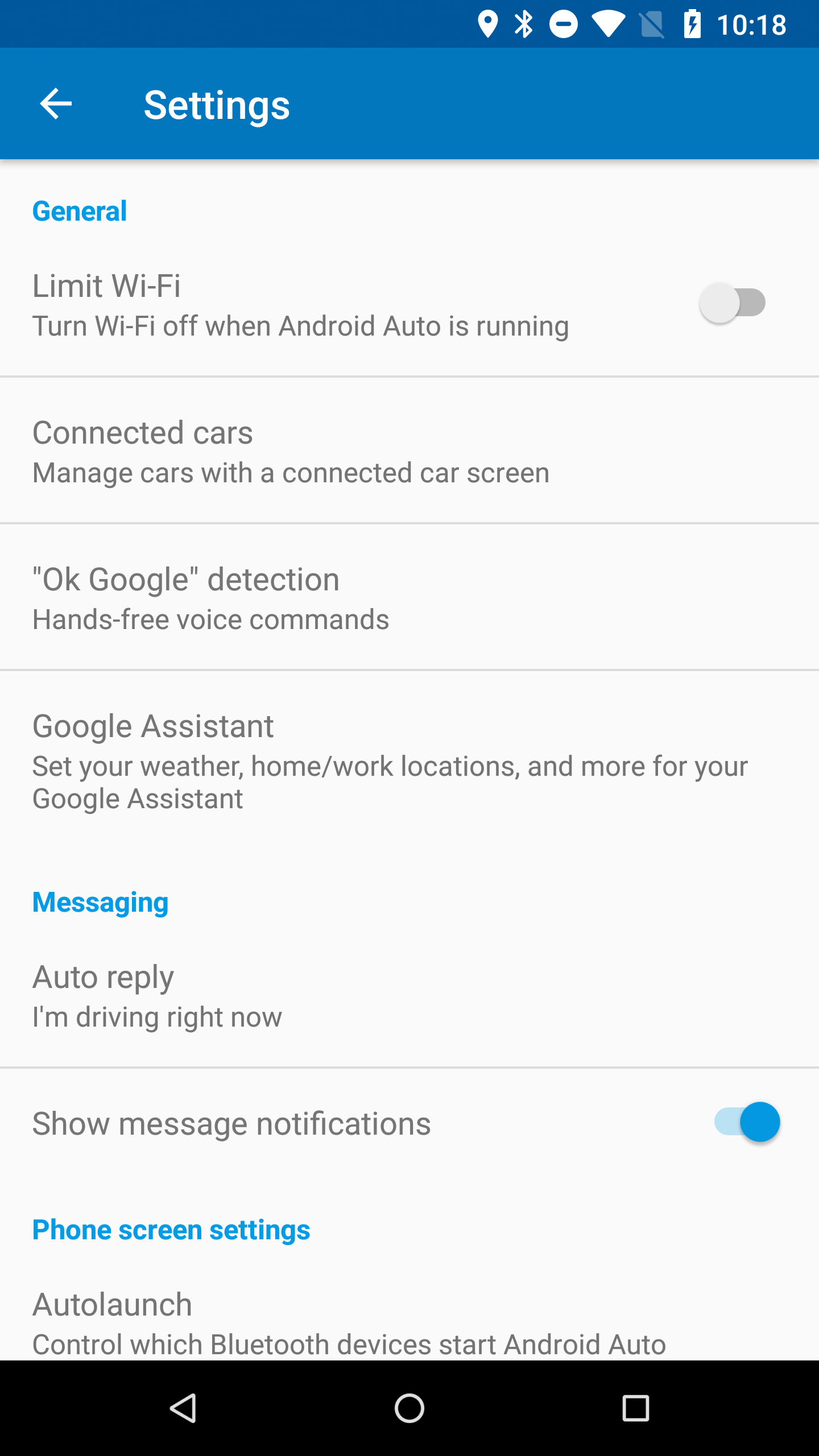
Link to Google Assistant settings
The Settings screen now contains one additional item: A shortcut to Google Assistant. It of course opens to the Assistant settings screen in the Google app, so there’s nothing particularly exceptional about this, but it is convenient if you’re already in Android Auto. Relocated Exit command
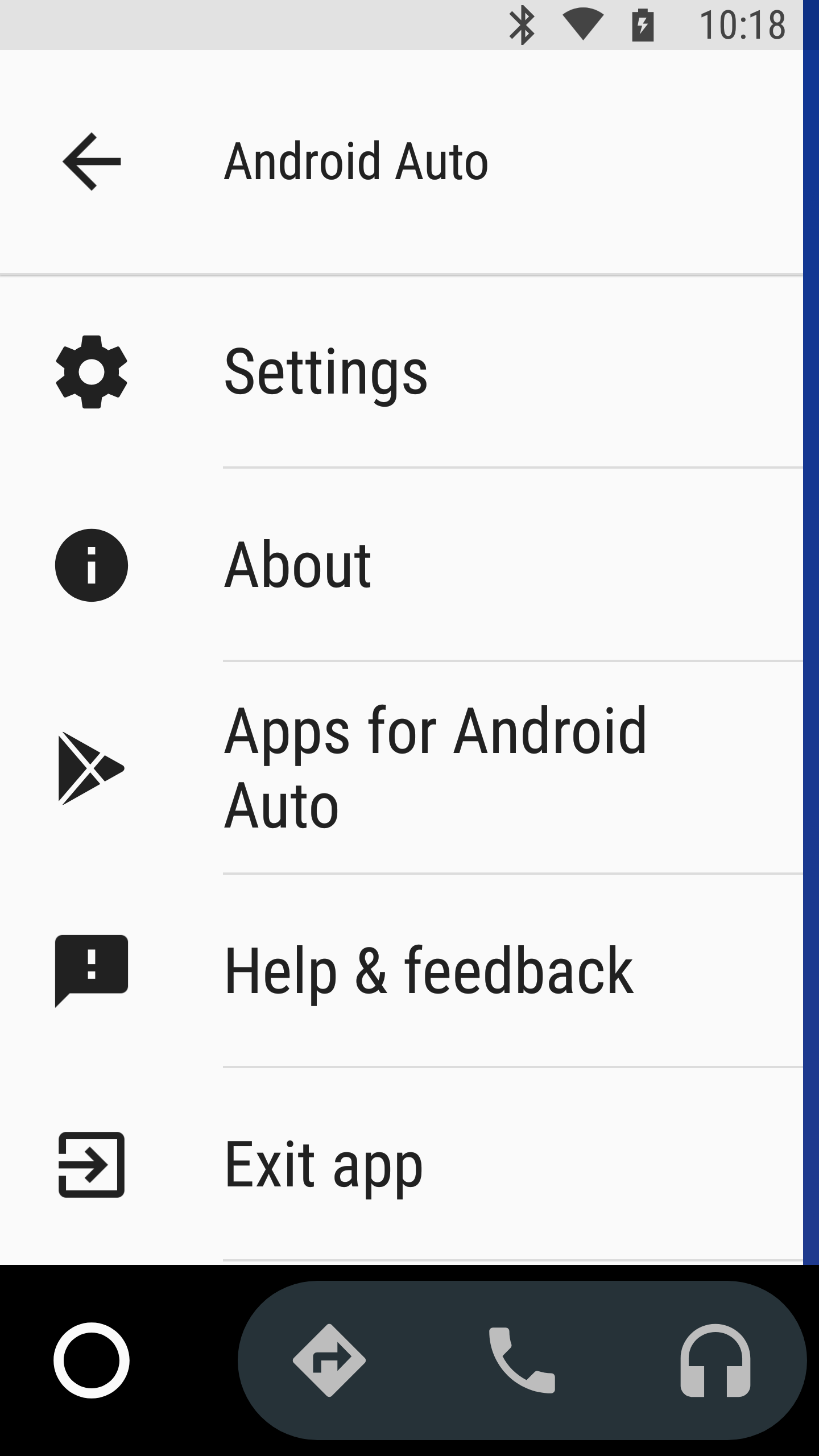
Left: v2.9. Right: v3.0. Open the Auto app on your phone and you’ll now find the “Exit app” command has been moved from the top of the navigation drawer to the bottom. It follows the conventional placement of an exit command at the bottom of a list, and it puts the command where people can easily reach it if they’re using their phone one-handed. All of the other menu options are still in the same order, but one line higher. TeardownDisclaimer: Teardowns are based on evidence found inside of apks (Android’s application package) and are necessarily speculative and usually based on incomplete information. It’s possible that the guesses made here are totally and completely wrong. Even when predictions are correct, there is always a chance that plans could change or may be canceled entirely. Much like rumors, nothing is certain until it’s officially announced and released. The features discussed below are probably not live yet, or may only be live for a small percentage of users. Unless stated otherwise, don’t expect to see these features if you install the apk. Wi-Fi projectionI won’t beat around the bush, it’s pretty clear this version of the Auto app adds Wi-Fi projection mode. It’s not actually clear if it’s working yet – I don’t have a car that supports it – but the obvious elements are here. There are new elements in code and resources related to wireless projection. New lines have also been added to the Settings screen layout that allow users to enable or disable wireless projection on their phone. I would expect these settings to appear on any phone, even if they’ve never connected to a Wireless-capable car, which leads me to think Google hasn’t flipped the switch quite yet. Nevertheless, we’re probably getting pretty close.
We’re still looking for additional changes, but for now, we would appreciate if somebody has a wireless-capable car could confirm whether this version fully supports wireless projection or if it’s just putting some of the pieces into place. DownloadThe APK is signed by Google and upgrades your existing app. The cryptographic signature guarantees that the file is safe to install and was not tampered with in any way. Rather than wait for Google to push this download to your devices, which can take days, download and install it just like any other APK. Version: 3.0.570554  Price: Free Powered by WPeMatico The post Android Auto v3.0 prepares to launch Wi-Fi projection support [APK Teardown] appeared first on Guaripete. |





| You are subscribed to email updates from Software Trending News. To stop receiving these emails, you may unsubscribe now. | Email delivery powered by Google |
| Google, 1600 Amphitheatre Parkway, Mountain View, CA 94043, United States | |

No comments:
Post a Comment